
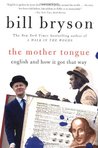
The Mother Tongue: English and How It Got That Way
"A witty expedition through the improbable history and anarchic charm of the English language."
Nook Talks
- 1English is a magpie language built on borrowed words. Its vast vocabulary is a historical accretion from Viking raids, Norman conquests, and global trade, making it uniquely rich and inherently chaotic rather than designed.
- 2Spelling is a historical artifact, not a logical system. The notorious irregularity of English spelling preserves fossilized pronunciations and the idiosyncratic decisions of early printers, creating a enduring challenge for learners.
- 3American English is a conservative, innovative dialect. It often retains older British forms lost in the UK while simultaneously generating its own slang and idioms, reflecting a distinct cultural trajectory.
- 4Swearing and slang are vital, dynamic linguistic laboratories. These 'low' registers of language evolve rapidly and reveal deep-seated social taboos, attitudes, and the creative, subversive energy of everyday speech.
- 5Global dominance stems from historical accident, not inherent superiority. The spread of English was propelled by British colonialism and American economic power, not any linguistic merit, leading to its status as a global lingua franca.
- 6All living languages are in a constant state of flux. Bryson illustrates that change—through pronunciation shifts, new word coinage, and grammatical simplification—is the natural, unstoppable condition of any spoken tongue.
Bill Bryson’s The Mother Tongue is a rollicking tour through the bizarre and triumphant history of the English language. It begins not with grand design, but with the guttural sounds of Germanic tribes, tracing how a marginal dialect evolved into a global behemoth. Bryson frames English as a glorious, messy accident of history, a language that has absorbed, adapted, and conquered through sheer opportunistic vigor rather than any innate logical purity.
Bryson meticulously charts the language’s pivotal transformations: the seismic impact of the Norman Conquest, which layered a French-derived vocabulary onto an Anglo-Saxon base; the Great Vowel Shift, which dramatically altered pronunciation; and the printing press’s paradoxical effect of standardizing spelling while freezing its inconsistencies. He explores the linguistic divergence that created American English, arguing it often preserves Shakespearean-era British forms more faithfully than modern British English does. The narrative is peppered with digressions into etymology, the origins of names, and the peculiarities of swearing, treating each as a window into social history.
The book also confronts English’s global expansion, examining how it was imposed through empire and later adopted through economic and cultural hegemony. Bryson delves into the language’s structural quirks—its spelling nightmares, its relatively simple grammar, and its unparalleled vocabulary size—explaining each as a product of specific historical forces rather than deliberate planning. He compares English to other languages, highlighting its unique strengths and glaring weaknesses with a demystifying clarity.
Ultimately, The Mother Tongue is a work of popular linguistics for the curious generalist. It demotes English from a pedestal of superiority and recasts it as a fascinating, flawed, and resilient human institution. The book’s lasting impact lies in its ability to make readers see their own speech not as a fixed tool, but as a living, breathing archive of invasion, innovation, and endless change.
The consensus celebrates Bryson’s characteristically witty and accessible approach to linguistic history, finding the book packed with delightful trivia and compelling narratives that make a complex subject highly engaging. However, a significant and vocal critique centers on factual inaccuracies, particularly in sections dealing with languages and dialects outside Bryson’s expertise, which for some readers undermines the book’s authority. The tone, while humorous to most, strikes others as occasionally glib or prone to overgeneralization.
- 1The tension between the book's entertaining presentation and concerns over factual reliability, especially in global linguistic examples.
- 2Debate over Bryson's portrayal of Australian English and culture, which readers from Australia find riddled with errors and stereotypes.
- 3Discussion about the book's effectiveness as an introductory primer versus its shortcomings for readers seeking scholarly depth or precision.
Amusing Ourselves to Death: Public Discourse in the Age of Show Business
Neil Postman
Radical Markets: Uprooting Capitalism and Democracy for a Just Society
Eric A. Posner, E. Glen Weyl

Out of Control
Kevin Kelly
The Essays of Warren Buffett: Lessons for Corporate America
Lawrence A. Cunningham, Warren Buffett
Bad Samaritans
Ha-Joon Chang

Breath: The New Science of a Lost Art
James Nestor
Sapiens: A Brief History of Humankind
Yuval Noah Harari
Stumbling on Happiness
Daniel Gilbert
The Lessons of History
Will Durant
Chip War: The Quest to Dominate the World's Most Critical Technology
Chris Miller

The Intelligent Investor
Benjamin Graham
The Psychology of Money: Timeless Lessons on Wealth, Greed, and Happiness
Morgan Housel