
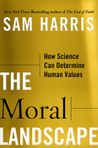
The Moral Landscape: How Science Can Determine Human Values
"Science can map human flourishing, providing objective answers to our deepest moral questions and displacing religious dogma."
- 1[object Object]
- 2[object Object]
- 3[object Object]
- 4[object Object]
- 5[object Object]
In The Moral Landscape, neuroscientist and philosopher Sam Harris launches a direct assault on one of modernity's most entrenched intellectual divides: the fact-value distinction. He confronts the widespread assumption, held by believers and secularists alike, that science is silent on questions of meaning, morality, and human values. For Harris, this concession is both philosophically mistaken and culturally catastrophic, as it cedes the most important terrain of human life to religious dogma and ungrounded relativism.
Harris's central argument is that morality must be understood in terms of the well-being of conscious creatures. He proposes the metaphor of a "moral landscape" with peaks corresponding to the highest possible states of well-being and valleys representing suffering and despair. While there may be multiple paths to a peak, the existence of these peaks and valleys represents a landscape of objective facts. Consequently, moral questions have right and wrong answers discoverable through the tools of science, particularly the brain sciences, which can illuminate the conditions that lead to human flourishing or misery.
The book systematically dismantles counterarguments, from religious claims to moral relativism and Hume's famous is-ought problem. Harris contends that concerns about deriving 'ought' from 'is' are overstated; once we agree that well-being is what we ought to care about, the entire project becomes an empirical investigation into what best promotes it. He draws on insights from neuroscience, philosophy, and his experiences in public intellectual debates to argue that failing to develop a science of morality perpetuates needless human suffering.
The Moral Landscape is a foundational text for the nascent project of secular, evidence-based ethics. It is aimed at readers weary of the stalemate between religious absolutism and postmodern relativism, offering a provocative framework for rebuilding our moral discourse on rational grounds. Its legacy lies in its bold attempt to reclaim the territory of human values for reason and to sketch the contours of a future where moral progress is guided by knowledge rather than tradition.
The readership is sharply polarized. Admirers praise the book's bold, clarifying thesis as a necessary corrective to moral relativism and a brilliant application of scientific thinking to ethics. Critics, however, find the central argument philosophically naive, accusing Harris of glossing over the is-ought problem and constructing a scientistic framework that feels reductive. A recurring note, even among sympathetic readers, is that the prose can be strident and the tone dismissive toward opposing viewpoints, which undermines its persuasive power for the uninitiated.
- 1The validity of bridging the 'is-ought' gap with neuroscience and a focus on well-being.
- 2Criticism of the book's perceived tone as overly combative and dismissive of philosophical nuance.
- 3Debate over the definition of 'well-being' as a sufficiently objective foundation for morality.
- 4The practicality and potential dangers of a 'science of morality' guiding human values.
Out of Control
Kevin Kelly

The Almanack of Naval Ravikant
Naval Ravikant, Eric Jorgenson
Outliers: The Story of Success
Malcolm Gladwell
The Artist's Way
Julia Cameron
Just Listen: Discover the Secret to Getting Through to Absolutely Anyone
Mark Goulston
The Norwegian Method
Brad Culp
Sapiens: A Brief History of Humankind
Yuval Noah Harari

Bad Samaritans
Ha-Joon Chang

The Road to Financial Freedom
Bodo Schäfer

Permanent Record
Edward Snowden
Breath: The New Science of a Lost Art
James Nestor
The Psychology of Money: Timeless Lessons on Wealth, Greed, and Happiness
Morgan Housel