
Influence: The Psychology of Persuasion
"Master the six universal principles that govern human compliance to ethically persuade others and shield yourself from manipulation."
Nook Talks
- 1Reciprocation. The internal drive to repay what another person has provided us. Even a small, unsolicited gift can create a powerful obligation to return a favor.
- 2Commitment and Consistency. Once we take a stand or make a choice, we encounter personal and interpersonal pressures to behave consistently with that commitment.
- 3Social Proof. We determine what is correct by finding out what other people think is correct, especially in uncertain situations or when we perceive others as similar to ourselves.
- 4Liking. We prefer to say yes to the requests of someone we know and like. This is often triggered by physical attractiveness, similarity, praise, and repeated contact.
- 5Authority. There is a deep-seated sense of duty to authority within us. We often react blindly to the mere symbols of authority, such as titles, clothing, and trappings.
- 6Scarcity. Opportunities seem more valuable to us when their availability is limited. We are more motivated by the thought of losing something than by the thought of gaining something of equal value.
- 7Unity. The feeling of being 'of' a group. We are more easily influenced by people we share a shared identity with, such as family, race, or even shared interests.
Robert Cialdini's Influence is not merely a business book but a foundational text in social psychology, dissecting the invisible machinery of compliance that operates in everyday interactions. It posits that human decision-making, particularly under pressure, often relies not on careful analysis but on automatic, pre-programmed shortcuts. These mental heuristics, evolved for efficiency, are the levers that skilled persuaders—from salespeople to fundraisers—know how to pull.
Cialdini distills this science into six universal principles of influence: Reciprocity, Scarcity, Authority, Consistency, Liking, and Consensus (Social Proof). Each chapter meticulously deconstructs one principle, illustrating its operation through controlled experiments, anthropological observation, and field studies from Cialdini's three-year immersion in the training programs of advertisers, car salesmen, and recruiters. The book reveals how a free sample triggers reciprocal obligation, how limited-time offers exploit loss aversion, and how a simple badge can confer unquestioned authority.
The work functions dually as a manual for ethical persuasion and a guide for self-defense. Cialdini argues that understanding these principles is a form of literacy in a world saturated with influence attempts. By recognizing the 'click, whirr' of our automatic responses, we can pause and introduce reason where instinct would normally prevail.
Its impact spans disciplines, essential reading for marketers, managers, negotiators, and consumers alike. Influence provides the diagnostic framework for understanding why we comply, offering both the tools to persuade more effectively and the intellectual armor to resist manipulation.
The consensus hails the book as a seminal, eye-opening classic whose core framework remains profoundly relevant decades later. Readers praise its compelling blend of rigorous research and accessible, anecdotal storytelling, which makes complex psychology tangible. A common critique targets the later chapters and updated editions, which some find repetitive or diluted compared to the potent, focused original arguments. The book is universally deemed accessible to a general audience, transforming passive consumers into aware analysts of daily persuasive encounters.
- 1The enduring relevance of the six principles versus perceptions of the content becoming dated or common sense.
- 2Debate over the ethical use of these tools for persuasion versus outright manipulation.
- 3Criticism of later revised editions for added filler that dilutes the original's impactful conciseness.
- 4Personal anecdotes from readers on successfully applying the principles in sales, negotiation, or daily life.
The Crash Course
Chris Martenson
The Essays of Warren Buffett: Lessons for Corporate America
Lawrence A. Cunningham, Warren Buffett

Sapiens: A Brief History of Humankind
Yuval Noah Harari
The Art of Contrarian Trading
Carl Futia

The Almanack of Naval Ravikant
Naval Ravikant, Eric Jorgenson
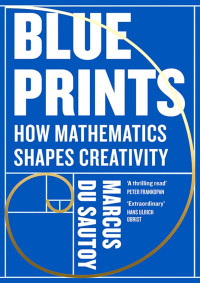
Blueprints: How mathematics shapes creativity
Marcus du Sautoy
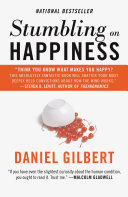
Stumbling on Happiness
Daniel Gilbert

The Intelligent Investor
Benjamin Graham

Out of Control
Kevin Kelly

Transformation in Christ
Dietrich Von Hildebrand

Breakthrough: The Quest for Life-Changing Medicines
Dr William Pao

Permanent Record
Edward Snowden