

I Will Teach You to Be Rich
"Automate your finances to effortlessly build wealth, freeing you to spend lavishly on what you truly love."
- 1Automate your savings and investments to overcome inertia. By setting up automatic transfers, you remove the psychological friction of saving, ensuring consistent wealth accumulation without relying on willpower or perfect discipline.
- 2Adopt a Conscious Spending Plan instead of a restrictive budget. This framework allocates money for fixed costs, investments, savings, and guilt-free spending, shifting focus from deprivation to intentional allocation aligned with personal values.
- 3Spend extravagantly on your passions while cutting costs ruthlessly elsewhere. True frugality is not about universal cheapness but about strategic reduction on unimportant items to fund meaningful experiences and possessions without guilt.
- 4Prioritize long-term, passive, buy-and-hold investing over speculation. Wealth is built through consistent investment in low-cost index funds and compound growth, not by attempting to time the market or pick individual stocks.
- 5Embrace the 85 Percent Solution: action beats perfect inaction. Progress requires starting, even with an imperfect plan. Waiting for perfect knowledge or conditions guarantees failure, while immediate, good-enough action creates momentum.
- 6Negotiate recurring bills and bank fees to instantly increase cash flow. Proactively negotiating credit card rates, cable bills, and bank charges is a high-impact, low-effort tactic that directly boosts monthly disposable income.
I Will Teach You To Be Rich arrives as a foundational text for a generation characterized by high material aspirations but rudimentary financial literacy. Ramit Sethi’s six-week program directly targets 20-to-35-year-olds, rejecting scare tactics and moralizing in favor of a pragmatic, behavior-focused system. The book is built on the four pillars of personal finance—banking, saving, budgeting, and investing—but reframes them through a lens of psychological efficiency and personal alignment.
The methodology centers on automation as the core mechanism for wealth building. Sethi provides concrete scripts for negotiating lower APRs and bank fees, instructions for setting up high-yield savings accounts, and a clear roadmap for initiating low-cost index fund investments. He dismantles common myths, such as the necessity of credit card debt for building credit or the effectiveness of traditional, restrictive budgeting. Instead, he introduces the Conscious Spending Plan, a framework that allocates funds for fixed costs, investments, savings goals, and, crucially, guilt-free spending money.
Beyond mechanics, the book delves into the philosophy of a rich life, distinguishing sharply between being cheap and being frugal. Sethi argues that strategic cost-cutting on things one doesn’t care about liberates capital to spend lavishly on chosen passions, whether travel, dining, or technology. This is complemented by principles like the “85 Percent Solution,” which prioritizes immediate action over paralyzing perfectionism, and advice on developing “personal entrepreneurship” to increase income.
Integrated with his online community and tools, the book functions as both a tactical manual and a cultural manifesto. Its enduring significance lies in its synthesis of behavioral psychology with executable personal finance steps, offering a scalable system that grows with the reader’s income. It is less about pinching pennies and more about designing a financial infrastructure that supports a personally defined, ambitious life.
The consensus positions this as an essential, actionable primer for financial novices, particularly young adults. Readers universally praise its practical, step-by-step automation strategy and the psychologically liberating “guilt-free spending” philosophy. The tone is celebrated as refreshingly non-judgmental and motivating, though a minority of more financially literate readers find the investment advice overly basic. Criticisms occasionally note the heavy promotion of the author’s brand and website within the text.
- 1The revolutionary effectiveness of automating finances versus relying on self-discipline and monthly budgeting.
- 2Debating the book's core philosophy of 'spend lavishly on what you love, cut mercilessly on what you don't.'
- 3The practicality and long-term value of the 'Conscious Spending Plan' compared to traditional budgeting methods.
- 4Assessment of the investment advice as either perfectly sufficient for beginners or overly simplistic and shallow.

Code: The Hidden Language of Computer Hardware and Software
Charles Petzold
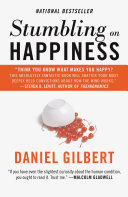
Stumbling on Happiness
Daniel Gilbert
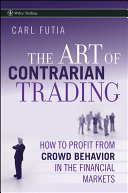
The Art of Contrarian Trading
Carl Futia
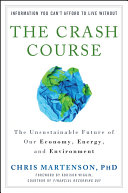
The Crash Course
Chris Martenson
Boom: Bubbles and the End of Stagnation
Byrne Hobart
The Essays of Warren Buffett: Lessons for Corporate America
Lawrence A. Cunningham, Warren Buffett

The Psychology of Money: Timeless Lessons on Wealth, Greed, and Happiness
Morgan Housel
Blueprints: How mathematics shapes creativity
Marcus du Sautoy

Out of Control
Kevin Kelly
Breath: The New Science of a Lost Art
James Nestor

The Norwegian Method
Brad Culp

Sapiens: A Brief History of Humankind
Yuval Noah Harari