
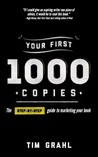
Your First 1000 Copies: The Step-by-Step Guide to Marketing Your Book
"Build a sustainable author platform through genuine reader connection, not transactional sales tactics."
- 1Establish permission-based communication with your readers. Move beyond sporadic announcements to create a reliable, opt-in channel for engagement. This foundational step transforms anonymous buyers into a participatory community invested in your creative journey.
- 2Prioritize being relentlessly helpful over being promotional. Content should serve the reader's needs first, building trust and authority. This ethos turns marketing from an interruption into a welcome service, naturally fostering loyalty and word-of-mouth.
- 3Implement the Connection System as a complete framework. The five-stage sequence—Permission, Content, Outreach, Sell, Track—creates a virtuous cycle. Each stage logically feeds the next, ensuring marketing efforts are systematic rather than scattershot.
- 4Use data to track what genuinely works. Replace guesswork with metrics from modern online tools. Analyzing engagement and conversion data allows for informed iteration, focusing energy on high-impact activities that drive real reader connection.
- 5Ethically expand your reach through targeted outreach. Introduce yourself to new audiences by providing value first. This principled approach to growth builds a reputation as a generous contributor, not a spammer, within relevant communities.
- 6View platform-building as a long-term authorial practice. This is not a pre-launch campaign but an integral, ongoing part of a writing career. The system cultivates a durable asset—a direct relationship with readers—that outlives any single book release.
In the fragmented modern publishing landscape, where algorithmic obscurity is the default, Tim Grahl’s Your First 1000 Copies posits that an author’s greatest asset is not a viral tweet or a bookstore placement, but a direct, permission-based connection with readers. Drawing from his extensive work with bestselling authors across genres, Grahl argues against the desperation of transactional sales pushes. Instead, he presents a sustainable methodology for building a dedicated audience from the ground up, framing marketing not as a necessary evil but as an extension of the author’s creative and communicative practice.
The core of the book is the Connection System, a five-stage framework designed to create a virtuous cycle of audience growth. It begins with establishing Permission—creating a reliable, opt-in channel like an email list that opens a direct line of communication. This foundation supports the creation of valuable Content, aimed not at promotion but at being "relentlessly helpful" to the reader’s interests. With this trust established, ethical Outreach to new communities becomes possible, where the author contributes value before ever making an ask.
Grahl meticulously details how these relationship-focused stages naturally lead to the Sell phase, where book purchases become a welcomed outcome of engagement rather than an awkward request. Crucially, the system concludes with Track, advocating for the use of simple online analytics to move beyond intuition. By measuring what content resonates and which outreach efforts convert, authors can make data-informed decisions to refine their approach continuously.
Your First 1000 Copies serves as both a philosophical recalibration and a practical manual. It is targeted at authors at any career stage—from the novice overwhelmed by digital tools to the seasoned writer struggling to adapt to a post-legacy-media world. Its legacy is its demystification of platform-building, recasting it from a mysterious art form into a repeatable, ethical system that aligns an author’s need to sell books with a reader’s desire for genuine connection and value.
The consensus celebrates the book as an accessible and ethical antidote to marketing anxiety, particularly for fiction writers and beginners. Readers consistently praise its actionable, step-by-step framework—the Connection System—for replacing overwhelm with clarity. The "relentlessly helpful" philosophy resonates deeply, though some note the initial technical steps, like setting up a blog or mailing list, present a real-world hurdle that the book’s conceptual clarity cannot fully eliminate. It is widely deemed a foundational text, not a get-rich-quick scheme.
- 1The transformative power of the 'relentlessly helpful' ethos for authors who despise traditional salesmanship.
- 2Practical hurdles for the 'tech-challenged' in implementing the initial system setup, despite the clear plan.
- 3The system's proven applicability across genres, including niche fiction, not just business or non-fiction.
- 4The high value-perceived from the low-cost book and the accompanying free blog content.
Chip War: The Quest to Dominate the World's Most Critical Technology
Chris Miller
The Crash Course
Chris Martenson

Permanent Record
Edward Snowden
Breath: The New Science of a Lost Art
James Nestor
Boom: Bubbles and the End of Stagnation
Byrne Hobart
The Creative Habit
Twyla Tharp, Mark Reiter
Breakthrough: The Quest for Life-Changing Medicines
Dr William Pao
The Art of Contrarian Trading
Carl Futia
Out of Control
Kevin Kelly
Bad Samaritans
Ha-Joon Chang
Just Listen: Discover the Secret to Getting Through to Absolutely Anyone
Mark Goulston
The Artist's Way
Julia Cameron