

The Checklist Manifesto: How to Get Things Right
"A simple, disciplined checklist conquers the catastrophic failures of modern complexity."
Nook Talks
- 1[object Object]
- 2[object Object]
- 3[object Object]
- 4[object Object]
- 5[object Object]
In an era defined by staggering specialization and technological advancement, a paradox endures: the most expert professionals continue to make avoidable, sometimes fatal, errors. Atul Gawande’s The Checklist Manifesto posits that the solution to this failure of applied knowledge is not more training or more technology, but a profoundly humble tool: the checklist. Gawande, a surgeon and public health researcher, frames this not as a tale of managerial efficiency but as a fundamental inquiry into how we handle complexity when individual mastery has reached its limits.
Gawande builds his case through a series of gripping narratives drawn from high-stakes environments. He details how a simple, ninety-second surgical checklist—verifying the patient’s identity, the planned procedure, and antibiotic administration—dramatically reduced deaths and complications in hospitals worldwide. He travels to the cockpit of a modern aircraft and the construction site of a soaring skyscraper, revealing how checklists manage the intricate interplay of thousands of components and communications. These stories demonstrate that the checklist’s power lies less in reminding us what we forget than in structuring essential communication and enforcing a discipline of pause and verification.
The book delves into the philosophy and design of effective checklists, distinguishing between the ‘DO-CONFIRM’ and ‘READ-DO’ models. Gawande argues that the best checklists are brief, precise, and focused on the ‘killer items’—the steps most prone to being skipped. Crucially, they must foster team dialogue, empowering even junior members to halt the process if a check fails. This transforms the checklist from a mere memory aid into a mechanism for cultivating a culture of teamwork and collective responsibility.
The Checklist Manifesto transcends its medical origins to offer a compelling argument for a new approach to complexity in business, finance, government, and beyond. It is essential reading for anyone whose work involves multiple steps, collaboration under pressure, or consequences for error. Gawande makes a elegant, evidence-based case that in our fractured world, the path to getting things right is often found not in striving for superhuman expertise, but in embracing the disciplined simplicity of a well-crafted list.
The critical consensus celebrates the book’s powerful, paradigm-shifting core idea, finding it brilliantly illuminated through Gawande’s masterful storytelling. Readers consistently praise its actionable insights and the compelling evidence from aviation and medicine. A significant point of contention, however, is the execution: many argue the central thesis is stretched thin to fill a book, resulting in repetitive anecdotes and a sense that it would have been more potent as a long-form article. The writing is universally acknowledged as clear and engaging, even by those who find the structure padded.
- 1Debate over whether the core idea is profound or overly simplistic, stretched too thin to justify a full book.
- 2The transformative power of checklists in fostering team communication and flattening medical hierarchy.
- 3Frustration with repetitive examples and a sense that the material would be better as a long article.
- 4Practical application discussions: which personal or professional tasks are suitable for a checklist approach.
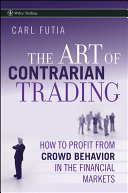
The Art of Contrarian Trading
Carl Futia

Just Listen: Discover the Secret to Getting Through to Absolutely Anyone
Mark Goulston

No Rules Rules: Netflix and the Culture of Reinvention
Reed Hastings, Erin Meyer
The Norwegian Method
Brad Culp

How to Win Friends & Influence People
Dale Carnegie

The Artist's Way
Julia Cameron
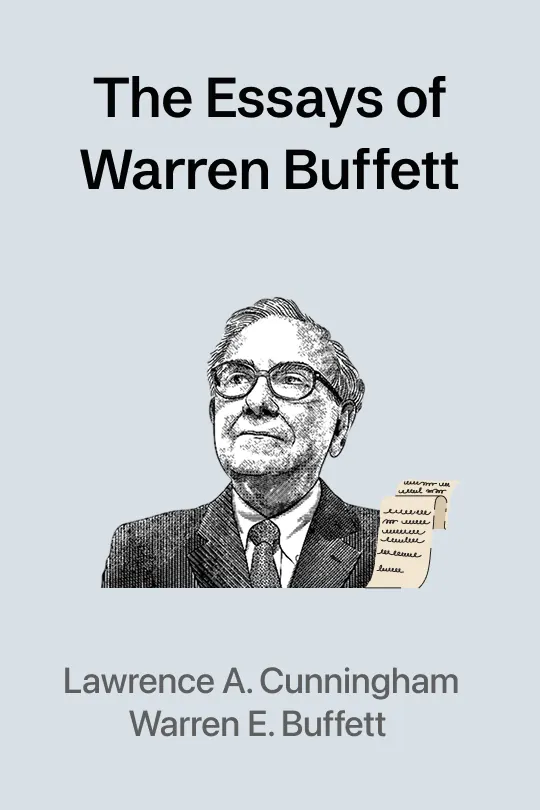
The Essays of Warren Buffett: Lessons for Corporate America
Lawrence A. Cunningham, Warren Buffett

The Almanack of Naval Ravikant
Naval Ravikant, Eric Jorgenson

Out of Control
Kevin Kelly
Stumbling on Happiness
Daniel Gilbert

Code: The Hidden Language of Computer Hardware and Software
Charles Petzold
The Crash Course
Chris Martenson