
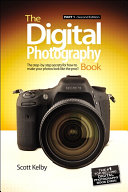
The Digital Photography Book
"It transforms your DSLR from a complex gadget into a practical tool for achieving professional-looking shots."
- 1Prioritize actionable recipes over theoretical jargon. The book bypasses dense technical theory, offering immediate, step-by-step settings for common shooting scenarios, which accelerates practical skill acquisition.
- 2Structure your learning around discrete, page-long tips. Its modular format presents each concept as a self-contained unit, making complex photography techniques digestible and easy to reference during a shoot.
- 3Master the foundational trinity of sharpness, light, and composition. Professional results hinge on manipulating aperture for depth, harnessing natural light effectively, and applying simple compositional rules to create visually compelling images.
- 4Adopt the mindset of a pro on assignment. Kelby frames advice as mentorship, simulating real-world shooting conditions to teach problem-solving and workflow, not just camera functions.
- 5Leverage humor to demystify intimidating technical concepts. The accessible, conversational tone lowers the psychological barrier to engaging with manual settings, making the learning process engaging rather than arduous.
Scott Kelby's The Digital Photography Book arrives as a pragmatic antidote to the technically dense manuals that overwhelm new DSLR owners. It operates on a simple, revolutionary premise: to provide the reader with the exact settings and straightforward tricks professional photographers use on everyday shoots, deliberately sidestepping lengthy expositions on optics or sensor physics. The book is a direct translation of experience into actionable knowledge, promising not to make you a camera engineer, but to make your photographs look like they were taken by someone who is.
Organized by photographic scenario—such as shooting portraits, landscapes, weddings, or products—each chapter functions as a series of concise, recipe-style tips. Kelby instructs the reader to "turn this dial to that setting" for a specific result, demystifying the path from a flat, amateur snapshot to a vibrant, professional-grade image. The methodology covers crucial ground: achieving tack-sharp focus, flattering natural light, balanced exposure, and simple compositional frameworks that immediately elevate a photograph's impact. This is photography stripped of its academic pretension, rebuilt as a craft of replicable techniques.
The book's distinctive voice, marked by Kelby's brand of dad-humor and direct address, is a core feature of its pedagogy. This approachability deliberately lowers the intimidation factor of expensive equipment, positioning the author as a friendly guide rather than a distant expert. It targets the enthusiast who has outgrown automatic modes but finds traditional textbooks impenetrable, offering a bridge to creative control. The focus remains relentlessly practical, with advice extending to gear recommendations on a budget and workflow tips that streamline the shooting process.
As the first volume in a seminal series, it established a new genre of accessible photography guides. Its legacy is defined by its successful marriage of utility and clarity, empowering a generation of hobbyists to unlock the potential of their cameras. The book is less a comprehensive treatise and more a field manual—its value lies not in theoretical mastery, but in the immediate improvement visible through the viewfinder after following its clear, succinct instructions.
The consensus celebrates the book as an exceptionally effective primer for moving beyond automatic settings, praised for its clear, recipe-based approach that yields immediate improvements. Readers universally appreciate the digestible, tip-per-page format and Kelby's engaging, humorous tone, which makes technical learning enjoyable. The primary critique is a repeated caveat: this is firmly a beginner's guide, leaving advanced photographers wanting deeper technical or artistic exploration. Its accessibility is its greatest strength and its most noted limitation.
- 1The book's beginner-friendly, recipe-style format versus the expectation of advanced technical depth based on its professional cover.
- 2The effectiveness and reception of Scott Kelby's conversational humor as a tool for demystifying complex photography concepts.
- 3The practical value of the book's specific gear and setting recommendations for immediate improvement in everyday shooting scenarios.

Just Listen: Discover the Secret to Getting Through to Absolutely Anyone
Mark Goulston
The Creative Habit
Twyla Tharp, Mark Reiter

The Essays of Warren Buffett: Lessons for Corporate America
Lawrence A. Cunningham, Warren Buffett

The Art of Contrarian Trading
Carl Futia

Code: The Hidden Language of Computer Hardware and Software
Charles Petzold

Out of Control
Kevin Kelly

Permanent Record
Edward Snowden

Breakthrough: The Quest for Life-Changing Medicines
Dr William Pao

Vacuum Diagrams (Xeelee Sequence, #5)
Stephen Baxter

Bad Samaritans
Ha-Joon Chang

How to Win Friends & Influence People
Dale Carnegie

The Intelligent Investor
Benjamin Graham