
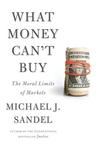
What Money Can't Buy: The Moral Limits of Markets
"A philosophical inquiry into the corrosive effects of applying market logic to every facet of human life and civic good."
- 1Distinguish between market economies and market societies. A market economy is a tool for organizing productive activity, but a market society is a way of life where market values dominate all social relations, corrupting non-market norms like civic duty and fairness.
- 2Recognize how markets crowd out moral and civic goods. Introducing financial incentives can erode intrinsic motivations, such as civic duty or altruism. Paying for an action often transforms it from a moral obligation into a mere transaction, degrading its social meaning.
- 3Interrogate the fairness of market solutions to social problems. Market allocations often favor the wealthy, exacerbating inequality. Auctioning scarce goods or allowing paid queue-jumping undermines democratic equality and can make a mockery of fair access to essentials like healthcare or education.
- 4Identify the corruption inherent in certain market exchanges. Some things are degraded or corrupted when bought and sold, regardless of consent. Putting a price on friendship, citizenship, or human organs commodifies what should be sacred, reducing human dignity to a monetary metric.
- 5Cultivate public debate on the good life. The book argues that avoiding a market society requires a robust public discourse not just about fairness, but about the values and meanings we wish to protect and promote in our common life.
In What Money Can’t Buy, political philosopher Michael J. Sandel mounts a formidable critique of the silent, decades-long expansion of market thinking into spheres of life traditionally governed by nonmarket norms. The book begins not with abstract theory, but with a cascade of provocative, real-world examples: a prison cell upgrade for a fee, the sale of the right to emit carbon, insurance policies taken out by investors on the lives of strangers. These are the frontier outposts of a market society, and Sandel uses them to hook the reader into a fundamental ethical inquiry: Have we drifted from having a market economy to being a market society, and is this where we want to be?
Sandel systematically explores the two primary objections to this creep of commodification. The first is the issue of fairness, where market allocations often tilt decisively in favor of the wealthy, turning equality of access into a privilege of wealth. The second, and more profound, argument concerns corruption—the way putting a price on certain goods and practices can degrade or crowd out the values they embody. Paying children to read books may increase pages turned, but it can also replace the intrinsic love of learning with a crude instrumentalism. Sandel draws on social science, such as the Israeli daycare study where fines for late pick-ups increased tardiness, to show how monetary incentives can displace moral responsibility.
The analysis moves beyond individual cases to diagnose a broader societal shift. Sandel argues that the great missing project of our time is a public debate about the role of markets and the meaning of the good life. By avoiding questions of value and meaning, we have ceded the moral terrain to the logic of efficiency and consumer choice alone. The book serves as both a warning and a call to arms, insisting that democracy requires a vibrant, substantive discourse about what should and should not be up for sale.
What Money Can’t Buy is aimed at a broad audience—any citizen concerned about the moral fabric of society in an age of rampant commercialism. It stands as an essential work of public philosophy, challenging readers to confront the ethical boundaries of markets and to reclaim civic discourse about the values that money cannot, and should not, measure.
Readers widely praise Sandel’s accessible, story-driven approach to complex moral philosophy, finding the real-world examples both shocking and illuminating. The consensus is that the book successfully provokes essential self-reflection and public conversation. Criticisms focus on a perceived lack of concrete solutions or deeper philosophical rigor, with some noting the arguments can feel repetitive. It is universally regarded as an engaging and thought-provoking read, even for those without a background in economics or philosophy.
- 1The effectiveness and ethical implications of using financial incentives to modify behavior, such as paying for grades or organ donation.
- 2Debate over whether the book offers practical solutions or merely identifies problems with market encroachment.
- 3Discussion of specific, jarring examples, like life insurance policies on strangers or auctioning immigration rights, as powerful illustrations of market overreach.
- 4The accessibility of Sandel's philosophical arguments for a general audience versus a desire for more academic depth.
Sapiens: A Brief History of Humankind
Yuval Noah Harari
How to Win Friends & Influence People
Dale Carnegie
Bad Samaritans
Ha-Joon Chang
The Crash Course
Chris Martenson
The Artist's Way
Julia Cameron
Breath: The New Science of a Lost Art
James Nestor

Amusing Ourselves to Death: Public Discourse in the Age of Show Business
Neil Postman
Code: The Hidden Language of Computer Hardware and Software
Charles Petzold
Just Listen: Discover the Secret to Getting Through to Absolutely Anyone
Mark Goulston
The Art of Contrarian Trading
Carl Futia
Transformation in Christ
Dietrich Von Hildebrand
Radical Markets: Uprooting Capitalism and Democracy for a Just Society
Eric A. Posner, E. Glen Weyl