
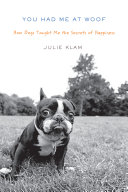
You Had Me at Woof: How Dogs Taught Me the Secrets of Happiness
"A memoir where the chaotic, joyful tutelage of rescue dogs reveals the profound architecture of a meaningful life."
- 1[object Object]
- 2[object Object]
- 3[object Object]
- 4[object Object]
- 5[object Object]
- 6[object Object]
Julie Klam's memoir begins not with a grand thesis, but with a specific, slobbering apparition: the Boston terrier Otto, who scampered into her dreams and then her waking life as a single woman in New York City. This encounter initiates a transformative journey, less about pet ownership than a form of canine apprenticeship. Klam, initially seeking companionship, finds herself enrolled in a rigorous, unplanned curriculum administered by a succession of rescued Boston terriers, each with distinct personalities and pathologies.
Through the mischievous Otto, the unexpectedly fertile Beatrice, the spirited Hank, and others, Klam's narrative unfolds as a series of lived parables. The dogs' needs—for training, veterinary care, behavioral management, and unconditional patience—impose a structure of selfless responsibility that reshapes her character. The chaos of fostering and rescue logistics becomes a forge for maturity, teaching compromise and sacrifice long before the arrival of her human child. The anecdotes are by turns uproarious and heart-wrenching, capturing the absurd realities of urban life with multiple small dogs.
The book's deeper investigation lies in how these relationships prefigure and illuminate human connection. The trust earned from a fearful dog mirrors the vulnerability required in marriage; the relentless care for a sick animal rehearses the selflessness of parenthood. Klam traces a direct line from the lessons of canine stewardship to her capacity for a fuller, more open-hearted human life, arguing that dogs are not substitutes for family but essential primers for it.
Ultimately, You Had Me at Woof transcends the niche of 'dog book' to offer a meditation on attention, instinct, and love. Its significance rests on its quiet argument that happiness is not found in self-actualization but in the committed, messy service to another being. The target audience may be dog lovers, but its legacy is a universal template for how devotion to something outside oneself—even a small, snorting, stubborn creature—can architect a soul.
The critical consensus embraces the book as a witty, heartfelt memoir that successfully blends self-deprecating humor with genuine emotional weight. Readers consistently praise its avoidance of saccharine sentimentality, finding the life lessons earned rather than preachy. A primary critique notes the narrative can feel episodic or slight to those seeking a more linear plot, but most agree its thoughtful resonance on love, loss, and growth lands powerfully, particularly for those who share the dog-lover sensibility.
- 1The book's balance of humor and heartfelt emotion, avoiding the maudlin traps of the animal memoir genre.
- 2Whether the life lessons derived from dog ownership feel naturally integrated or overly constructed for narrative purpose.
- 3Comparisons and contrasts to other popular dog memoirs like *Marley & Me*, with debates on its relative depth and uniqueness.
- 4The specificity of the Boston Terrier rescue focus and how it appeals to both niche enthusiasts and general readers.
The Art of Contrarian Trading
Carl Futia
The Crash Course
Chris Martenson

Permanent Record
Edward Snowden
The Road to Financial Freedom
Bodo Schäfer
Transformation in Christ
Dietrich Von Hildebrand
The Creative Habit
Twyla Tharp, Mark Reiter
Sapiens: A Brief History of Humankind
Yuval Noah Harari

Chip War: The Quest to Dominate the World's Most Critical Technology
Chris Miller
The Book of Basketball: The NBA According to The Sports Guy
Bill Simmons

The Almanack of Naval Ravikant
Naval Ravikant, Eric Jorgenson
The Psychology of Money: Timeless Lessons on Wealth, Greed, and Happiness
Morgan Housel

Bad Samaritans
Ha-Joon Chang