
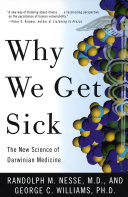
Why We Get Sick: The New Science of Darwinian Medicine
"Reveals how evolutionary mismatches, not design flaws, explain modern chronic disease and suffering."
- 1Treat symptoms as evolved defenses, not mere malfunctions. Fever, pain, and anxiety are often adaptive responses shaped by natural selection. Suppressing them without understanding their evolutionary purpose can inadvertently prolong or worsen the underlying condition.
- 2Distinguish between proximate and ultimate causation in disease. Medicine traditionally asks *how* a disease works (proximate cause). Darwinian medicine asks *why* natural selection left us vulnerable to it (ultimate cause), revealing deeper roots in evolutionary trade-offs and historical constraints.
- 3Recognize the body as a bundle of evolutionary compromises. Traits are selected for overall reproductive success, not perfect health. This explains vulnerabilities like back pain (bipedalism's trade-off) and wisdom teeth (dietary evolution outpacing anatomical change).
- 4View pathogens as engaged in a relentless co-evolutionary arms race. Bacteria and viruses evolve far faster than humans. Our immune responses and their counter-adaptations, like antibiotic resistance, are dynamic battles where temporary advantage is the only constant.
- 5Identify modern environments as sources of evolutionary mismatch. Chronic diseases like obesity and heart disease arise because our Paleolithic-era bodies are maladapted to contemporary diets, sedentary lifestyles, and unprecedented longevity, creating novel physiological stresses.
- 6Apply the lens of natural selection to mental disorders. Conditions like anxiety and depression may stem from adaptive mechanisms—like smoke alarms—that are now triggered too easily or intensely in modern contexts, rendering them pathological.
Why We Get Sick dismantles the conventional view of disease as mere mechanical breakdown. Instead, it proposes a revolutionary framework: Darwinian medicine. This paradigm argues that to truly understand illness—from cancer and heart disease to allergies and anxiety—we must ask not just how the body fails, but why natural selection, a process that shapes organisms for survival and reproduction, left us vulnerable to such failures in the first place. It shifts the inquiry from proximate biology to ultimate evolutionary causation.
The book systematically explores the core principles of this new science. It explains that many symptoms we treat as problems, such as fever, vomiting, and pain, are actually evolved defenses. These defenses represent the body's sophisticated, if sometimes crude, solutions to threats like infection or injury. The authors delve into the concept of evolutionary trade-offs, illustrating how traits beneficial for reproduction in our ancestral environment can predispose us to disease today, as seen in the trade-off between bipedal locomotion and back pain. A central theme is the relentless co-evolutionary arms race with pathogens, which explains the persistence of infectious diseases and the inevitability of antibiotic resistance.
Further chapters examine the critical idea of mismatch: our Stone Age bodies are ill-equipped for the modern world of abundant calories, sedentary habits, and environmental toxins, leading to epidemics of obesity, diabetes, and autoimmune disorders. The analysis extends to aging and genetic diseases, framed not as programming errors but as consequences of selection's diminishing power after reproductive age and the persistence of harmful genes that may have offered other advantages.
Ultimately, Why We Get Sick is a foundational text that recontextualizes all of human pathology. Its significance lies in offering clinicians, researchers, and intellectually curious readers a powerful new lens for diagnosis, treatment, and prevention. It argues that by understanding the evolutionary 'why' of sickness, we can develop more profound, effective, and compassionate medical strategies, moving beyond symptom suppression to address the deeper roots of human suffering.
The consensus hails the book as a seminal, paradigm-shifting work that fundamentally alters how one thinks about health and disease. Readers praise its intellectual rigor and the profound clarity it brings to puzzling medical phenomena. The primary critique is that the prose can feel dry and academic, more a series of compelling scientific arguments than a fluid narrative, which some find challenging despite the fascinating subject matter. It is widely regarded as essential but demanding reading.
- 1The revolutionary reconceptualization of common symptoms like fever and nausea as adaptive defenses rather than mere malfunctions.
- 2The compelling explanation for persistent human vulnerabilities, such as back pain and wisdom teeth, through the lens of evolutionary trade-offs.
- 3Debate on the book's academic tone, which some find necessary for the complex subject and others see as a barrier to accessibility.

Permanent Record
Edward Snowden

The Art of Contrarian Trading
Carl Futia

Bad Samaritans
Ha-Joon Chang
Sapiens: A Brief History of Humankind
Yuval Noah Harari
Breath: The New Science of a Lost Art
James Nestor
Breakthrough: The Quest for Life-Changing Medicines
Dr William Pao

Outliers: The Story of Success
Malcolm Gladwell

Just Listen: Discover the Secret to Getting Through to Absolutely Anyone
Mark Goulston

The Artist's Way
Julia Cameron
The Crash Course
Chris Martenson

Out of Control
Kevin Kelly

Transformation in Christ
Dietrich Von Hildebrand