
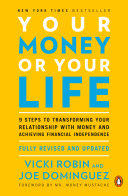
Your Money or Your Life
"Transforms money from a source of anxiety into a tool for reclaiming your time and defining a life of purpose."
- 1Calculate your real hourly wage, not your salary. Your true earnings are your salary minus all job-related costs—commuting, attire, meals—revealing the stark net value of your labor and the life energy it consumes.
- 2View money as quantified life energy. Every dollar spent represents a portion of your finite time on earth. This fundamental reframe forces a conscious evaluation of whether purchases align with your deepest values.
- 3Achieve financial independence through conscious spending. By tracking income and expenses with meticulous awareness, you can minimize waste, maximize savings, and build a capital base that liberates you from compulsory work.
- 4Cultivate contentment to break the earn-and-spend cycle. True wealth stems from appreciating what you have. The program encourages finding fulfillment outside consumerism, reducing the need for income and accelerating financial freedom.
- 5Align spending with personal values for integrity. Conscious spending is an exercise in existential alignment. Each financial decision becomes a vote for the kind of life and world you wish to inhabit.
Your Money or Your Life is not a mere personal finance manual; it is a philosophical treatise on the relationship between time, money, and fulfillment. Co-authored by Vicki Robin and the late Joe Dominguez, the book presents a radical nine-step program that challenges the foundational premise of modern work culture: that a job is simply an exchange of time for money. Instead, it posits that money is literally "life energy"—the finite hours of one's existence converted into currency. This core insight reframes financial management as a profound exercise in personal integrity and conscious living.
The methodology begins with a brutal accounting of one's true earnings. Readers are guided to calculate their "real hourly wage" by subtracting all job-related costs—commuting, professional attire, decompression activities—from their salary, then dividing by the total hours devoted to work. This reveals the stark net value of their labor. Concurrently, every cent of income and expense is tracked, not for budgeting's sake, but to cultivate a deep, mindful awareness of how life energy is being traded. The goal is to reach a state of "crossover point," where investment income covers expenses, granting financial independence.
Beyond the mechanics, the book delves into the psychology of consumption. It dissects the societal conditioning that equates spending with happiness and status, advocating for a practice of "enough." Readers are encouraged to differentiate between satisfaction derived from material possessions and the deeper contentment found in relationships, personal growth, and community. This is not a call to austere deprivation, but to purposeful allocation, where spending aligns precisely with declared values, creating a life of coherence and intention.
Since its original publication, the book has become a cornerstone of the Financial Independence, Retire Early (FIRE) movement and a timeless critique of consumer culture. Its audience extends beyond the debt-ridden to anyone feeling trapped on the work-spend treadmill. It offers a rigorous, transformative framework for anyone seeking to escape the cycle of compulsory work and reclaim their time for what they find most meaningful, making it a seminal text in the literature of purposeful living.
The consensus positions this as a transformative, almost philosophical text rather than a simple financial guide. Readers champion its core paradigm shift—viewing money as life energy—as genuinely life-altering, fostering profound mindfulness around spending and work. However, a significant contingent finds the prescribed tracking system overly rigid and tedious for modern life, and the anti-consumerist ethos can feel austere or judgmental. The book is widely acknowledged as demanding, best suited for those ready for deep systemic change, not quick tips.
- 1The practicality and tedium of the book's meticulous expense-tracking system in the digital age.
- 2Debate over the book's anti-consumerist philosophy as either liberating wisdom or overly restrictive asceticism.
- 3The relevance and application of its 'life energy' concept for achieving early financial independence (FIRE).
- 4Comparisons between older editions and the updated version, regarding timeless principles versus contemporary advice.
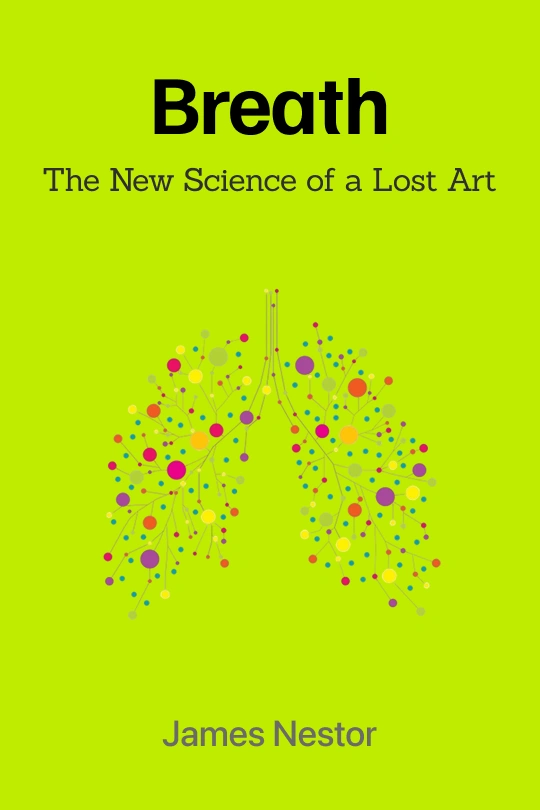
Breath: The New Science of a Lost Art
James Nestor

The Almanack of Naval Ravikant
Naval Ravikant, Eric Jorgenson

The Psychology of Money: Timeless Lessons on Wealth, Greed, and Happiness
Morgan Housel
Chip War: The Quest to Dominate the World's Most Critical Technology
Chris Miller
The Art of Contrarian Trading
Carl Futia

Permanent Record
Edward Snowden
Out of Control
Kevin Kelly
The Intelligent Investor
Benjamin Graham
The Crash Course
Chris Martenson
Sapiens: A Brief History of Humankind
Yuval Noah Harari

Just Listen: Discover the Secret to Getting Through to Absolutely Anyone
Mark Goulston
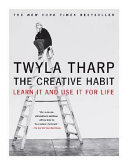
The Creative Habit
Twyla Tharp, Mark Reiter