
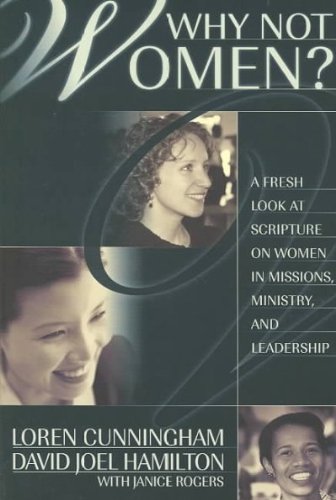
Why Not Women?: A Fresh Look at Scripture on Women in Missions, Ministry, and Leadership
"A rigorous scriptural exegesis dismantles traditional barriers, arguing for women's full equality in church leadership and mission."
- 1Exegete contested passages through original language and structure. The book's core methodology involves a meticulous, linguistically-grounded analysis of key Pauline texts (1 Corinthians 11, 14; 1 Timothy 2), revealing how traditional interpretations often rest on translational ambiguities and missed literary patterns like chiasmus.
- 2Ground the argument in scripture, not secular feminism. The thesis derives its authority from a conservative hermeneutic, intentionally distancing itself from cultural movements to demonstrate that biblical integrity itself mandates the inclusion of women in all ministry offices.
- 3Recognize the global and historical fruit of women's ministry. The argument is bolstered by examining the tangible, positive outcomes of women's leadership throughout church history and in contemporary global missions, framing their exclusion as a practical loss for the Kingdom.
- 4Shift the burden of proof to the restrictive position. The cumulative weight of the linguistic, historical, and practical evidence establishes a new paradigm: the obligation to justify exclusion now falls on complementarians, not egalitarians.
- 5Understand translation's pivotal role in doctrinal formation. Specific modern translations, like the ESV, are critiqued for perpetuating androcentric biases, highlighting how translation choices can actively shape theological boundaries rather than neutrally convey text.
Why Not Women? confronts one of the most persistent and divisive debates within modern Christianity: the role of women in ecclesiastical authority. Written from a theologically conservative standpoint, the book deliberately sidesteps the familiar trenches of culture-war rhetoric to mount a case rooted exclusively in scriptural exegesis. Its premise is that the Bible, properly understood in its linguistic and historical context, does not support the categorical exclusion of women from leadership, teaching, or missional authority.
The analytical heart of the work is a granular, chapter-by-chapter dissection of the New Testament passages most frequently cited to restrict women's roles—primarily 1 Corinthians 11, 14, and 1 Timothy 2. The authors, including founder of Youth With A Mission Loren Cunningham and biblical scholar David Joel Hamilton, employ rigorous philological analysis of the Greek text. They examine grammatical constructions, word meanings, and literary structures, such as identifying a chiasm in 1 Corinthians 14, to argue that traditional interpretations have often been flattened by translation and doctrinal presupposition. This technical study is framed not as a rebellion against orthodoxy, but as a deeper pursuit of it.
Beyond textual analysis, the book widens the lens to incorporate two compelling lines of evidence. It surveys the historical and global landscape of the church, documenting the indispensable and Spirit-empowered contributions of women in missions and ministry from the apostolic era to the present. This empirical 'fruit' is presented as a theological datum in itself. Simultaneously, it explores the profound consequences of the debate, arguing that stifling women's callings cripples the church's evangelistic reach and corrupts the relational dynamics intended for both men and women.
Ultimately, Why Not Women? is a targeted polemic for an evangelical audience skeptical of secular feminist frameworks. It seeks to move the conversation from a defensive posture about permissible exceptions to a positive, biblically saturated vision for full partnership. The book's legacy is its challenge to a significant segment of the church to reconcile its professed commitment to biblical authority with a practice that, the authors contend, may inadvertently undermine it.
The reader consensus hails this as a definitive, intellectually formidable work within evangelical egalitarian literature. It is praised for its scholarly depth, meticulous documentation, and persuasive power, particularly for those from restrictive backgrounds who find its scriptural grounding liberating. The primary critique is an isolated, dismissive comment about homosexuality in the introduction, which readers note as an unfortunate but minor distraction in an otherwise focused and transformative argument.
- 1The revelatory power of analyzing scriptural structure and original Greek, changing readers' understanding of key restrictive passages.
- 2The book's effectiveness for readers from complementarian backgrounds, providing a theologically conservative path to affirming women's leadership.
- 3Criticism of specific modern Bible translations, especially the ESV, for obscuring the original intent of the biblical text regarding gender.

Stumbling on Happiness
Daniel Gilbert

The Artist's Way
Julia Cameron

Code: The Hidden Language of Computer Hardware and Software
Charles Petzold

Out of Control
Kevin Kelly

The Crash Course
Chris Martenson

Radical Markets: Uprooting Capitalism and Democracy for a Just Society
Eric A. Posner, E. Glen Weyl

Breath: The New Science of a Lost Art
James Nestor

The Creative Habit
Twyla Tharp, Mark Reiter

The Fifth Discipline
Peter M. Senge

Bad Samaritans
Ha-Joon Chang
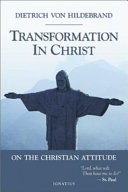
Transformation in Christ
Dietrich Von Hildebrand

Amusing Ourselves to Death: Public Discourse in the Age of Show Business
Neil Postman