
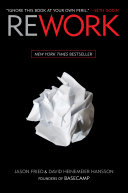
Rework
"A radical manifesto for building a sane, profitable business by doing less, ignoring convention, and starting now."
- 1Plans are guesses; execution is strategy. Detailed, long-term business plans are often obsolete upon completion. Real strategy emerges from the act of starting, making decisions, and adapting based on immediate feedback and results.
- 2Ignore the competition to find true originality. Obsessive focus on competitors leads to derivative work and reactive anxiety. True innovation comes from solving your own problems and serving your customers, not from mimicking others.
- 3Workaholism is a vice, not a virtue. Sustained overwork is a sign of poor prioritization and inefficiency, not dedication. Sustainable productivity requires rest, clear constraints, and a focus on essential outcomes over mere activity.
- 4Meetings are toxic to productivity. Most meetings are expensive, unstructured, and decision-averse. They should be treated as a last resort, replaced by clear, asynchronous written communication that respects everyone's time and focus.
- 5Launch your product when it does one thing well. Waiting for perfection or feature-completeness is procrastination. Get a simple, functional version to market immediately to start learning, earning, and iterating based on real-world use.
- 6Outside funding often costs more than it's worth. Venture capital demands growth at all costs, sacrificing control and long-term vision. A profitable, self-sustaining business built on customer revenue is a more durable and autonomous path.
- 7Hire for work ethic, not résumé pedigree. Skills can be taught, but character and intrinsic motivation cannot. Prioritize candidates who are passionate, self-directed, and a cultural fit over those with impressive but irrelevant credentials.
Rework is a polemical dismantling of the sacred cows and bloated orthodoxies of modern business culture. Authors Jason Fried and David Heinemeier Hansson, founders of the software company 37signals (now Basecamp), argue that the traditional playbook—write a formal business plan, seek venture capital, emulate competitors, and glorify the 80-hour workweek—is not just ineffective but actively harmful. They posit that this conventional wisdom creates unnecessary complexity, stifles creativity, and burns out founders before they even begin.
Instead, the book advocates for a philosophy of radical simplicity and immediacy. It champions starting small, with a product that solves a clear problem, and launching it before it feels "finished." It argues that outside investors dilute control and distort priorities, making profitability from day one a superior goal. The text systematically attacks productivity theater, declaring most meetings, paperwork, and long-term planning as wasteful rituals that protect people from the harder work of making decisions and building something tangible.
This is not a theoretical framework but a collection of actionable, counterintuitive directives. Chapters are brief and aphoristic, covering topics like why you should say "no" by default, why learning from mistakes is overrated compared to learning from successes, and why building a half-product, not a half-assed product, is the key to clarity. The prose is deliberately straightforward, rejecting corporate jargon in favor of a direct, almost confrontational tone that mirrors the book's call to stop preparing and start doing.
Rework’s enduring impact lies in its democratization of entrepreneurship. It speaks directly to solo practitioners, artists, small business owners, and employees trapped in dysfunctional corporate environments, offering permission to reject complexity and validation for building a business on their own terms. Its legacy is the empowerment of the bootstrapped, profitable, and purposefully small-scale venture as a legitimate and admirable ambition.
The consensus celebrates Rework as a vital antidote to bloated business dogma, particularly resonant for aspiring entrepreneurs and those stifled by corporate inertia. Readers consistently praise its concise, actionable format and its empowering permission to ignore conventional wisdom. The primary critique is its lack of depth and structural rigor; some find its aphoristic style repetitive and its advice overly simplistic for complex, scaled operations, dismissing it as a repackaging of the authors' blog content.
- 1The value of the book's concise, blog-like format versus its lack of detailed case studies or rigorous argumentation.
- 2Debate over whether its anti-investor, anti-growth philosophy is liberating for small businesses or dangerously limiting for scalable ventures.
- 3The practicality of dismissing all meetings and long-term planning as universally toxic in complex organizational environments.
- 4Discussion on whether the book's core ideas are timeless truths or a product of a specific tech-startup moment that has since passed.
The Creative Habit
Twyla Tharp, Mark Reiter

Code: The Hidden Language of Computer Hardware and Software
Charles Petzold

Just Listen: Discover the Secret to Getting Through to Absolutely Anyone
Mark Goulston

How to Win Friends & Influence People
Dale Carnegie

Transformation in Christ
Dietrich Von Hildebrand
The Crash Course
Chris Martenson

Out of Control
Kevin Kelly

The Intelligent Investor
Benjamin Graham

Breath: The New Science of a Lost Art
James Nestor

The Essays of Warren Buffett: Lessons for Corporate America
Lawrence A. Cunningham, Warren Buffett

Permanent Record
Edward Snowden
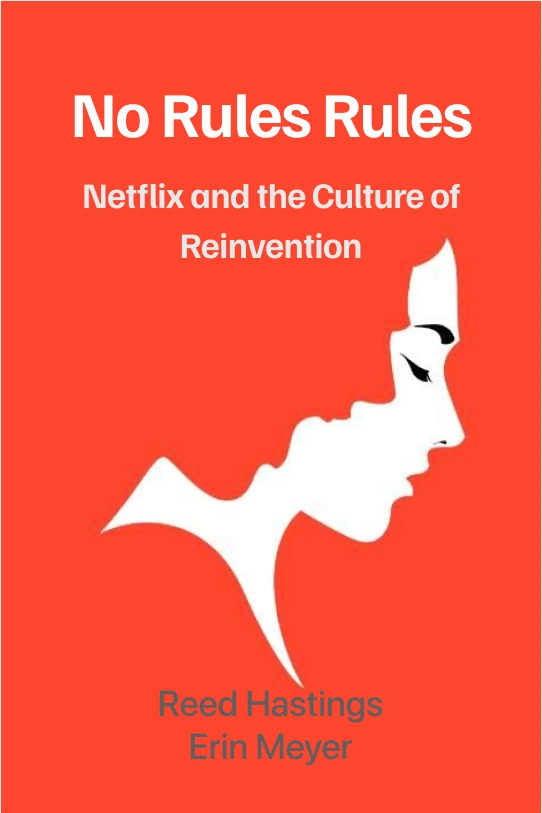
No Rules Rules: Netflix and the Culture of Reinvention
Reed Hastings, Erin Meyer