
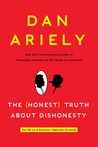
The Honest Truth About Dishonesty: How We Lie to Everyone - Especially Ourselves
"We all cheat, but only a little, to preserve our self-image as fundamentally honest people."
- 1Dishonesty is governed by irrational, not rational, forces. Cheating is not a simple cost-benefit calculation. It is driven by psychological mechanisms like self-deception and cognitive flexibility, which allow us to bend rules without triggering our internal moral alarm.
- 2Create friction to increase ethical behavior. Small interventions that make dishonesty more salient—like signing a honesty pledge at the top of a form—can significantly reduce cheating by activating moral standards before the act.
- 3Understand the 'fudge factor' that limits our cheating. People cheat just enough to benefit but not so much that they must radically alter their positive self-concept. This internal boundary explains widespread minor infractions over massive fraud.
- 4Recognize how environment and culture enable dishonesty. Organizational practices, physical distance from money, and vague rules can unintentionally pave the way for unethical behavior by making dishonesty easier to rationalize.
- 5Collaboration often amplifies, not curbs, dishonesty. Working in groups can increase cheating through social contagion and diffusion of responsibility, as individuals observe and justify minor ethical lapses in others.
- 6External reminders of morality have limited, specific effects. While priming with honor codes or religious texts can reduce cheating in the immediate moment, the effect is often temporary and does not translate to a broadly more ethical character.
In The (Honest) Truth About Dishonesty, behavioral economist Dan Ariely dismantles the comforting myth that dishonesty is primarily the domain of a few bad actors. Instead, he posits a more unsettling and universal reality: we are all cheaters, engaged in a constant, quiet negotiation with our own morality. Through a series of ingenious and often humorous experiments, Ariely investigates the circumstances under which ordinary people pad expenses, fudge test answers, and tell white lies, revealing that unethical behavior is a pervasive feature of the human condition.
Ariely’s core thesis challenges the standard rational-choice model, arguing that dishonesty is driven not by careful risk-reward analysis but by irrational psychological forces. He introduces the concept of the 'fudge factor'—the cognitive flexibility that allows us to cheat a little while still maintaining a self-image of honesty. The book meticulously explores the factors that stretch or shrink this fudge factor, from the psychological distance created by non-cash transactions to the wearing of counterfeit designer goods, which Ariely found could increase subsequent dishonest acts.
The narrative moves from the personal to the systemic, examining how individual tendencies scale into societal problems. Ariely dissects the environments that foster cheating, such as conflicts of interest in professional services and the subtle cues in corporate culture that normalize minor ethical breaches. He demonstrates how collaboration can exacerbate dishonesty through social proof and how moral reminders, like signing an honesty pledge at the beginning rather than the end of a form, can serve as a surprisingly effective, if fragile, bulwark.
Ultimately, this work is more than a catalog of our failings; it is a pragmatic guide to designing a more honest world. By mapping the psychological terrain of cheating, Ariely provides actionable insights for educators, policymakers, and managers seeking to structure environments that encourage integrity. The book’s significance lies in its shift from judging character to engineering choice architecture, offering a clear-eyed, scientifically-grounded path toward mitigating the everyday dishonesty that costs society profoundly.
The consensus celebrates Ariely’s engaging and accessible presentation of complex behavioral science, finding the experimental narratives both illuminating and entertaining. Readers consistently praise the book’s ability to challenge their self-perceptions and reveal the ubiquity of minor dishonesty. A recurring critique targets the reliance on controlled lab experiments, with some readers questioning how well these findings translate to the messier ethical dilemmas of real-world politics or finance. The overall mood is one of fascinated introspection, though a minority desire more concrete solutions for the systemic corruption the book outlines.
- 1The validity and real-world applicability of Ariely's academic experiments versus complex ethical situations.
- 2The surprising conclusion that religious priming does not make people more honest in tests.
- 3Debate over the book's anecdotal dismissal of essay mills as a serious academic problem.
- 4The concept of the 'fudge factor' and its resonance with readers' own experiences of minor cheating.
- 5Appreciation for the readable, story-driven style that makes behavioral economics accessible to a general audience.
The Creative Habit
Twyla Tharp, Mark Reiter
Stumbling on Happiness
Daniel Gilbert
The Psychology of Money: Timeless Lessons on Wealth, Greed, and Happiness
Morgan Housel
Boom: Bubbles and the End of Stagnation
Byrne Hobart
Blueprints: How mathematics shapes creativity
Marcus du Sautoy

Transformation in Christ
Dietrich Von Hildebrand
The Art of Contrarian Trading
Carl Futia
Just Listen: Discover the Secret to Getting Through to Absolutely Anyone
Mark Goulston
The Intelligent Investor
Benjamin Graham

The Artist's Way
Julia Cameron
Bad Samaritans
Ha-Joon Chang
Breath: The New Science of a Lost Art
James Nestor