
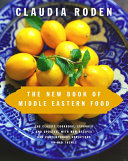
The New Book of Middle Eastern Food
"A culinary anthropology that transforms regional staples into accessible, deeply flavorful home cooking."
- 1Understand cuisine as cultural and historical expression. Recipes are not mere instructions but artifacts of migration, trade, and tradition. The book frames each dish within its social and geographical context, making cooking an act of cultural preservation.
- 2Master the foundational quartet of regional cooking styles. Distinguish between the refined rice-based cuisine of Iran, the vibrant vegetable dishes of the Arab Levant, the complex orchestration of Turkish meze and grills, and the heady, sweet-savory balance of North African tagines and couscous.
- 3Build flavor through aromatic accent pastes and condiments. The soul of a dish often lies in its *ta'liya* or *qawarma*—the fried garlic with cumin, the cinnamon and allspice blend, the preserved lemon or harissa. These define a dish's national character more than its primary ingredients.
- 4Embrace mezze as a philosophy of eating and hospitality. The meal begins not with a centerpiece but with a communal array of small, savory bites. This structure prioritizes variety, shared experience, and prolonged conversation over rapid consumption.
- 5Simplify technique without sacrificing authentic texture and taste. Traditional methods are adapted for the modern kitchen, using healthier fats and time-saving tools, while rigorously preserving the essential freshness and layered complexity that defines the cuisine.
- 6Source authenticity through now-accessible core ingredients. Essential flavors—sumac, pomegranate molasses, tahini, bulgur—have moved from specialty markets to supermarkets, democratizing the ability to achieve genuine regional character in home cooking.
Claudia Roden’s masterwork is far more than a compilation of recipes; it is a seminal work of culinary anthropology that maps the diverse and interconnected foodways of the Middle East and North Africa. First published in 1972 as a landmark introduction to a then largely unfamiliar cuisine, this expanded edition represents three decades of the author’s relentless travel, research, and refinement. Roden approaches the region’s cooking not as a static tradition but as a living, evolving expression of history, geography, and daily life, weaving personal narrative, folk tales, and social observation into a rich tapestry that contextualizes every dish.
The book’s intellectual architecture is built upon the four major culinary traditions of the region: the exquisite, rice-centric haute cuisine of Persia, where grains are adorned with meats, fruits, and nuts; the vibrant, vegetable-forward cooking of the Arab Levant (Syria, Lebanon, Jordan), celebrated for its salads and bulgur wheat preparations; the legendary complexity of Turkish cuisine, with its kebabs, savory pies, yogurt salads, and syrup-drenched pastries; and the sensually orchestrated flavors of North Africa, particularly Morocco, where sweet and hot are balanced in iconic tagines and couscous. Roden meticulously details the aromatic signatures—the fried garlic and coriander of Egypt, the sumac of Syria, the preserved lemon of Morocco—that distinguish each country’s palate.
With over 800 recipes, the volume moves systematically from the foundational mezze—a philosophy of eating embodied in small, shared plates—through robust skewered meats, savory stews, pilafs, and vegetable dishes, to conclude with syrup-soaked pastries and nut-based confections. Roden has thoughtfully updated techniques for contemporary kitchens, advocating for healthier ingredients and efficient methods without compromising the essential textures and layered flavors that define authenticity. The prose is both authoritative and evocative, treating each recipe as a story waiting to be completed in the reader’s kitchen.
The book’s enduring significance lies in its dual role as an indispensable practical guide and a profound cultural document. It demystifies a vast culinary landscape for the home cook, proving that its core ingredients are now accessible and its techniques achievable, while simultaneously arguing for the deep interconnectedness of food, memory, and identity. It is essential reading for anyone seeking to understand not just how to prepare a dish, but why it matters.
The consensus venerates this work as the definitive, encyclopedic authority on Middle Eastern cuisine, a foundational text for serious cooks and culinary scholars. Readers praise its profound cultural depth, treating recipes as historical narratives. However, a significant critique targets the book’s density and occasional lack of practical guidance; some find it better for reading than for weeknight cooking, wishing for more visual aids and streamlined instructions amidst its wealth of anthropological detail.
- 1The book's status as an essential cultural archive versus its practicality for daily kitchen use.
- 2Debates over recipe authenticity and the adaptation of traditional methods for modern, health-conscious cooks.
- 3The value of Roden's anthropological storytelling and historical context in a cookbook format.

Breakthrough: The Quest for Life-Changing Medicines
Dr William Pao

Stumbling on Happiness
Daniel Gilbert

The Intelligent Investor
Benjamin Graham
Blueprints: How mathematics shapes creativity
Marcus du Sautoy

The Psychology of Money: Timeless Lessons on Wealth, Greed, and Happiness
Morgan Housel

How to Win Friends & Influence People
Dale Carnegie

The Artist's Way
Julia Cameron
The Norwegian Method
Brad Culp

Just Listen: Discover the Secret to Getting Through to Absolutely Anyone
Mark Goulston

The Essays of Warren Buffett: Lessons for Corporate America
Lawrence A. Cunningham, Warren Buffett

Chip War: The Quest to Dominate the World's Most Critical Technology
Chris Miller
The Creative Habit
Twyla Tharp, Mark Reiter