

A Random Walk Down Wall Street
"Outperform professional money managers by embracing market efficiency and investing in low-cost index funds."
- 1[object Object]
- 2[object Object]
- 3[object Object]
- 4[object Object]
- 5[object Object]
- 6[object Object]
Burton Malkiel's seminal work dismantles the edifice of professional investment management with a simple, powerful thesis: the stock market is fundamentally efficient. In an efficient market, stock prices instantly reflect all publicly available information, making it impossible for any investor—whether a novice or a seasoned fund manager—to consistently achieve above-average returns through stock selection or market timing. This 'random walk' hypothesis suggests that the past movement of a stock's price cannot be used to predict its future direction, rendering technical analysis a futile exercise in pattern recognition.
Malkiel systematically eviscerates the tools of the active trader, from technical charting to fundamental analysis, demonstrating through exhaustive historical data and academic research their collective failure to beat a simple buy-and-hold strategy. He then turns his critique to the mutual fund industry, revealing how high management fees, turnover costs, and sales loads doom the vast majority of actively managed funds to underperform their benchmark indices. The dot-com bubble serves as a contemporary object lesson in the destructive power of speculative mania and the perils of ignoring valuation.
The book's constructive core is its advocacy for the passive index fund. Malkiel argues that the most rational path for the individual investor is to own the entire market through low-cost, broad-based index funds or ETFs, thereby guaranteeing market-matching returns at minimal expense. He provides a practical, life-cycle framework for asset allocation, guiding readers on how to adjust the balance between stocks, bonds, and other assets from early career through retirement.
More than an investment manual, 'A Random Walk Down Wall Street' is a philosophical manifesto for rational investing. It empowers the individual by demystifying Wall Street's jargon-laden complexity and arming them with evidence-based principles. Its enduring legacy is its transformation of the index fund from a curious academic proposition into the default, intelligent choice for a generation of investors seeking financial security without the folly of trying to outguess the crowd.
The reader consensus elevates this book to canonical status for personal finance, praising its rigorous, evidence-based demolition of active investing myths. Readers universally champion its central prescription—low-cost index fund investing—as transformative and liberating. The primary critique is not of its thesis but of its exhaustive detail; some find the extensive historical and technical explanations dense, suggesting it is a comprehensive textbook rather than a quick-start guide, though most consider this depth a virtue.
- 1The book's definitive argument for index funds over actively managed mutual funds and individual stock picking.
- 2Debate over the book's length and detail versus shorter primers that arrive at the same core conclusion.
- 3Skepticism towards financial advisors, framed as costly underperformers compared to a simple self-managed portfolio.
- 4The psychological discussion of investor self-deception in selectively remembering winning stocks while forgetting losses.

Breath: The New Science of a Lost Art
James Nestor

The Norwegian Method
Brad Culp

Code: The Hidden Language of Computer Hardware and Software
Charles Petzold
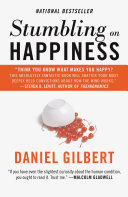
Stumbling on Happiness
Daniel Gilbert
Bad Samaritans
Ha-Joon Chang

Breakthrough: The Quest for Life-Changing Medicines
Dr William Pao

The Psychology of Money: Timeless Lessons on Wealth, Greed, and Happiness
Morgan Housel
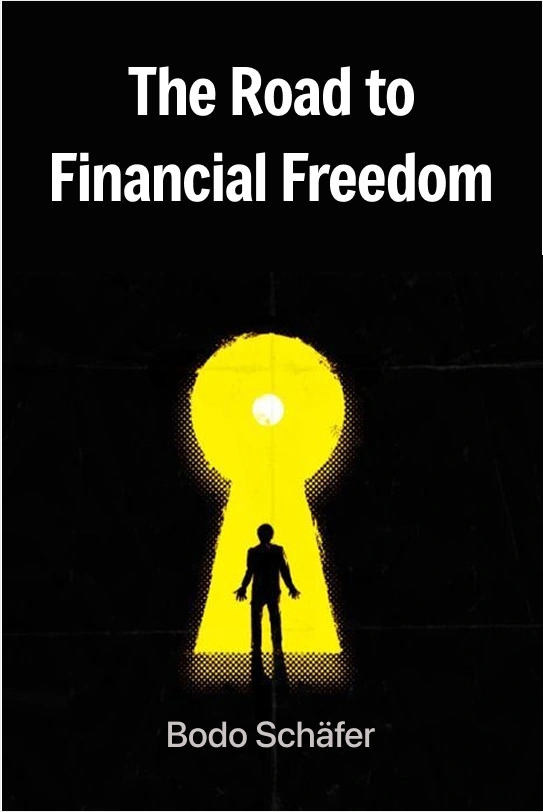
The Road to Financial Freedom
Bodo Schäfer
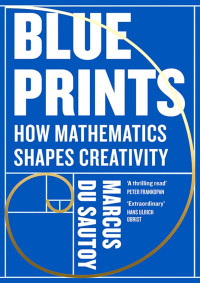
Blueprints: How mathematics shapes creativity
Marcus du Sautoy
The Essays of Warren Buffett: Lessons for Corporate America
Lawrence A. Cunningham, Warren Buffett

The Almanack of Naval Ravikant
Naval Ravikant, Eric Jorgenson

Just Listen: Discover the Secret to Getting Through to Absolutely Anyone
Mark Goulston