

The Facebook Effect: The Inside Story of the Company That Is Connecting the World
"A definitive chronicle of how a relentless focus on connection and openness built a social utility that reshaped global identity and communication."
- 1Treat social networks as communication utilities, not media destinations. Facebook's foundational strategy prioritized facilitating user connections and information flow over retaining eyeballs on its own pages. This utility mindset, which welcomes outbound links, was crucial to its viral growth and user trust.
- 2Prioritize relentless growth and market dominance over immediate profits. Mark Zuckerberg's unwavering vision insisted that scale and ubiquity were prerequisites for impact and revenue. This long-term gamble, often frustrating to investors, enabled Facebook to achieve the network effects that made it indispensable.
- 3Architect for a future of radical transparency and open identity. The company operates on a philosophical conviction that an open society, where actions are visible to one's social graph, inherently promotes honesty and better behavior. This idealism directly informs its often-controversial product decisions around privacy.
- 4Leverage exclusive insider access to build narrative authority. Kirkpatrick's deep cooperation with Zuckerberg and key executives provides an authoritative, company-sanctioned origin story. This access transforms the book from an external observation into the semi-official account of Facebook's early ethos and internal logic.
- 5Understand how a platform's design shapes social life and identity. The book traces how features like the News Feed and the Like button did not merely add functions but actively rewired social interactions, marketing, political organizing, and individuals' conscious curation of their own digital selves.
David Kirkpatrick's The Facebook Effect stands as the seminal journalistic history of the social network's tumultuous and world-altering first decade. With unprecedented access to Mark Zuckerberg and his inner circle, Kirkpatrick chronicles the company's evolution from a Harvard dorm-room project into a global behemoth, framing it not as a mere website but as a deliberate and disruptive social experiment.
The narrative meticulously reconstructs the key decisions, conflicts, and cultural shifts that defined Facebook's ascent. It details Zuckerberg's steadfast, often controversial, philosophy of radical transparency and his strategic insistence on growth over revenue—a stance that repeatedly clashed with investors and co-founders. Kirkpatrick explores pivotal moments: the legal battles over ownership, the fraught acquisitions of competitors, and the intentional design choices, like the introduction of the News Feed, that sparked user outrage but ultimately cemented engagement.
Beyond internal corporate drama, the book examines the profound and often unintended consequences of Facebook's architecture. It documents how the platform became an essential tool for political mobilization, from U.S. presidential campaigns to protests in Iran and Colombia, while simultaneously transforming marketing, media, and the very concept of personal identity. The work grapples with the central tension between Zuckerberg's utopian vision of an open world and the escalating privacy concerns it ignited.
Ultimately, this is less a business case study and more a portrait of a generation-defining institution and its enigmatic founder. It is essential reading for anyone seeking to understand the forces that reshaped the early 21st century, offering a crucial baseline for debates about technology, power, and society that have only intensified since its publication.
Readers broadly acclaim the book as the definitive, insider account of Facebook's formative years, essential for entrepreneurs and tech observers. The deep access to Zuckerberg is praised for revealing a surprisingly principled, philosophical vision behind the company's growth. However, a significant critique centers on the narrative's perceived proximity to its subject; some find it overly sympathetic, glossing over deeper ethical critiques of Facebook's privacy practices and societal impact in favor of its founding mythology.
- 1The revelation of Mark Zuckerberg's coherent long-term philosophy and idealism, contrasting with his public persona.
- 2Debate over the book's perspective as an authorized history versus an objective critical journalism.
- 3Analysis of Facebook's strategic pivot from a social network to a fundamental communication utility.
- 4The ethical and societal implications of the 'radical transparency' vision championed by Zuckerberg.

The Book of Basketball: The NBA According to The Sports Guy
Bill Simmons
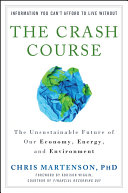
The Crash Course
Chris Martenson
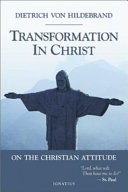
Transformation in Christ
Dietrich Von Hildebrand

Sapiens: A Brief History of Humankind
Yuval Noah Harari

The Intelligent Investor
Benjamin Graham

Vacuum Diagrams (Xeelee Sequence, #5)
Stephen Baxter

The Creative Habit
Twyla Tharp, Mark Reiter

The Artist's Way
Julia Cameron

Breath: The New Science of a Lost Art
James Nestor

Code: The Hidden Language of Computer Hardware and Software
Charles Petzold

Chip War: The Quest to Dominate the World's Most Critical Technology
Chris Miller

Out of Control
Kevin Kelly