
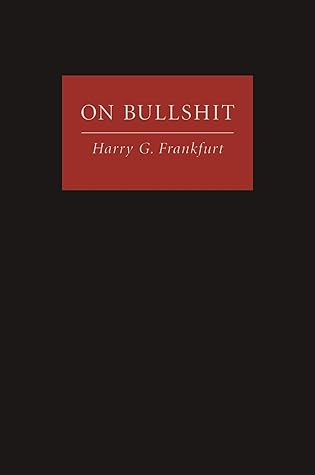
On Bullshit
"It dissects the pervasive indifference to truth that corrodes discourse more insidiously than outright lies."
Nook Talks
- 1Distinguish bullshit from lying by its indifference to truth. The liar deliberately subverts a known truth, while the bullshitter operates without any regard for truth or falsity. This fundamental distinction reveals bullshit's unique threat to coherent communication.
- 2Recognize bullshit as a greater enemy of truth than lies. Because liars must acknowledge truth to oppose it, they remain within its epistemic framework. Bullshit, by ignoring truth's very relevance, erodes the foundation for any shared reality.
- 3Identify bullshit by its intent to impress rather than inform. Bullshit is a performance of the self, designed to convey a certain impression or advance an agenda. Its content is secondary to its function as a tool of personal or rhetorical positioning.
- 4Understand the social and psychological functions of bullshit. Bullshit often serves as social lubrication, a means to avoid difficult truths, or a shortcut to perceived authority. Its proliferation signals a cultural retreat from rigorous truth-seeking.
- 5Cultivate a conscientious aversion to bullshit in yourself. Chronic bullshitting corrupts the practitioner's own relationship with truth, degrading their capacity for authentic thought. Vigilance against it is an ethical and intellectual imperative.
In a culture saturated with empty rhetoric, political spin, and intellectual posturing, Harry G. Frankfurt’s seminal philosophical essay "On Bullshit" emerges as a precise and urgent intervention. Frankfurt identifies a pervasive yet neglected feature of modern life: an overwhelming abundance of communication that is unconcerned with truth. Unlike traditional philosophical inquiries into falsehood, this work tackles the more insidious phenomenon where the very standard of truth is dismissed as irrelevant.
Frankfurt proceeds with analytical rigor, first distinguishing bullshit from its conceptual neighbor, the lie. The liar, he argues, must know the truth to deliberately distort it, thus remaining paradoxically beholden to truth’s authority. The bullshitter, in stark contrast, is not engaged in a project of misrepresentation but of impression management. His speech is unmoored from a concern for how things truly are; his aim is to shape perceptions, evoke a response, or project an image. This renders bullshit a distinct and potentially more dangerous form of miscommunication.
The essay explores the ontology and etymology of bullshit, considering related terms like "humbug" and examining everyday instances. Frankfurt suggests that bullshit arises not necessarily from malice but often from a careless or opportunistic relationship with language. In contexts where the primary goal is persuasion, self-aggrandizement, or filling silence, truth becomes a dispensable constraint. This analysis provides a framework for understanding everything from advertising puffery to political evasion.
"On Bullshit" transcends its modest length to offer a profound commentary on epistemic responsibility. Its lasting impact lies in providing readers with the philosophical vocabulary to diagnose a ubiquitous social toxin. The book is essential reading for anyone seeking to navigate contemporary discourse with clarity, serving as both a shield against manipulation and a mirror for one’s own communicative habits.
Readers widely praise the essay's prescient and clarifying core thesis, finding its distinction between lying and bullshit intellectually liberating and directly applicable to modern politics and media. The primary critique targets its brevity and academic tone; some find its philosophical exposition thin or unsatisfying, wishing for a more expanded analysis of bullshit's social mechanisms. Despite this, it is consistently deemed a vital, timely, and thought-provoking read.
- 1The book's direct relevance to understanding modern political discourse, particularly in the era of Donald Trump.
- 2Debates over whether the philosophical analysis is profound or overly simplistic and academically lightweight.
- 3Frustration with the essay's short length, with readers split on whether it is succinct or underdeveloped.
- 4The utility of the core liar-versus-bullshitter distinction as a practical tool for parsing daily communication.

The Intelligent Investor
Benjamin Graham

Amusing Ourselves to Death: Public Discourse in the Age of Show Business
Neil Postman

Code: The Hidden Language of Computer Hardware and Software
Charles Petzold
The Art of Contrarian Trading
Carl Futia

The Almanack of Naval Ravikant
Naval Ravikant, Eric Jorgenson
The Essays of Warren Buffett: Lessons for Corporate America
Lawrence A. Cunningham, Warren Buffett

Just Listen: Discover the Secret to Getting Through to Absolutely Anyone
Mark Goulston
The Creative Habit
Twyla Tharp, Mark Reiter
The Psychology of Money: Timeless Lessons on Wealth, Greed, and Happiness
Morgan Housel
The Crash Course
Chris Martenson
Radical Markets: Uprooting Capitalism and Democracy for a Just Society
Eric A. Posner, E. Glen Weyl

Permanent Record
Edward Snowden