
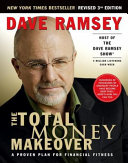
The Total Money Makeover: A Proven Plan for Financial Fitness
"A behavioral reset that replaces financial anxiety with disciplined action, freeing you from debt's psychological and practical shackles."
- 1[object Object]
- 2[object Object]
- 3[object Object]
- 4[object Object]
- 5[object Object]
- 6[object Object]
Dave Ramsey’s The Total Money Makeover is less a technical finance manual and more a polemical intervention into the American psyche. It confronts the collective delusions of the “American Dream”—the pervasive belief that debt is a normal tool and that material signifiers equate to success—arguing that these myths are the root cause of widespread financial anxiety and insolvency. The book positions personal finance not as a matter of complex investment strategies, but as a straightforward behavioral discipline accessible to anyone willing to follow its rules.
Ramsey’s methodology is built on his iconic “Seven Baby Steps,” a sequential plan that begins with saving a $1,000 starter emergency fund and culminates in building wealth and giving generously. The core of the debt-elimination strategy is the “debt snowball,” a behavioral tactic where debts are listed from smallest to largest balance. By focusing all extra resources on the smallest debt first, the individual experiences the psychological victory of quickly closing an account, which generates momentum to attack the next, larger debt. This process is supported by a mandate to live on a rigorous, zero-based budget and to cease all retirement investing temporarily to funnel every available dollar toward debt freedom.
The plan’s radicalism lies in its absolute prohibition on debt, including mortgages once the later steps are achieved, and its rejection of credit scores as a measure of financial health. Ramsey supplements his directives with numerous testimonials from individuals and families who have followed the plan, serving as proof of concept and emotional motivation. These stories illustrate the transformation from being controlled by monthly payments to achieving what Ramsey terms “financial peace.”
The Total Money Makeover targets individuals feeling overwhelmed by consumer debt, living paycheck to paycheck, or simply lacking a coherent financial system. Its legacy is that of a cultural phenomenon, providing a clear, actionable script for financial recovery that prioritizes behavioral change and psychological wins over mathematical optimization, resonating deeply with those for whom traditional financial advice has failed.
The consensus celebrates the book as a transformative, behavior-focused catalyst for those drowning in debt, praising its actionable steps and psychological motivation. Critics, however, find its tone dogmatic and its blanket condemnation of all debt—including strategically beneficial low-interest debt—to be financially simplistic. The “debt snowball” method is both its most lauded feature for building momentum and its most debated flaw for ignoring interest rates.
- 1The psychological efficacy of the 'debt snowball' method versus the mathematical superiority of the 'debt avalanche' approach.
- 2Debate over the author's absolutist stance against all debt, including mortgages and student loans, as unrealistic or essential.
- 3The motivational power of the book's success stories versus the perceived harshness or judgmental tone of the writing.
- 4Practicality of the initial $1,000 emergency fund in the face of modern financial crises and cost of living.

How to Win Friends & Influence People
Dale Carnegie
The Creative Habit
Twyla Tharp, Mark Reiter

The Intelligent Investor
Benjamin Graham
The Art of Contrarian Trading
Carl Futia

Just Listen: Discover the Secret to Getting Through to Absolutely Anyone
Mark Goulston
The Norwegian Method
Brad Culp

Chip War: The Quest to Dominate the World's Most Critical Technology
Chris Miller
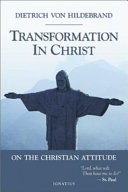
Transformation in Christ
Dietrich Von Hildebrand

Breakthrough: The Quest for Life-Changing Medicines
Dr William Pao
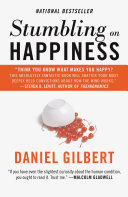
Stumbling on Happiness
Daniel Gilbert

The Psychology of Money: Timeless Lessons on Wealth, Greed, and Happiness
Morgan Housel

The Road to Financial Freedom
Bodo Schäfer