

Man's Search for Ultimate Meaning
"Transcending suffering requires discovering a purpose that withstands even the most brutal existential circumstances."
Nook Talks
- 1[object Object]
- 2[object Object]
- 3[object Object]
- 4[object Object]
- 5[object Object]
In "Man's Search for Ultimate Meaning," Viktor Frankl moves beyond the harrowing personal testimony of his concentration camp survival to articulate the philosophical and psychological foundations of logotherapy. This work represents his mature thought, systematically exploring the human capacity to find meaning as the central motivational force in life. Frankl contends that the primary drive is not the Freudian pursuit of pleasure nor the Adlerian will to power, but the "will to meaning"—a fundamental need to see purpose and value in one's existence.
Frankl delineates three primary avenues through which individuals can discover this meaning: by creating a work or doing a deed; by experiencing something or encountering someone (namely, through love); and by the attitude we take toward unavoidable suffering. It is this last avenue that forms the book's profound core. He argues that when faced with an unalterable fate—such as terminal illness, profound loss, or in his own case, the horrors of the camps—the last of human freedoms is the ability to choose one's attitude. This transformative stance can turn personal tragedy into a triumph, embedding suffering with dignity and purpose.
The book also engages in a critical dialogue with reductionist psychology, particularly Freudian psychoanalysis. Frankl introduces the concept of the "noetic" dimension, a spiritual unconscious that exists alongside the instinctual one. This dimension is the seat of conscience, creativity, and love, and it is here that individuals intuitively apprehend meaning. He illustrates his arguments with clinical case studies, demonstrating how a lack of meaning manifests as existential frustration, leading to aggression, addiction, and depression.
"Man's Search for Ultimate Meaning" is less a memoir and more a rigorous treatise, targeting readers interested in existential philosophy, psychotherapy, and the fundamental questions of human purpose. Its legacy lies in shifting the therapeutic focus from introspection of the past to a proactive search for future meaning, establishing Frankl as a pivotal figure who bridged clinical practice with a profound, humanistic worldview.
Readers regard this as a profound but demanding philosophical sequel to Frankl's more narrative-driven masterwork. It is celebrated for deepening the theoretical underpinnings of logotherapy, though its abstract and academic tone is noted as less immediately accessible than its predecessor. The consensus holds that it is essential reading for those already grounded in psychology or philosophy, offering transformative insights for the prepared mind.
- 1The necessity of prior psychological and philosophical knowledge to fully grasp the book's dense theoretical arguments.
- 2The comparative depth and accessibility between this sequel and the more personal, narrative-driven 'Man's Search for Meaning'.
- 3The power of Frankl's central teaching on finding meaning through one's attitude toward unavoidable suffering.
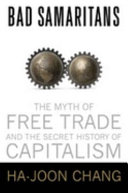
Bad Samaritans
Ha-Joon Chang

The Psychology of Money: Timeless Lessons on Wealth, Greed, and Happiness
Morgan Housel

Chip War: The Quest to Dominate the World's Most Critical Technology
Chris Miller
Boom: Bubbles and the End of Stagnation
Byrne Hobart

How to Win Friends & Influence People
Dale Carnegie

Just Listen: Discover the Secret to Getting Through to Absolutely Anyone
Mark Goulston
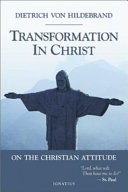
Transformation in Christ
Dietrich Von Hildebrand
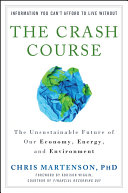
The Crash Course
Chris Martenson
Sapiens: A Brief History of Humankind
Yuval Noah Harari
The Essays of Warren Buffett: Lessons for Corporate America
Lawrence A. Cunningham, Warren Buffett

Out of Control
Kevin Kelly

Stumbling on Happiness
Daniel Gilbert