
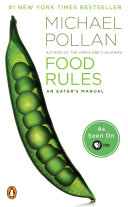
Food Rules
"Reclaim eating from industrial complexity with sixty-four timeless, actionable principles for daily nourishment."
- 1Define real food by its recognizability to your ancestors. Edible substances processed beyond historical recognition often sacrifice nutrition for shelf life and profit. This rule serves as a primary filter against hyper-processed industrial food products.
- 2Prioritize plants and understand ethical meat consumption. A diet centered on diverse vegetables and fruits provides foundational health. When eating animals, their own diet and living conditions directly impact the nutritional quality and ethical footprint of the meat.
- 3Cultivate mindful eating habits over obsessive calorie counting. Slowing down, using smaller plates, and savoring meals align consumption with biological satiety signals. This practice naturally regulates quantity by shifting focus from fuel to experience.
- 4Navigate the supermarket by strategically avoiding its center. The perimeter typically houses fresh, whole foods—produce, dairy, meat—while the interior aisles are dominated by processed, packaged commodities. This spatial strategy simplifies healthy shopping.
- 5Cook more to transform your relationship with junk food. The labor involved in preparing treats like fries or pastries from scratch naturally limits their frequency, recontextualizing them as occasional celebrations rather than daily conveniences.
- 6View food culture as a repository of accumulated wisdom. Traditional eating patterns across cultures have converged on similar principles, suggesting a deep, time-tested logic that often surpasses ephemeral nutritional science fads.
- 7Spend more on better food to ultimately eat less. Higher quality, more flavorful food satisfies more profoundly with smaller quantities. This investment prioritizes nutrient density and pleasure over cheap caloric abundance.
- 8Embrace pragmatic flexibility rather than dietary dogma. The final rule sanctions occasional indulgences, acknowledging that perfect adherence is less sustainable than a consistent, principled framework that allows for life's exceptions.
In an era paralyzed by nutritional complexity and conflicting dietary advice, Michael Pollan's Food Rules: An Eater's Manual offers a radical return to simplicity. The book distills the profound question "What should I eat?" into a deceptively straightforward, tripartite manifesto: "Eat food. Not too much. Mostly plants." This core philosophy serves as a direct rebuttal to the industrialized food system and the health anxieties it generates, proposing not another restrictive diet but a set of durable eating principles.
Pollan elaborates this philosophy through sixty-four concise, memorable rules, each presented on a single page with a brief, witty explanation. The rules in the "Eat Food" section provide practical heuristics for distinguishing whole foods from processed "edible food-like substances," such as avoiding products with unpronounceable ingredients or those advertised on television. The "Mostly Plants" segment celebrates dietary diversity from the plant kingdom while offering guidance for conscientious omnivory, emphasizing the quality and origins of animal products.
The "Not Too Much" portion addresses the manners and psychology of eating rather than mere quantity, with rules advocating for smaller plates, slower meals, and the conscious enjoyment of food as a cultural activity rather than a hurried act of refueling. Pollan draws from a wide array of sources, including folk wisdom, cultural traditions, and common sense, demonstrating how disparate societies have independently arrived at similar nutritional truths over centuries.
More than a manual, the book is a cultural intervention. It targets anyone bewildered by nutritional science headlines, offering an empowering framework that transfers authority from external experts back to the eater. Its enduring significance lies in its ability to translate the complex findings of Pollan's deeper investigative works into actionable, daily wisdom, making it a timeless reference for cultivating a sane and healthy relationship with food.
The consensus celebrates the book's brilliant distillation of complex food philosophy into accessible, memorable rules. Readers universally praise its clarity, common-sense approach, and practical utility as a daily guide, particularly for grocery shopping. The primary critique is its brevity and perceived lack of new information for those already familiar with Pollan's previous works, with some finding the rules overly simplistic. It is overwhelmingly viewed as a perfect gateway or reminder, not a detailed nutritional treatise.
- 1The transformative power and elegant simplicity of the core mantra: 'Eat food. Not too much. Mostly plants.'
- 2The practical utility of specific rules for navigating supermarkets and identifying processed foods.
- 3Debate over the book's value for newcomers versus those already versed in Pollan's broader philosophy.
- 4Appreciation for the book's format—concise, rule-a-page design—as ideal for quick reference and retention.
Transformation in Christ
Dietrich Von Hildebrand

How to Win Friends & Influence People
Dale Carnegie
Blueprints: How mathematics shapes creativity
Marcus du Sautoy
Breath: The New Science of a Lost Art
James Nestor

The Road to Financial Freedom
Bodo Schäfer
The Essays of Warren Buffett: Lessons for Corporate America
Lawrence A. Cunningham, Warren Buffett
Just Listen: Discover the Secret to Getting Through to Absolutely Anyone
Mark Goulston
Boom: Bubbles and the End of Stagnation
Byrne Hobart

Out of Control
Kevin Kelly
The Norwegian Method
Brad Culp
The Creative Habit
Twyla Tharp, Mark Reiter

Breakthrough: The Quest for Life-Changing Medicines
Dr William Pao