

First, Break All the Rules: What the World's Greatest Managers Do Differently
"Exceptional management requires rejecting conventional wisdom to cultivate innate talent, not fixating on weaknesses."
Nook Talks
- 1[object Object]
- 2[object Object]
- 3[object Object]
- 4[object Object]
- 5[object Object]
- 6[object Object]
Drawing from Gallup's unprecedented study of over 80,000 managers, Marcus Buckingham and Curt Coffman dismantle the orthodoxies of modern management to reveal the counterintuitive practices of the world's most effective leaders. The book posits that these exemplary figures share a common trait: they systematically ignore conventional wisdom, forging a people-centric philosophy that prioritizes individual talent over standardized processes.
At the heart of their argument is the radical premise that human potential is not infinitely malleable. The core responsibility of a manager, therefore, shifts from transforming people to identifying and deploying their innate talents. The authors introduce the twelve questions—the "Q12"—that serve as a robust empirical measure of a strong workplace, focusing on elements like clear expectations, proper tools, and opportunities to do what one does best daily. This framework moves beyond satisfaction to measure the key elements that drive productivity and retention.
The book meticulously outlines four key management roles: selecting for talent, defining the right outcomes, focusing on strengths, and finding the right fit for further development. It argues against the wastefulness of trying to correct weaknesses, advocating instead for a system where employees are guided into roles that align with their natural patterns of thought, feeling, and behavior. This strengths-based approach is presented not as a soft ideal but as a hard-nosed strategy for competitive advantage.
First, Break All the Rules established a new vocabulary for organizational effectiveness, influencing a generation of leaders and forming the bedrock of the modern strengths movement. Its enduring relevance lies in its data-driven challenge to industrial-era management, offering a pragmatic and humanistic blueprint for unlocking discretionary effort and building high-performance teams in any industry.
The consensus celebrates the book's paradigm-shifting, data-backed focus on strengths over weaknesses, finding it liberating and profoundly practical for both new and experienced managers. Critics, however, note a repetitive structure and argue that its core insights, now widely absorbed into mainstream business thought, can feel less revolutionary to contemporary readers. The central philosophy is universally endorsed, even as some find the presentation overly drawn out.
- 1The revolutionary impact of focusing on employee strengths rather than attempting to fix their weaknesses.
- 2The practical utility and lasting relevance of Gallup's twelve-question framework for measuring team engagement.
- 3Debate on whether the book's core ideas remain groundbreaking or have become standard management practice over time.

Chip War: The Quest to Dominate the World's Most Critical Technology
Chris Miller

The Fifth Discipline
Peter M. Senge

Breath: The New Science of a Lost Art
James Nestor

Sapiens: A Brief History of Humankind
Yuval Noah Harari

How to Win Friends & Influence People
Dale Carnegie
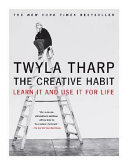
The Creative Habit
Twyla Tharp, Mark Reiter

Transformation in Christ
Dietrich Von Hildebrand

The Almanack of Naval Ravikant
Naval Ravikant, Eric Jorgenson

Permanent Record
Edward Snowden
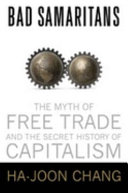
Bad Samaritans
Ha-Joon Chang

The Road to Financial Freedom
Bodo Schäfer

No Rules Rules: Netflix and the Culture of Reinvention
Reed Hastings, Erin Meyer