
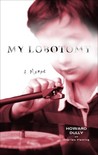
My Lobotomy
"A man's decades-long quest to understand why his childhood was stolen by a barbaric psychiatric procedure."
- 1Medical authority can mask profound ethical malpractice. The book exposes how a respected physician's radical theories, backed by professional stature, enabled the irreversible mutilation of vulnerable patients, particularly children, under the guise of treatment.
- 2Familial complicity is often the engine of personal tragedy. Dully's narrative reveals how a toxic stepmother's animosity and a father's passive compliance converged to sanction a catastrophic violation, highlighting the destructive power of domestic dysfunction.
- 3The search for 'why' is fundamental to reclaiming a stolen self. Dully's adult stability was contingent not on forgetting, but on a forensic excavation of his past, demonstrating that understanding the origin of trauma is a necessary step toward integration and peace.
- 4Institutional archives hold the cold, clinical truth of personal ruin. The discovery of Freeman's meticulous, emotionless case notes provided Dully with the incontrovertible evidence of his own objectification, transforming personal memory into documented historical fact.
- 5Redemption is forged through narrative reconstruction. By meticulously assembling and sharing his story, Dully transforms from a passive victim of medical history into an active author of his own identity, achieving a form of post-traumatic sovereignty.
My Lobotomy is Howard Dully's harrowing memoir and investigative reckoning with one of the twentieth century's most notorious medical atrocities: the transorbital or 'ice pick' lobotomy. In 1960, at the age of twelve, Dully became the youngest patient of Dr. Walter Freeman, the traveling evangelist of psychosurgery who performed the crude, minutes-long procedure in his office, often to catastrophic effect. The book is not merely a personal history but a dual narrative, chronicling both the immediate aftermath of the lobotomy and Dully's dogged, middle-aged quest to uncover the medical and familial motivations behind it.
Dully reconstructs a childhood marked by profound maternal loss and the subsequent arrival of a stepmother, Lou, whose relentless hostility framed his normal boyish behavior as pathological. The core of the narrative follows his pilgrimage through the wreckage of his post-operative life—decades spent shuttling between mental institutions, jails, and alcoholism—before finding stability. This hard-won equilibrium propels his central mission: to confront the surviving architect of his ruin, his father Rodney, and to unearth Freeman's clinical records, which were donated to a university archive.
The investigation leads him to a community of fellow lobotomy survivors and to Freeman's own son, painting a portrait of a doctor driven by messianic zeal rather than scientific rigor. The discovery of his own case file is a pivotal moment, revealing the chillingly casual clinical language that justified the destruction of a child's frontal lobes based on a stepmother's complaints and a father's acquiescence.
Ultimately, the book serves as a crucial document in the history of psychiatry, exposing the dangerous confluence of medical hubris, societal desperation for quick fixes, and familial failure. It transcends mere victim testimony to become a profound meditation on memory, identity, and the relentless human need for answers. Dully's story is targeted at readers of narrative nonfiction, medical history, and trauma memoirs, standing as a permanent indictment of a medical profession that failed its most fundamental duty: first, do no harm.
Readers are unanimously gripped by the narrative's raw, tragic power and Dully's remarkable resilience, describing it as a devastating yet essential read. The primary praise centers on the book's success as both a deeply personal memoir and a shocking exposé of medical ethics. A consistent critique, however, notes that the prose itself is straightforward and journalistic, lacking the literary polish some expect from the genre, which can make the horrific events feel reported rather than fully evoked. The story's momentum, driven by the central mystery of 'why,' is universally acknowledged as compelling.
- 1The chilling normalcy of Howard's boyhood behavior versus his stepmother's pathological portrayal of him as a candidate for lobotomy.
- 2The ethical catastrophe of Dr. Freeman's widespread lobotomy practice and his enduring, controversial legacy in psychiatry.
- 3The profound failure of Howard's father, Rodney, to protect his son and the emotional impact of their later confrontation.
- 4The role of NPR's radio documentary in catalyzing Howard's search and bringing his story to a national audience.
The Book of Basketball: The NBA According to The Sports Guy
Bill Simmons
The Psychology of Money: Timeless Lessons on Wealth, Greed, and Happiness
Morgan Housel
Out of Control
Kevin Kelly
Code: The Hidden Language of Computer Hardware and Software
Charles Petzold
The Crash Course
Chris Martenson
The Lessons of History
Will Durant
The Road to Financial Freedom
Bodo Schäfer
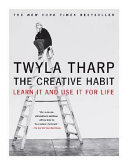
The Creative Habit
Twyla Tharp, Mark Reiter

Permanent Record
Edward Snowden
Just Listen: Discover the Secret to Getting Through to Absolutely Anyone
Mark Goulston
Breath: The New Science of a Lost Art
James Nestor
The Almanack of Naval Ravikant
Naval Ravikant, Eric Jorgenson