
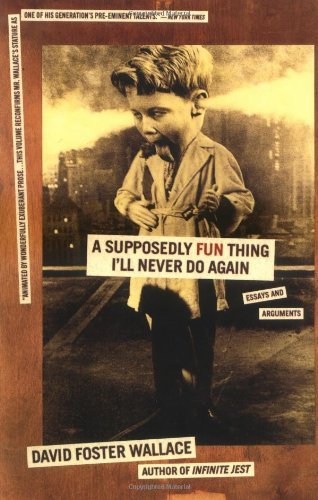
A Supposedly Fun Thing I'll Never Do Again: Essays and Arguments
"A hilarious and devastating autopsy of American pleasure, revealing the quiet despair beneath our mass entertainments."
Nook Talks
- 1Interrogate the manufactured nature of luxury and escape. The book dissects how commercialized leisure, from cruise ships to state fairs, sells an experience of freedom that is, in reality, a scripted and isolating performance, creating anxiety instead of alleviating it.
- 2Embrace maximalist prose to capture contemporary consciousness. Wallace's signature style—dense with footnotes, digressions, and technical precision—is not mere ornament but a philosophical tool to mirror the overwhelming noise and complexity of modern information and sensation.
- 3Find the profound lurking within the seemingly trivial. The essays operate on the principle that deep cultural truths are embedded in everyday phenomena, whether television, tennis, or fairground rides, demanding a patient and curious scrutiny of the ordinary.
- 4Recognize irony as both a shield and a prison. While wielding irony masterfully, the work simultaneously critiques it as a default cultural posture that can corrode genuine connection and meaning, searching for a path to sincere engagement.
- 5Understand the artist's lonely, obsessive gaze. Through profiles of figures like David Lynch, Wallace explores the creative mind as one committed to an almost pathological authenticity, rendering familiar worlds strange and unsettling in pursuit of truth.
- 6Confront the existential dread of pure comfort. The titular essay argues that the total eradication of hassle and want aboard a luxury cruise does not bring bliss but a terrifying confrontation with the void and the fragility of the self.
David Foster Wallace’s 1997 essay collection stands as a landmark work of literary nonfiction, capturing the peculiar anxieties of late-20th-century America through a series of deep, often uproarious cultural dissections. The book operates as a unified field theory of Wallace’s preoccupations, applying his hyper-observant, philosophically rigorous, and self-conscious style to subjects ranging from the spectacle of the Illinois State Fair to the hermetic genius of filmmaker David Lynch, from the technical beauty of professional tennis to the soul-stirring blandness of television.
Each essay is an expedition. In "Getting Away from Already Being Pretty Much Away from It All," Wallace immerses himself in the heartland pageantry of a state fair, parsing the complex dynamics of nostalgia, community, and sensory overload. "Tennis Player Michael Joyce's Professional Artistry as a Paradigm of Certain Stuff About Choice, Freedom, Limitation, Joy, Grotesquerie, and Human Completeness" uses a tennis tournament as a lens to examine the metaphysics of talent, discipline, and what it means to be a dedicated craftsman in a world of compromise. The celebrated title piece, a report from a Caribbean luxury cruise, becomes a profound meditation on the American pursuit of pleasure, where every desire is anticipated and serviced into a state of eerie, passive despair.
The collection is cemented by its opening salvo, "Derivative Sport in Tornado Alley," a memoir of Wallace’s midwestern youth that links the algorithmic patterns of wind-affected tennis to the formation of a particular cognitive style, and "E Unibus Pluram: Television and U.S. Fiction," a seminal critical work that diagnoses television’s culture of irony and predicts—and calls for—a new literary sincerity. Together, these pieces map the contours of a culture saturated by entertainment, desperate for authenticity, and struggling to find meaning in the manufactured.
A Supposedly Fun Thing I’ll Never Do Again is essential reading for anyone interested in the essay form, the pathologies of postmodern life, or the voice of a writer whose intellectual ferocity and emotional vulnerability defined a generation. It is a work that is simultaneously laugh-out-loud funny and piercingly sad, a testament to Wallace’s unique ability to hold the totality of a moment—its absurdity, its beauty, and its hidden terror—in a single, sprawling thought.
The critical consensus venerates Wallace's intellectual horsepower and hilarious, penetrating insight, particularly in the cruise and state fair essays, which are considered masterpieces. However, a significant minority finds his digressive, footnote-heavy prose style to be self-indulgent and exhausting, arguing it obscures rather than illuminates. Readers are sharply divided between seeing his work as brilliantly authentic or terminally arch, a split that defines his enduring polarizing legacy.
- 1The polarizing effect of Wallace's dense, footnote-laden prose style, seen as either brilliantly immersive or needlessly convoluted.
- 2The iconic status of the title essay on cruise ships as a definitive critique of luxury and manufactured happiness.
- 3Debates over whether the collection's unevenness reflects its magazine origins or a deliberate artistic curation.
- 4The prescience of his analysis of television and irony in 'E Unibus Pluram' for understanding contemporary internet culture.
Radical Markets: Uprooting Capitalism and Democracy for a Just Society
Eric A. Posner, E. Glen Weyl
The Artist's Way
Julia Cameron

Chip War: The Quest to Dominate the World's Most Critical Technology
Chris Miller
Bad Samaritans
Ha-Joon Chang
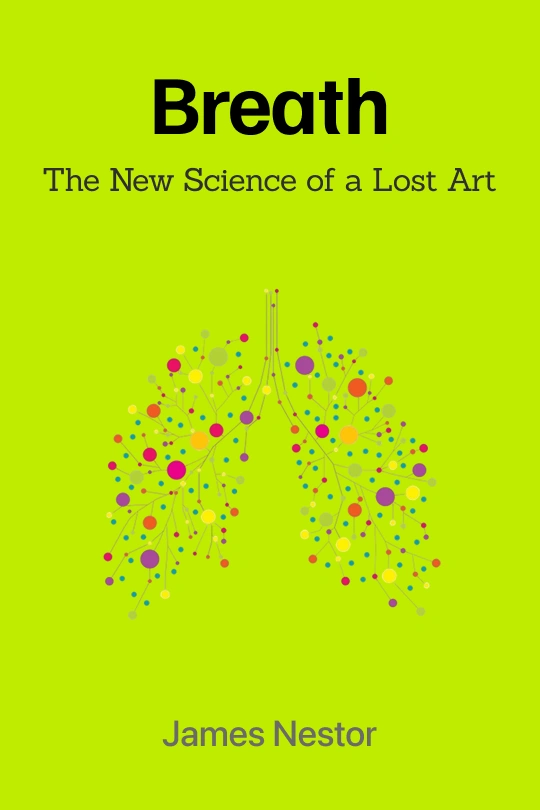
Breath: The New Science of a Lost Art
James Nestor
Zero and Other Fictions
Fan Huang

Out of Control
Kevin Kelly

Permanent Record
Edward Snowden

The Road to Financial Freedom
Bodo Schäfer
Stumbling on Happiness
Daniel Gilbert
The Dispossessed
Ursula K. Le Guin
Amusing Ourselves to Death: Public Discourse in the Age of Show Business
Neil Postman