
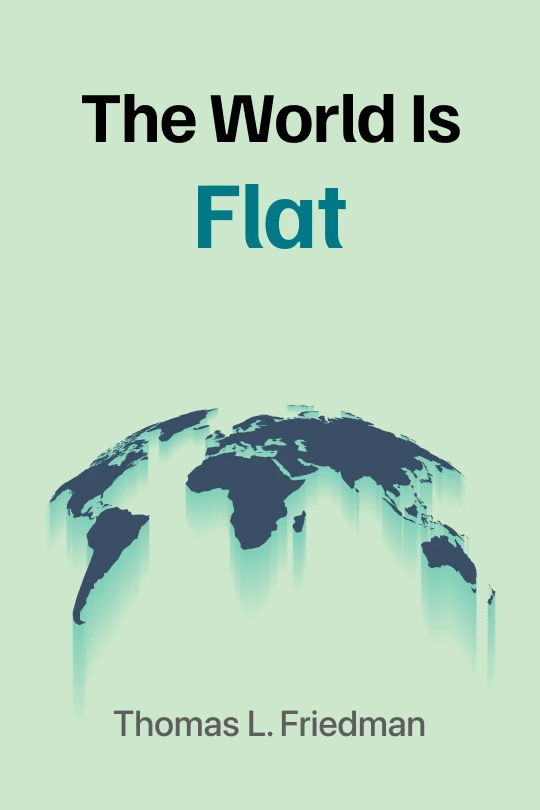
The World Is Flat: A Brief History of the Twenty-first Century
"Globalization's leveling force demands we run faster just to stay in place, reshaping economics, politics, and identity."
Nook Talks
- 1[object Object]
- 2[object Object]
- 3[object Object]
- 4[object Object]
- 5[object Object]
At the dawn of the twenty-first century, a seismic shift reordered the global landscape, not through conquest or treaty, but through an invisible convergence of technology and capital. Thomas Friedman’s seminal work argues that the world has been ‘flattened’—rendered interconnected and accessible to a degree previously unimaginable. This flattening is not a metaphor for equality but for the erosion of traditional hierarchies and geographic barriers, enabling intellectual work, manufacturing, and service provision to flow instantly to the most efficient, cost-effective point on the globe.
The book meticulously chronicles the ‘Ten Flatteners,’ a set of political and technological innovations—from the fall of the Berlin Wall and the Netscape IPO to the advent of workflow software, outsourcing, and supply-chaining—that collectively created a new, horizontal platform for global collaboration. Friedman then introduces the concept of the ‘Triple Convergence’: the moment when these flatteners integrated with new business practices and the sudden entry of three billion people from China, India, and the former Soviet Union into the free-market workforce. This convergence unleashed explosive economic growth but also intensified competition to a frenetic pace.
Friedman explores the profound implications for companies, which must constantly innovate to avoid commodification, and for individuals, who must cultivate skills that cannot be automated or digitized. He travels to outsourcing hubs in Bangalore and manufacturing centers in China, providing ground-level reportage of the flat world in action. The narrative also grapples with the ‘double-edged’ nature of this force, acknowledging the dark side of globalization, including job insecurity, environmental strain, and the potential for cultural and political backlash.
Ultimately, The World Is Flat serves as both a diagnostic map and a survival guide for the modern era. It is essential reading for anyone seeking to comprehend the underlying forces shaping contemporary economics, politics, and culture. While its examples are rooted in the mid-2000s, its central thesis—that connectivity is the defining condition of our time—remains powerfully relevant, framing the ongoing debates about inequality, technological disruption, and national identity in a globalized age.
The consensus positions the book as a vital, accessible primer that successfully demystified globalization for a mainstream audience at a critical moment. Readers widely praise its explanatory power and compelling reportage, crediting it with shaping their worldview. However, a significant critical strand finds its prose repetitive and its length excessive, while others contend its optimistic, business-centric framework has aged poorly, underestimating globalization's destabilizing political and social consequences.
- 1The book's prescience in identifying globalization's drivers versus its failure to anticipate the populist and political backlash that followed.
- 2Debates over the repetitive writing style and considerable length, which some find enlightening and others find unnecessarily padded.
- 3The enduring relevance of its core concepts about competition and adaptation in the face of more recent technological leaps like AI.
- 4Criticism of its perceived American-centric, corporatist perspective that overlooks the human cost of dislocation and inequality.
Sapiens: A Brief History of Humankind
Yuval Noah Harari

Amusing Ourselves to Death: Public Discourse in the Age of Show Business
Neil Postman

Permanent Record
Edward Snowden
The Essays of Warren Buffett: Lessons for Corporate America
Lawrence A. Cunningham, Warren Buffett

Code: The Hidden Language of Computer Hardware and Software
Charles Petzold
Breath: The New Science of a Lost Art
James Nestor

Vacuum Diagrams (Xeelee Sequence, #5)
Stephen Baxter
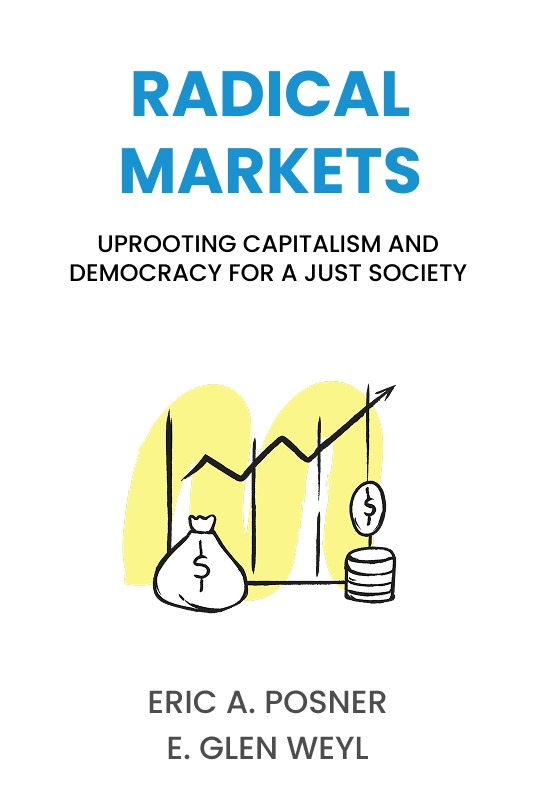
Radical Markets: Uprooting Capitalism and Democracy for a Just Society
Eric A. Posner, E. Glen Weyl
Stumbling on Happiness
Daniel Gilbert

The Road to Financial Freedom
Bodo Schäfer
Transformation in Christ
Dietrich Von Hildebrand
Bad Samaritans
Ha-Joon Chang