
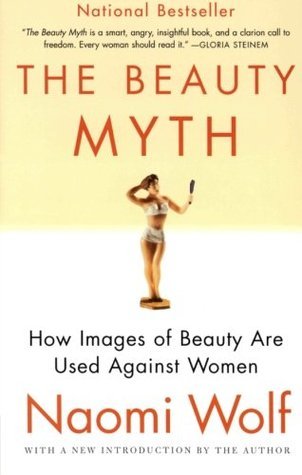
The Beauty Myth
"It exposes beauty as a political weapon, engineered to undermine women's power and perpetuate their subordination."
Nook Talks
- 1Understand beauty as a political and economic control mechanism. The myth is not about aesthetics but social control. It functions as a punitive ideology that distracts women from collective power by enforcing an unattainable physical ideal, thereby preserving patriarchal structures.
- 2Recognize the myth's evolution alongside women's liberation. As women gained legal and professional ground, the beauty industry intensified its standards. The myth shifted from prescribing domestic virtue to mandating physical perfection, creating a new sphere for female anxiety and consumption.
- 3Decouple self-worth from compliance with commercial imagery. The advertised ideal is a fabricated fiction, often digitally manipulated. Internalizing it leads to a cycle of self-hatred and expenditure, diverting energy from authentic ambition and political engagement.
- 4See hunger and diet culture as tools of disempowerment. Systemic food restriction physically and psychologically weakens women. The cult of thinness is a direct assault on female vitality, ensuring that energy spent on bodily management is not spent on challenging the status quo.
- 5Identify the collusion of media, religion, and science. The myth is reinforced by a powerful consortium: magazines sell the ideal, religious dogma moralizes it, and pseudo-scientific studies pathologize non-compliance, creating a pervasive reality that feels inescapable.
- 6Reject the false binary of beauty versus intelligence. The myth insists that a woman cannot be both seriously powerful and conventionally attractive. This dichotomy forces a corrosive choice and invalidates women who attempt to occupy both spaces authentically.
Naomi Wolf's seminal work, The Beauty Myth, posits that just as the first wave of feminism secured legal and political rights, a new, insidious form of social control emerged to check women's power. This "beauty myth" is not a celebration of aesthetics but a violent backlash ideology, replacing the explicit constraints of the past with an obsessive, punishing cult of physical perfection. It argues that the myth functions as a political weapon, undermining women's confidence and consuming their resources, time, and psychic energy to prevent full participation in the public sphere.
Wolf meticulously dissects how the myth operates across five key institutions: the workplace, where appearance is weaponized against professional credibility; culture, through magazines and advertising that define an ever-narrowing ideal; religion, which historically moralized female vanity; sexuality, where the myth distorts and commodifies desire; and finally, hunger, where dieting is framed as a virtuous discipline that physically weakens and preoccupies women. She traces a historical pivot where, as women gained freedom from the domestic sphere, the beauty industry expanded exponentially, creating a new, lucrative market built on female insecurity.
The book is a work of cultural criticism bolstered by extensive research, weaving together literary analysis, economic data, and media critique. It demonstrates how the ideal of beauty is not static but evolves strategically—today's gaunt, youthful standard serves a different economic function than the voluptuous ideal of the 1950s. Wolf exposes the collusion between industries that profit from women's dissatisfaction, from cosmetics and fashion to diet and surgery, revealing a self-perpetuating economic engine.
The Beauty Myth remains a foundational text in feminist theory and cultural studies, its arguments chillingly prescient in the age of social media filters and algorithmic beauty standards. It is essential reading for anyone seeking to understand the structural forces shaping female identity, offering not just a diagnosis but a call to recognize the myth's mechanics as the first step toward intellectual and personal liberation from its grip.
Readers acknowledge the book's enduring relevance and intellectual rigor, praising its powerful framework for understanding pervasive cultural pressures. The consensus finds it dense and academically challenging, sometimes repetitive in its arguments, which can make for a slow read. However, its core thesis is celebrated as transformative, providing a vocabulary for unspoken experiences and validating personal frustrations as systemic issues, even if the statistical data now feels dated.
- 1The unsettling relevance of its 1990s analysis to today's social media and Photoshop-driven beauty standards.
- 2Debate over the book's academic density versus its essential, paradigm-shifting insights for feminist understanding.
- 3Discussion of the central thesis that beauty standards are a deliberate political backlash to women's increasing power.
- 4The emotional impact of the book's hard facts and statistics, described as both depressing and validating.
Radical Markets: Uprooting Capitalism and Democracy for a Just Society
Eric A. Posner, E. Glen Weyl

The Almanack of Naval Ravikant
Naval Ravikant, Eric Jorgenson

Just Listen: Discover the Secret to Getting Through to Absolutely Anyone
Mark Goulston
The Creative Habit
Twyla Tharp, Mark Reiter
The Crash Course
Chris Martenson

Chip War: The Quest to Dominate the World's Most Critical Technology
Chris Miller
The Essays of Warren Buffett: Lessons for Corporate America
Lawrence A. Cunningham, Warren Buffett

The Artist's Way
Julia Cameron
Out of Control
Kevin Kelly

Amusing Ourselves to Death: Public Discourse in the Age of Show Business
Neil Postman
Sapiens: A Brief History of Humankind
Yuval Noah Harari

Permanent Record
Edward Snowden