
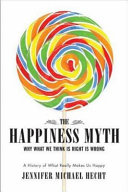
The Happiness Myth
"Liberates you from modern self-help dogma by revealing happiness as a cultural construct, not a scientific formula."
- 1Distinguish between three competing types of happiness. The 'good day,' euphoric, and 'good life' forms of happiness are often in direct conflict. Pursuing one can sabotage another, requiring conscious trade-offs rather than a single, unified goal.
- 2Treat happiness advice as pop culture, not physics. Our rules for living well are transient myths specific to our era, like fashion or music. Recognizing their historicity frees us from their absolute authority and the anxiety of compliance.
- 3Interrogate the commercial interests behind wellness trends. Modern happiness advice is often a lucrative industry selling a specific, narrow ideal. This 'sour charm wisdom' profits from making you feel perpetually inadequate in your pursuit of joy.
- 4Find liberation in historical perspective. Examining how past cultures pursued happiness—through wisdom, drugs, money, bodies, and celebration—reveals the absurdity and specificity of our own rituals, offering genuine, timeless alternatives.
- 5Cultivate a personal philosophy over prescribed routines. Lasting contentment arises not from following external scripts but from developing an internal, reasoned framework for life that minimizes dependence on volatile external conditions.
Jennifer Michael Hecht's The Happiness Myth is a work of intellectual archaeology that excavates the buried foundations of our most cherished assumptions about joy. It begins with a provocative central thesis: our contemporary prescriptions for happiness—from kale to mindfulness—are not timeless truths but fleeting cultural artifacts, as subject to change as pop music. We mistake these socially constructed rules for objective science, a confusion that leads to unnecessary guilt and a frantic, consumerist pursuit of an ever-receding ideal.
Hecht structures her investigation around five historical avenues humans have traveled in search of fulfillment: wisdom, drugs, money, bodies, and celebration. Each chapter is a rich tapestry, weaving together philosophical commentary, surprising historical anecdotes, and sharp cultural criticism. She reveals how the Stoic pursuit of wisdom coexisted with ancient drug use, how the Puritan work ethic twisted our relationship with money and pleasure, and how modern fitness culture pathologizes the body in ways our ancestors would find bizarre. This methodology demonstrates that every era concocts its own paradoxical and often contradictory blend of advice.
The book’s final movement synthesizes these historical lessons into a liberating pragmatism. Hecht identifies a thread of enduring, clear-eyed counsel—what she terms 'sour charm wisdom'—that runs from ancient philosophers to modern satirists. This wisdom acknowledges life's inherent difficulties and the folly of seeking perfect, permanent happiness, instead advocating for a more resilient and self-determined contentment.
Ultimately, The Happiness Myth is targeted at the intellectually curious reader fatigued by the scolding tone of commercial self-help. It offers not a new list of rules, but the profound relief that comes from historical perspective. By understanding happiness as a story we tell ourselves, we gain the agency to edit the narrative, freeing ourselves from the tyranny of today’s myths to craft a more authentic and sustainable personal philosophy.
Readers greet this book as a bracing antidote to conventional self-help, praising its erudite, historical approach and its capacity to induce intellectual liberation. The primary critique centers on execution: some find the narrative digressive and anecdotal, lacking a rigorous through-line, which can dilute the impact of its powerful central argument. It is broadly appreciated by those seeking philosophical depth over prescriptive advice.
- 1The validity and utility of Hecht's tripartite model of happiness (good day, euphoria, good life) as a framework for personal decision-making.
- 2Debate over the book's genre—whether it succeeds as cohesive history-philosophy or feels like an unstructured series of cultural anecdotes.
- 3The effectiveness of using historical perspective as a tool for personal liberation from modern anxiety and consumerist wellness culture.
Blueprints: How mathematics shapes creativity
Marcus du Sautoy

Out of Control
Kevin Kelly
The Crash Course
Chris Martenson

The Road to Financial Freedom
Bodo Schäfer

Permanent Record
Edward Snowden
Stumbling on Happiness
Daniel Gilbert

The Almanack of Naval Ravikant
Naval Ravikant, Eric Jorgenson
Sapiens: A Brief History of Humankind
Yuval Noah Harari
The Essays of Warren Buffett: Lessons for Corporate America
Lawrence A. Cunningham, Warren Buffett

The Artist's Way
Julia Cameron
Boom: Bubbles and the End of Stagnation
Byrne Hobart
The Creative Habit
Twyla Tharp, Mark Reiter