
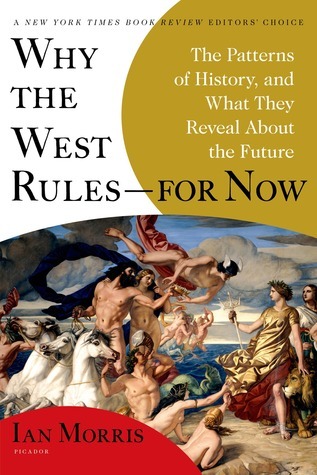
Why the West Rules—for Now: The Patterns of History, and What They Reveal About the Future
No key takeaways available
Key takeaways have not been configured yet
A New York TimesNotable Book for 2011 Sometime around 1750, English entrepreneurs unleashed the astounding energies of steam and coal, and the world was forever changed. The emergence of factories, railroads, and gunboats propelled the West's rise to power in the nineteenth century, and the development of computers and nuclear weapons in the twentieth century secured its global supremacy. Now, at the beginning of the twenty-first century, many worry that the emerging economic power of China and India spells the end of the West as a superpower. In order to understand this possibility, we need to look back in time. Why has the West dominated the globe for the past two hundred years, and will its power last? Describing the patterns of human history, the archaeologist and historian Ian Morris offers surprising new answers to both questions. It is not, he reveals, differences of race or culture, or even the strivings of great individuals, that explain Western dominance. It is the effects of geography on the everyday efforts of ordinary people as they deal with crises of resources, disease, migration, and climate. As geography and human ingenuity continue to interact, the world will change in astonishing ways, transforming Western rule in the process. Deeply researched and brilliantly argued, Why the West Rules--for Now spans fifty thousand years of history and offers fresh insights on nearly every page. The book brings together the latest findings across disciplines--from ancient history to neuroscience--not only to explain why the West came to rule the world but also to predict what the future will bring in the next hundred years.
No community verdict available
Community verdict has not been configured yet
No hot topics available
Hot topics have not been configured yet

Just Listen: Discover the Secret to Getting Through to Absolutely Anyone
Mark Goulston

The Art of Contrarian Trading
Carl Futia

Breath: The New Science of a Lost Art
James Nestor

The Creative Habit
Twyla Tharp, Mark Reiter

Out of Control
Kevin Kelly

Chip War: The Quest to Dominate the World's Most Critical Technology
Chris Miller

Code: The Hidden Language of Computer Hardware and Software
Charles Petzold
The Norwegian Method
Brad Culp
The Lessons of History
Will Durant

The Psychology of Money: Timeless Lessons on Wealth, Greed, and Happiness
Morgan Housel

The Almanack of Naval Ravikant
Naval Ravikant, Eric Jorgenson

Stumbling on Happiness
Daniel Gilbert