
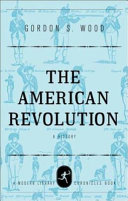
The Radicalism of the American Revolution
No key takeaways available
Key takeaways have not been configured yet
The nominal subtitle/description of this work on the front cover reads, "How a Revolution Transformed a Monarchical Society into a Democratic One Unlike Any That Had Ever Existed." In this major work of historical, cultural, social & political analysis, Gordon Wood overturns long-held theories about the nature & the effects of the American revolution. He shows that it was not, as has often been claimed, a conservative movement, a defense of American rights against British encroachments that was undertaken merely to preserve rather than change the existing structures of society. To the contrary, it is his thesis, based on assessment of the changes that actually took place in the way people were socially & economically connected to one another, that the American Revolution was as radical as any revolution in modern history, producing a society that was free & democratic far beyond anything thought either possible or desirable by the founding fathers. To make clear just how radically the Revolution transformed American society & culture, Wood provides a thoroughly detailed picture of the old colonial, monarchical society, outlining its vertical & horizontal divisions, patriarchal dependence & patronage networks. He describes the democratic structures already implicit in colonial life that were brought to the surface by the Revolution, & shows how the revolutionaries of 1776 sought to replace the power of kinship & influence with that of merit & natural sociability. Wood sees the Constitution as, in great part, an attempt to mitigate the effects of the newly unleashed social forces. He shows why these forces could not be restrained. It is his contention that the idealistic republican revolution, driven by powerful popular impulses, carried its leaders much farther than they had anticipated--until, by the early years of the 19th century, the actions & ideas given impetus by the Revolution had created a society fundamentally different from the colonial society of the 18th century. Finally, he demonstrates that it was, over all, the energy, effort & accomplishments of ordinary people--hundreds of thousands of them working hard to get ahead--that caused the U.S. to emerge as a prosperous, commercial, egalitarian, middle-way society unlike any that had ever previously existed in the world. "...Wood rescues the American Revolution from those who would see it as a conservative or backward-looking event...Wood provides a timely reminder of the radical energy that drives popular democracy." -- T.H. Breen, Northwestern University "A work that vividly re-creates the new American society with almost Tocquevillean power and a brilliant historian's flair for the complexities of his subject." -- Jack Rakove, Stanford University
No community verdict available
Community verdict has not been configured yet
No hot topics available
Hot topics have not been configured yet

Amusing Ourselves to Death: Public Discourse in the Age of Show Business
Neil Postman
Breath: The New Science of a Lost Art
James Nestor
The Lessons of History
Will Durant

Code: The Hidden Language of Computer Hardware and Software
Charles Petzold

Stumbling on Happiness
Daniel Gilbert

Transformation in Christ
Dietrich Von Hildebrand

The Intelligent Investor
Benjamin Graham

Permanent Record
Edward Snowden
The Essays of Warren Buffett: Lessons for Corporate America
Lawrence A. Cunningham, Warren Buffett
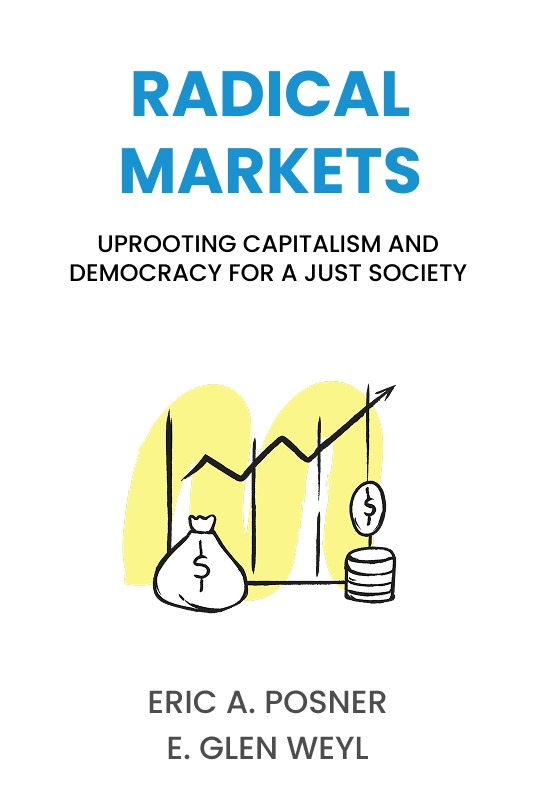
Radical Markets: Uprooting Capitalism and Democracy for a Just Society
Eric A. Posner, E. Glen Weyl

The Almanack of Naval Ravikant
Naval Ravikant, Eric Jorgenson

The Psychology of Money: Timeless Lessons on Wealth, Greed, and Happiness
Morgan Housel