

I'm Judging You: The Do-Better Manual
"A sharp-witted cultural audit that demands personal accountability in our digital and social lives."
- 1Audit your social media presence for ethical engagement. The book argues that online platforms amplify personal responsibility; sharing without context or empathy perpetuates harm and trivializes serious issues, demanding more conscientious digital citizenship.
- 2Confront the scaffolding of systemic racism in daily life. Ajayi moves beyond individual prejudice to examine how entrenched institutions and cultural norms uphold racial inequality, requiring a foundational overhaul, not just personal goodwill.
- 3Reject the tyranny of chronic lateness and poor hygiene. Framed as a respect issue, habitual tardiness and neglect of personal care are presented as silent declarations that your time and presence are more valuable than others'.
- 4Apply feminist principles to interpersonal relationships. The essays dissect how patriarchal norms corrupt friendships and romantic partnerships, advocating for boundaries, mutual support, and calling out sexist behavior in private spheres.
- 5Cultivate cultural literacy through critical pop culture consumption. Analyzing shows like *Scandal* becomes a lens for understanding media representation, narrative power, and the importance of demanding diverse and complex stories.
- 6Distinguish between performative activism and substantive allyship. The manual critiques hollow social justice gestures, emphasizing that true support requires consistent action, resource sharing, and centering marginalized voices beyond trending hashtags.
In I'm Judging You: The Do-Better Manual, Luvvie Ajayi positions herself as the witty, no-nonsense friend auditing modern life’s moral and social bankruptcies. The book is a collection of sharply observed essays that function as a cultural corrective, targeting the gap between our professed values and our actual behavior, particularly as magnified through social media and pop culture. It operates on the premise that common sense is not so common, and that a forceful, humorous intervention is required to realign our collective compass.
Ajayi’s methodology is rooted in her perspective as a Nigerian-American culture blogger, dissecting a vast terrain that ranges from the deeply personal to the broadly political. She tackles the micro-aggressions of group chats and family gatherings with the same analytical rigor she applies to macro issues of systemic racism and media representation. Chapters seamlessly transition from calling out the absurdity of oversharing funeral selfies online to deconstructing the institutional scaffolding that upholds racial inequality, arguing that both stem from a failure of empathy and accountability.
The essays are united by a central thesis: that "doing better" is an active, daily practice. Ajayi provides a roadmap that begins with self-examination—addressing one’s own lateness or hygiene—and expands outward to encompass how we consume media, engage in relationships, and perform allyship. Her critique is especially potent regarding "slacktivism," highlighting the dissonance between curated online social justice personas and tangible, offline action. The tone is conversational yet incisive, employing neologisms and pop culture references as tools for disarming the reader before delivering a substantive argument.
Ultimately, the book’s significance lies in its accessibility as a primer on ethical living in a connected age. It speaks directly to a generation fluent in internet culture but often adrift in its moral implications. While grounded in a Black feminist perspective, its calls for integrity, critical thinking, and courage extend as a universal challenge. I'm Judging You is less a final verdict than a provocative opening statement, inviting readers to join the ongoing trial of their own choices.
The consensus celebrates Ajayi's razor-sharp wit and her fearless tackling of uncomfortable topics like race, feminism, and digital etiquette, finding these essays both hilarious and morally bracing. However, a significant contingent of readers criticizes the book for feeling like a repackaged blog compilation, arguing that some chapters lack the depth or structure expected of long-form writing and land as extended hot takes. The humor, while widely praised, is also noted as a double-edged sword, occasionally seeming to blunt the force of more serious arguments for some audiences.
- 1The effectiveness of blending humor with serious social justice topics, which some find engaging and others find diminishing.
- 2Debate over whether the book's structure feels like a cohesive manual or a disjointed series of blog posts.
- 3Discussion on Ajayi's takes about social media etiquette and "call-out culture," polarizing readers on her tone.
- 4Scrutiny of the author's personal stance on compensating activists, which colored some readers' perception of her message.
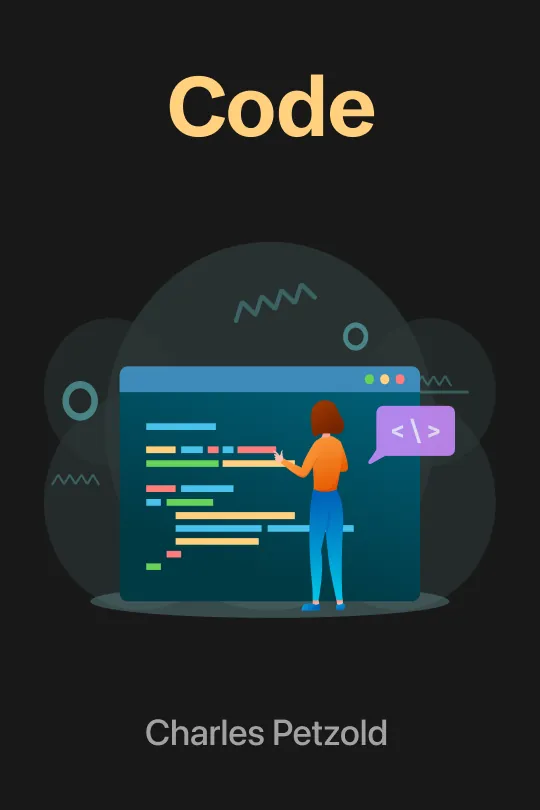
Code: The Hidden Language of Computer Hardware and Software
Charles Petzold

The Artist's Way
Julia Cameron

The Art of Contrarian Trading
Carl Futia

Permanent Record
Edward Snowden
How to Win Friends & Influence People
Dale Carnegie

Amusing Ourselves to Death: Public Discourse in the Age of Show Business
Neil Postman

Chip War: The Quest to Dominate the World's Most Critical Technology
Chris Miller
Out of Control
Kevin Kelly

The Almanack of Naval Ravikant
Naval Ravikant, Eric Jorgenson

The Essays of Warren Buffett: Lessons for Corporate America
Lawrence A. Cunningham, Warren Buffett
The Crash Course
Chris Martenson

Radical Markets: Uprooting Capitalism and Democracy for a Just Society
Eric A. Posner, E. Glen Weyl