Nookix
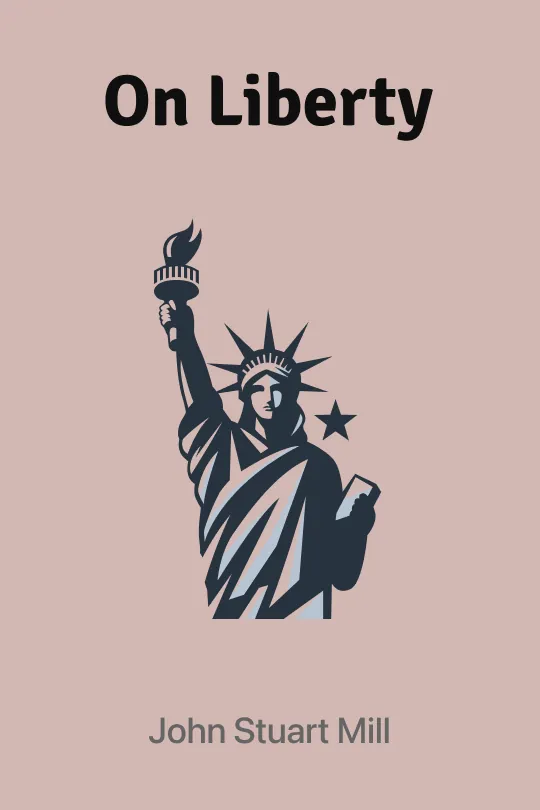
On Liberty

On Liberty

by John Stuart Mill
Duration not available
3.0
Philosophy
Society

"A foundational defense of individual sovereignty against the tyranny of both government and social conformity."

Key Takeaways
  • 1Define liberty as the absence of harm to others. Mill's 'harm principle' establishes the sole legitimate purpose for power over an individual: to prevent harm to others. This creates a sacred sphere of personal sovereignty for thought, taste, and pursuit.
  • 2Vigilantly guard freedom of thought and discussion. Suppressing opinion assumes infallibility and robs humanity of the chance to exchange error for truth. Even false opinions force the re-examination and deeper understanding of true ones.
  • 3Cultivate individuality as essential for human progress. The tyranny of custom and majority opinion stifles genius and social development. Eccentricity and personal experimentation are not just permitted but necessary for a vibrant, advancing society.
  • 4Recognize the insidious danger of social tyranny. Coercion by prevailing opinion and peer pressure can be more enslaving than political oppression, as it shapes desires and stifles the soul from within, leaving no avenue for escape.
  • 5Apply limits to societal authority over the individual. Society's control is justified only for self-protection. It has no warrant to compel actions for a person's own good, whether physical or moral, provided they do not harm others.
Description

Published in 1859, John Stuart Mill's On Liberty stands as the quintessential philosophical treatise defending individual freedom against the encroachments of state power and, more innovatively, the stifling pressure of social conformity. Writing in the shadow of the democratic expansions of his age, Mill identified a new and subtler threat to human flourishing: the tyranny of the prevailing opinion. His work is not merely a political document but a profound meditation on the conditions necessary for truth, genius, and authentic self-development to thrive.

At its core lies the famous 'harm principle,' a radical delimitation of societal authority. Mill argues that the only purpose for which power can be rightfully exercised over any member of a civilized community, against his will, is to prevent harm to others. His own good, whether physical or moral, is not a sufficient warrant. This principle carves out an inviolable sphere of personal sovereignty encompassing liberty of conscience, thought, feeling, and opinion on all subjects, along with the freedom to unite for any purpose not involving harm to others.

The treatise dedicates significant space to a ferocious defense of absolute freedom of opinion and expression. Mill contends that silencing an opinion assumes our own infallibility and robs humanity of the opportunity to exchange error for truth. Even a false opinion serves the vital function of challenging a true one, preventing it from hardening into dead dogma. He extends this defense to individuality itself, arguing that eccentricity and nonconformity are engines of social progress, and that the despotism of custom is a perpetual threat to human advancement.

On Liberty remains a foundational text of liberal political philosophy and a vital handbook for modern democratic citizenship. Its arguments are essential reading for anyone navigating conflicts between individual rights and collective norms, the limits of free speech, and the ongoing struggle to preserve a space for dissent in an age of social media and polarized public discourse. Mill’s eloquent plea is for a society that values diversity of character and the courageous exercise of personal judgment over the comfortable slavery of unanimous, unthinking assent.

Community Verdict

Readers consistently hail the book's enduring relevance, finding its nineteenth-century warnings about social tyranny and the suppression of dissent eerily prescient for contemporary campus politics and online discourse. The dense, Victorian prose is acknowledged as a significant barrier, making the text a challenging but rewarding intellectual workout. The core principles—especially the harm principle and defense of free speech—are celebrated as timeless and essential, though some critique Mill's utilitarianism or find his examples dated.

Hot Topics
  • 1The alarming contemporary relevance of Mill's warnings about 'social tyranny' to modern cancel culture and campus speech disputes.
  • 2The 'harm principle' as a critical but debated boundary for personal freedom versus societal regulation.
  • 3The challenging, dense Victorian prose style acting as a barrier to accessibility for modern readers.
  • 4The treatise's foundational status as an indispensable, timeless defense of liberal thought and individual sovereignty.
Related Matches
Browse by Genres
History
Business
Leadership
Marketing
Management
Innovation
Economics
Productivity
Psychology
Mindset
Communication
Philosophy
Biography
Science
Technology
Society
Health
Parenting
Self-Help
Wealth
Investment
Relationship
Startups
Sales
Money
Fitness
Nutrition
Sleep
Wellness
Spirituality
AI
Future
Nature
Politics
Classics
Sci-Fiction
Fantasy
Thriller
Mystery
Romance
Literary
Historical
Religion
Law
Crime
Arts
Habits
Creativity