
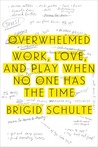
Overwhelmed: Work, Love, and Play When No One Has the Time
"Reclaim your time and sanity by dismantling the cultural architecture of busyness and rediscovering leisure."
- 1Reject the myth of the 'ideal worker' and 'perfect mother'. These culturally constructed archetypes are impossible standards that contaminate our experience of time, creating guilt and reducing actual productivity by demanding constant availability and self-sacrifice.
- 2Recognize that overwhelm physically alters your brain. Chronic time pressure and stress trigger a neural response that shrinks the prefrontal cortex, impairing cognitive function, decision-making, and emotional regulation, trapping you in a cycle of reactivity.
- 3Treat leisure as a non-negotiable requirement for a good life. Leisure—defined as pure, purposeless enjoyment—is not laziness but the essential space for creativity, connection, and restoration that the Greeks considered the point of existence.
- 4Audit your time to expose 'time confetti'. Scattered, fragmented moments of free time feel worthless. A time diary reveals these patterns, providing the data needed to challenge internalized busyness and consolidate time for meaningful engagement.
- 5Seek structural change, not just personal solutions. The overwhelm is a systemic issue rooted in outdated workplace policies and lack of family support. Lasting serenity requires advocating for flexible work, equitable domestic labor, and societal value shifts.
- 6Cultivate play as a fundamental human need. Play is not frivolous; it is a state of flow and discovery that counteracts stress, fosters innovation, and is critical for psychological well-being, yet is often the first casualty of perceived time scarcity.
Brigid Schulte’s 'Overwhelmed' launches from a personal, almost absurd provocation: a time-use researcher informs her that, statistically, she has thirty hours of leisure each week. This claim clashes violently with her lived reality as a harried journalist and mother, catalyzing a deeply reported global investigation into the modern epidemic of time scarcity. Schulte traces the feeling of being perpetually behind not to personal failing, but to a complex historical and cultural architecture that glorifies busyness as a status symbol, enshrines the always-available 'ideal worker,' and burdens women with the impossible standards of 'intensive motherhood.'
Her journey takes her from neuroscientists at Yale, who demonstrate how chronic stress literally shrinks the brain's prefrontal cortex, to sociologists in North Dakota studying the 'busyness trap,' and to evolutionary anthropologists challenging the assumption that women are 'naturally' the primary caregivers. The narrative meticulously deconstructs how these forces conspire to fracture our time into worthless 'confetti,' contaminating our experience of the present moment. Schulte examines the American workplace's unconscious biases and the federal policy vacuum that leaves families unsupported, contrasting this with more humane models abroad.
The book is ultimately a search for 'time serenity,' a state of presence and peace that Schulte discovers is both a personal practice and a political achievement. She documents 'bright spots'—innovative companies adopting results-only work environments, couples consciously renegotiating domestic labor, and nations like Denmark that prioritize leisure through policy. Schulte devours research on the science of play and feminist leisure studies, arguing that reclaiming purposeless enjoyment is a radical act. The synthesis is not a simple productivity hack but a profound call to redefine a good life, making a compelling case that systemic change and a cultural revaluation of time are not just possible but already emerging in pockets of resistance.
The critical consensus praises Schulte's masterful synthesis of rigorous journalism, accessible science, and relatable personal narrative, finding the book both intellectually validating and personally resonant. Readers consistently highlight its powerful dismantling of societal myths around work and motherhood as a liberating revelation. The primary critique centers on a perceived lack of concrete, actionable steps for the individual reader, with some feeling the solutions-oriented final section is less forceful than the diagnostic core. Nonetheless, it is widely deemed an essential, eye-opening read for anyone feeling trapped by the cult of busyness.
- 1The resonant validation of feeling overwhelmed as a systemic, not personal, failure, which readers found profoundly relieving.
- 2Debate over the book's balance between diagnosing societal problems and providing practical, individual solutions for immediate change.
- 3The impactful discussion on 'time confetti' and the neuroscience of stress, which readers frequently cited as transformative concepts.
- 4Appreciation for the inclusive research, particularly the challenges to evolutionary justifications for unequal domestic labor burdens.

Chip War: The Quest to Dominate the World's Most Critical Technology
Chris Miller
The Crash Course
Chris Martenson

Sapiens: A Brief History of Humankind
Yuval Noah Harari

Out of Control
Kevin Kelly
Transformation in Christ
Dietrich Von Hildebrand

The Essays of Warren Buffett: Lessons for Corporate America
Lawrence A. Cunningham, Warren Buffett
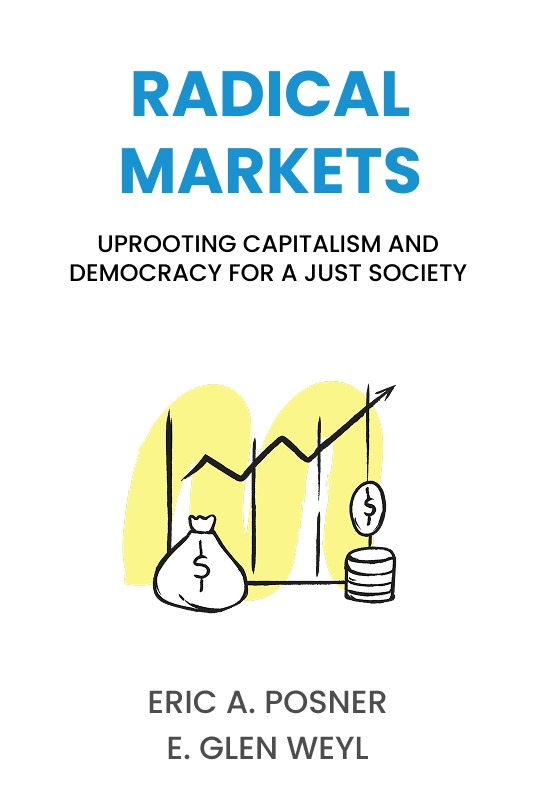
Radical Markets: Uprooting Capitalism and Democracy for a Just Society
Eric A. Posner, E. Glen Weyl
Stumbling on Happiness
Daniel Gilbert
The Creative Habit
Twyla Tharp, Mark Reiter

Amusing Ourselves to Death: Public Discourse in the Age of Show Business
Neil Postman
How to Win Friends & Influence People
Dale Carnegie

The Road to Financial Freedom
Bodo Schäfer