Nookix
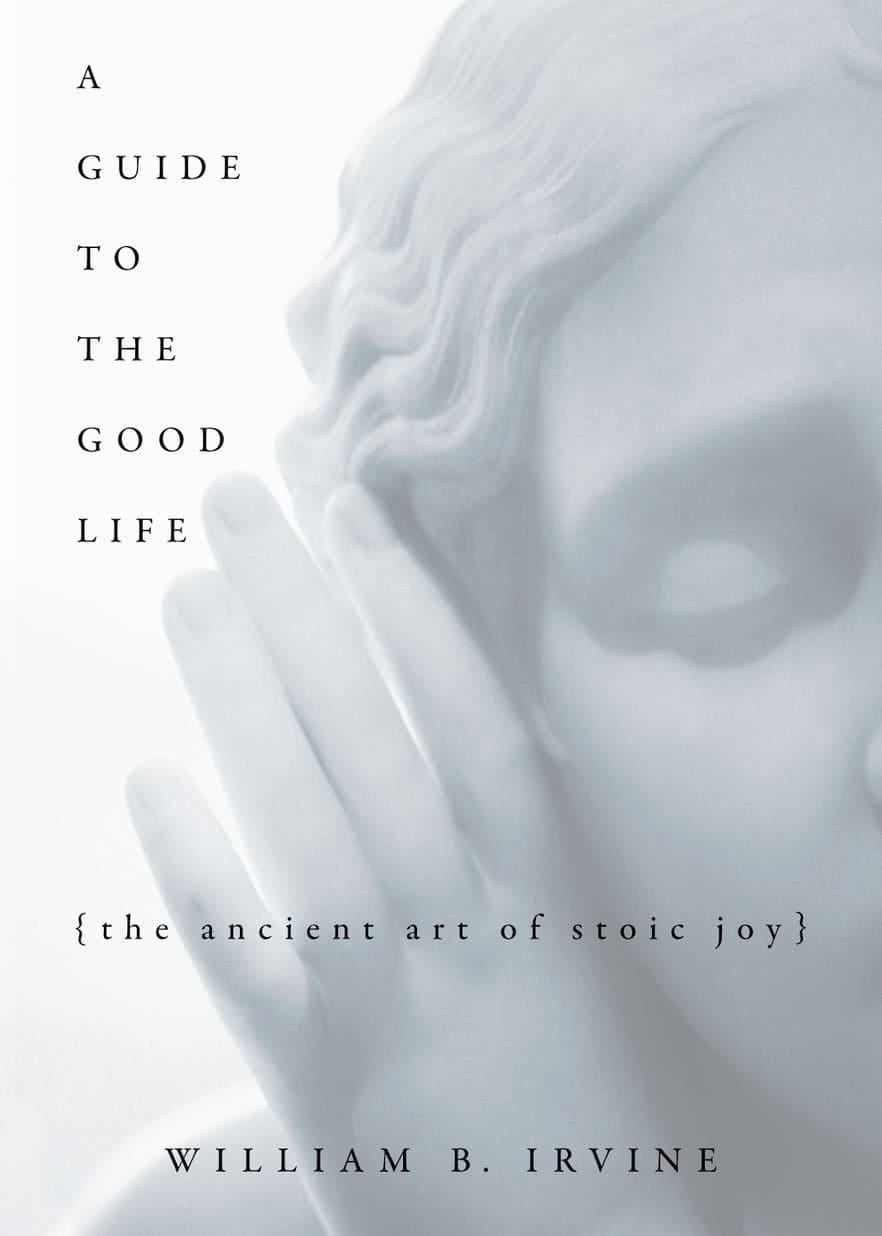
A Guide to the Good Life

A Guide to the Good Life

by William B. Irvine
Duration not available
3.0
Philosophy
Self-Help
Psychology

"Transforms ancient Stoic philosophy into a practical toolkit for modern tranquility and durable satisfaction."

Key Takeaways
  • 1Practice negative visualization to cultivate gratitude. Regularly contemplate the temporary nature of your possessions and relationships. This mental exercise, far from being morbid, heightens appreciation for the present and immunizes against the shock of potential loss.
  • 2Internalize your goals to preserve equanimity. Focus exclusively on actions within your control, not external outcomes. Defining success as playing your best, rather than winning the match, disentangles self-worth from unpredictable fortune.
  • 3Voluntarily embrace discomfort to build resilience. Periodically practice austerity—skipping a meal, forgoing warmth—to dismantle the fear of privation. This voluntary hardship strengthens contentment by proving your needs are simpler than your desires.
  • 4Dichotomize control to eliminate futile anxiety. Rigorously separate events into what you can control (your judgments and actions) and what you cannot (external outcomes, others' opinions). Direct energy solely to the former, accepting the latter with indifference.
  • 5Observe yourself as a detached social philosopher. Cultivate self-awareness by periodically stepping back to examine your impulses and reactions. This meta-cognitive practice allows you to identify and reprogram the sources of distress in your daily life.
  • 6Reject the pursuit of fame and conventional status. Recognize that fame extracts a high cost in autonomy and tranquility for fleeting, unreliable rewards. The Stoic seeks an internal citadel of virtue, indifferent to external validation and applause.
Description

William B. Irvine’s A Guide to the Good Life performs a vital excavation, recovering Stoic philosophy from its modern caricature as a grim, emotion-suppressing creed. He reintroduces it as a sophisticated and practical psychological framework designed for a single purpose: the attainment of tranquillitas animi—a state of profound tranquility and resilient joy. Irvine positions Stoicism not as a relic but as a viable antidote to the chronic dissatisfaction of contemporary life, where enlightened hedonism and the endless pursuit of pleasure often lead to a restless, unfulfilled existence.

Irvine systematically outlines the core techniques developed by Roman Stoics like Seneca, Epictetus, and Marcus Aurelius. He details the practice of negative visualization—consciously imagining the loss of what we cherish—as a powerful engine for gratitude. He explains the Stoic art of desire management through the dichotomy of control, teaching readers to invest only in their own voluntary actions and judgments. The book also explores voluntary discomfort, a method of practicing austerity to appreciate comforts and build antifragility, and the internalization of goals, which shifts the locus of success from fickle external outcomes to impeccable personal effort.

The final sections of the guide address applying Stoic principles to specific modern challenges: handling insults, managing grief, confronting aging, and resisting the siren call of fame and wealth. Irvine moves beyond theory by weaving in his own decade-long experiment with Stoicism, offering candid first-hand testimony of its efficacy and pitfalls. This personal dimension transforms ancient advice into lived wisdom, providing a realistic roadmap for integration.

Ultimately, the book argues that Stoicism is a philosophy of life, a coherent system for making value judgments that lead to eudaimonia—a flourishing life. It is targeted at any thoughtful individual seeking liberation from anxiety, toxic desires, and social comparison. Irvine’s work has significantly contributed to the modern Stoic revival, demonstrating how this ancient operating system for the mind remains remarkably capable of guiding us toward a good life, defined not by what we accumulate but by the quality of our character and our unshakeable inner peace.

Community Verdict

The consensus praises the book as an exceptionally accessible and practical gateway to Stoicism, successfully demystifying its principles for modern application. Readers consistently value the concrete behavioral techniques—particularly negative visualization and the dichotomy of control—for reducing daily anxiety. A significant critique centers on the perceived simplicity of Irvine's historical synthesis; some argue it glosses over complexities and differences among the original Stoic thinkers, presenting a somewhat homogenized, self-help-oriented version. The author's personal anecdotes are found to be either illuminating relatable proofs of concept or occasionally distracting departures from philosophical rigor.

Hot Topics
  • 1The practicality of 'negative visualization' versus its potential to foster a pessimistic mindset.
  • 2Debate over the historical accuracy and simplification of classical Stoic doctrines for a popular audience.
  • 3The effectiveness of internalizing goals to reduce performance anxiety in competitive environments.
  • 4Discussion on whether voluntary discomfort is a profound exercise or merely an unnecessary hardship.
Related Matches