
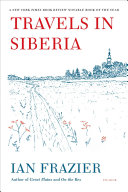
Travels in Siberia
"A profound, darkly comic journey into the soul of Russia through its vast, mythic, and unforgiving hinterland."
- 1Understand Siberia as a state of mind, not just a place. Frazier argues Siberia's true power lies in its psychological weight—a repository of national myth, exile, and raw ambition that has shaped the Russian character for centuries, far beyond its physical geography.
- 2Trace history through the lives of the exiled and forgotten. The narrative is built upon the stories of figures from Dostoyevsky to obscure Soviet zeks, revealing how Siberia functioned as a crucible for ideas and a dumping ground for dissent, forging its tragic legacy.
- 3Observe the absurd persistence of daily life in extremity. Amidst epic landscapes and brutal history, Frazier documents the dark humor, profound hospitality, and stubborn normalcy of Siberian inhabitants, highlighting the human capacity to adapt and find meaning.
- 4Confront the environmental and economic plunder of a frontier. The travelogue culminates in a stark assessment of the post-Soviet exploitation of Siberia's resources, framing it as a short-sighted tragedy that threatens both the region's future and global ecological balance.
- 5Appreciate travel writing as a layered historical excavation. Frazier masterfully blends personal anecdote, deep historical research, and literary reference, demonstrating how a journey can illuminate the complex strata of culture, politics, and collective memory.
Ian Frazier’s Travels in Siberia is an expansive and deeply researched odyssey into the physical and metaphysical heart of Russia’s most formidable region. More than a conventional travelogue, it positions Siberia as the essential key to understanding the Russian psyche—a land of unimaginable scale that has served as a source of national wealth, a prison for the condemned, and a canvas for the projection of fear and fascination. Frazier approaches this subject not as a distant observer but as an obsessed pilgrim, determined to grasp the 'amazingness' of a place defined by its contradictions.
The narrative is structured around several arduous journeys, most notably a grueling summer road trip in a temperamental van and a deeply frigid winter traversal. These expeditions become frameworks for a sprawling historical excavation. Frazier seamlessly weaves the region’s natural history with the human dramas that have unfolded upon it, from the early Cossack explorers and the reign of the Tsars to the unspeakable horrors of the Soviet Gulag system. The ghosts of exiles like Dostoyevsky and Solzhenitsyn are constant companions, their experiences providing a moral compass for the landscape.
Beyond history, the book is a vivid portrait of post-Soviet Siberia in the 1990s and early 2000s, capturing a society in chaotic transition. Frazier’s account is filled with unforgettable characters—his drivers, translators, and the myriad residents who offer vodka, stories, and insights into a life of resilience. His prose finds a unique balance between the epic and the mundane, chronicling both the sublime desolation of the taiga and the comic absurdities of breakdowns, bureaucratic hassles, and cultural misunderstandings.
Ultimately, Travels in Siberia stands as a monumental contribution to the literature of place. It is essential reading for anyone seeking to comprehend Russia’s enduring complexities, the legacy of its imperial and Soviet past, and the fragile state of its ecological and economic future. Frazier delivers not just a report on a territory, but a meditation on emptiness, endurance, and the stories we tell to fill the void.
Readers champion Frazier’s immersive, witty, and erudite voice, which makes a daunting subject profoundly engaging. The book is praised for its masterful blend of personal adventure, deep historical context, and poignant human observation. A common critique, however, is its occasionally meandering pace and exhaustive detail, which some find mirrors the sprawling, sometimes monotonous landscape it describes. The consensus is that it is a definitive, if demanding, work for those committed to understanding Russia.
- 1Debate over the book's pacing and dense detail, with some finding it immersive and others perceiving it as tedious or overly long.
- 2Appreciation for Frazier's unique authorial voice, balancing dark humor, deep empathy, and literary observation throughout the journey.
- 3The sobering final chapters on the economic exploitation of Siberia's resources, which left a strong and disheartening impression on many readers.

The Intelligent Investor
Benjamin Graham

Permanent Record
Edward Snowden

Amusing Ourselves to Death: Public Discourse in the Age of Show Business
Neil Postman
Radical Markets: Uprooting Capitalism and Democracy for a Just Society
Eric A. Posner, E. Glen Weyl

The Essays of Warren Buffett: Lessons for Corporate America
Lawrence A. Cunningham, Warren Buffett
The Lessons of History
Will Durant
The Road to Financial Freedom
Bodo Schäfer

Out of Control
Kevin Kelly

The Psychology of Money: Timeless Lessons on Wealth, Greed, and Happiness
Morgan Housel
Sapiens: A Brief History of Humankind
Yuval Noah Harari
Transformation in Christ
Dietrich Von Hildebrand

The Book of Basketball: The NBA According to The Sports Guy
Bill Simmons