
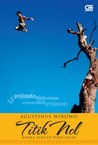
Titik Nol: Makna Sebuah Perjalanan
"A profound journey across continents and conflicts, ultimately arriving at the meaning of home and a mother's silent wisdom."
- 1True travel begins with an inward, not outward, departure. The quest for meaning is not measured in miles but in the depth of self-confrontation. The physical voyage serves merely as a catalyst for an essential internal reckoning and philosophical inquiry.
- 2The most distant lands hold a mirror to our own humanity. By immersing in the struggles of others—in war-torn Kashmir or forbidden Himalayan valleys—we are forced to examine universal themes of belonging, suffering, and the fragile construct of identity and nationhood.
- 3Documentation can both preserve and imperil one's empathy. The act of bearing witness, especially through photojournalism, creates a moral tension between objective observation and human intervention. The camera's lens risks distancing the heart from immediate human pain.
- 4Home is not a geographical location but a relational discovery. The culmination of a global odyssey is not a pin on a map, but a return to the primal bond of family. Meaning is often found not in the exotic, but in the familiar previously overlooked.
- 5Travel writing must transcend mere itinerary to become life writing. The genre achieves its highest form when it seamlessly blends external exploration with intimate memoir, using the journey as a narrative spine for deeper anthropological and personal reflection.
Titik Nol transcends conventional travelogue to become a meditative pilgrimage on the very nature of journeying. Agustinus Wibowo, a seasoned photojournalist, frames his epic overland voyage across Asia not as a triumphalist conquest of distance, but as a fraught search for meaning. The narrative boldly inverts the typical adventure arc, opening not with departure, but with a return—to his ailing mother's bedside in Indonesia. This homecoming establishes the book's central philosophical tension: the relentless pursuit of the far-flung versus the profound truths anchored in the domestic and the familial.
The body of the work chronicles his arduous passage through some of the world's most politically complex and physically demanding regions. From the crowded trains of Beijing heading towards Xinjiang, to smuggling himself into the forbidden Himalayas, and dwelling in the mysterious, conflict-ridden valleys of Kashmir, Wibowo serves as a perceptive witness. His prose meticulously documents not just landscapes, but the human condition within them—the faces etched by war, poverty, and resilience. The journey is as much an anthropological study as it is a personal trial, interrogating the ethics of his own role as an observer who captures suffering through his camera lens.
This internal conflict forms the book's moral core, questioning whether the act of documentation in crisis zones ultimately numbs the photographer's humanity. The narrative weaves together stark reportage with lyrical introspection, using each external encounter as a catalyst for self-examination. The "travel" becomes a vehicle to explore themes of border, identity, belonging, and the often-illusory divide between the self and the other.
Ultimately, Titik Nol argues that the greatest discovery lies in the return. The miles traversed and the frontiers crossed coalesce into a deeper understanding that the answers he sought were never external. The book carves a new path for Indonesian travel writing, merging intense personal memoir with geopolitical observation, and establishing that the most significant point of arrival—the "zero point"—is often the place from which one first began, now seen with transformed eyes.
Readers unanimously praise the book's profound depth and literary quality, hailing it as a transformative masterpiece that redefines travel writing. The emotional resonance of the mother-son narrative framework is particularly celebrated for adding a powerful, unexpected layer of intimacy. Criticisms are rare but note the challenging, dense nature of the prose, which demands and rewards slow, contemplative reading. The stunning photographic accompaniment is universally acclaimed for amplifying the narrative's visceral impact.
- 1The powerful and unexpected emotional core provided by the story of the author's mother, framing the entire journey.
- 2Appreciation for the stunning, story-rich photography that complements the descriptive prose and adds a visual documentary layer.
- 3The book's success in elevating travel writing into deep philosophical and anthropological literature, beyond mere adventure logging.
- 4Discussions on the moral dilemma of the photojournalist as a witness to suffering, versus an active participant in aid.

The Book of Basketball: The NBA According to The Sports Guy
Bill Simmons

The Psychology of Money: Timeless Lessons on Wealth, Greed, and Happiness
Morgan Housel

The Almanack of Naval Ravikant
Naval Ravikant, Eric Jorgenson
Transformation in Christ
Dietrich Von Hildebrand

The Intelligent Investor
Benjamin Graham

Out of Control
Kevin Kelly

The Art of Contrarian Trading
Carl Futia

The Artist's Way
Julia Cameron

How to Win Friends & Influence People
Dale Carnegie

The Creative Habit
Twyla Tharp, Mark Reiter

The Road to Financial Freedom
Bodo Schäfer

Breakthrough: The Quest for Life-Changing Medicines
Dr William Pao