
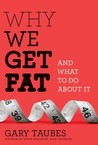
Why We Get Fat: And What to Do About It
"Obesity is a hormonal disorder of fat regulation, not a caloric arithmetic failure."
- 1Reject the calories-in-calories-out model of obesity. The conventional energy balance model mistakes correlation for causation. Weight gain is driven by hormonal dysregulation, not merely by consuming more calories than expended; the body prioritizes fat storage over energy utilization.
- 2Understand insulin as the primary regulator of fat tissue. Insulin signals fat cells to store lipids and inhibits their release. Chronically elevated insulin levels, driven by refined carbohydrates, lock the body into a state of fat accumulation regardless of caloric intake.
- 3Recognize carbohydrates as the fundamental driver of fat accumulation. Refined carbohydrates—sugars and starches—provoke the insulin response that directly promotes fat storage. Dietary fat, in the absence of high insulin, is not the primary culprit for obesity.
- 4Discard exercise as a primary weight-loss strategy. Physical activity, while beneficial for health, is inefficient for significant fat reduction. It increases appetite and can reinforce the faulty caloric model, distracting from the necessary dietary intervention.
- 5Adopt a very-low-carbohydrate, high-fat dietary framework. To lower insulin and unlock fat stores, drastically reduce intake of sugars, grains, and starchy vegetables. Prioritize whole foods: meats, fish, eggs, and non-starchy vegetables, allowing fat to become the primary fuel source.
- 6Appreciate obesity as a disorder of fat partitioning. The problem is not that the body stores too much energy, but that it partitions too much consumed energy into fat tissue, leaving other cells and muscles under-fueled and driving hunger.
Gary Taubes’s Why We Get Fat dismantles the foundational premise of modern nutrition: that obesity results from a simple imbalance between calories consumed and calories expended. With the precision of an investigative journalist and the rigor of a historian of science, Taubes traces how this “calories-in, calories-out” dogma became entrenched despite contradictory evidence. He argues that this model confuses cause and effect; we get fat not because we overeat, but because a metabolic dysfunction directs excess calories into adipose tissue, which in turn drives hunger and reduced energy expenditure.
The book’s central thesis pivots on the hormone insulin. Taubes presents a compelling physiological narrative: insulin, secreted primarily in response to carbohydrates, is the master regulator of fat storage. When insulin levels are high, fat cells are instructed to store fatty acids and are prevented from releasing them for energy. Consequently, the body becomes reliant on glucose for fuel while fat remains sequestered. This hormonal environment, created by diets rich in refined sugars and grains, traps individuals in a cycle of fat accumulation, hunger, and lethargy—a state Taubes describes not as gluttony or sloth, but as a disorder of fat metabolism.
Taubes systematically addresses counterarguments, examining the roles of exercise and genetics. He argues that exercise, while beneficial for health, is remarkably ineffective for weight loss, as it stimulates appetite and has minimal impact on daily energy expenditure. Genetics, he contends, determine an individual’s susceptibility to the insulinogenic modern diet rather than dictating a fixed metabolic destiny. The narrative is fortified with historical case studies and overlooked research, painting a picture of a scientific establishment that has persistently ignored evidence contradicting the low-fat, calorie-counting orthodoxy.
Why We Get Fat is more than a diet book; it is a manifesto for a paradigm shift in how we understand nutrition, metabolism, and public health. It is aimed at the frustrated dieter, the skeptical clinician, and anyone perplexed by the failure of conventional wisdom to curb the obesity epidemic. The book concludes with straightforward, actionable dietary principles—essentially a very-low-carbohydrate, high-fat approach—positioning it as both a radical critique and a practical guide for reclaiming metabolic health.
The readership is sharply polarized. A significant cohort hails the book as revolutionary and life-changing, crediting its low-carb framework with successful, sustained weight loss after decades of failed dieting. They praise its compelling logic, scientific rigor, and empowering narrative. An equally vocal contingent dismisses it as dangerous pseudoscience, criticizing Taubes for cherry-picking data, oversimplifying complex physiology, and promoting an unsustainable, restrictive diet. The book is acknowledged as highly engaging and thought-provoking, even by skeptics, but its accessibility is tempered by its confrontational stance against mainstream medical advice.
- 1The validity of rejecting the fundamental 'calories-in, calories-out' model of weight management.
- 2Concerns over the long-term health effects and sustainability of a very-low-carbohydrate, high-fat diet.
- 3Debate over Taubes's characterization of exercise as ineffective for meaningful fat loss.
- 4The charge that the author selectively cites historical research to support his insulin-centric hypothesis.

Code: The Hidden Language of Computer Hardware and Software
Charles Petzold

The Almanack of Naval Ravikant
Naval Ravikant, Eric Jorgenson
Out of Control
Kevin Kelly

Outliers: The Story of Success
Malcolm Gladwell
The Creative Habit
Twyla Tharp, Mark Reiter
The Essays of Warren Buffett: Lessons for Corporate America
Lawrence A. Cunningham, Warren Buffett

Just Listen: Discover the Secret to Getting Through to Absolutely Anyone
Mark Goulston

Chip War: The Quest to Dominate the World's Most Critical Technology
Chris Miller
Breath: The New Science of a Lost Art
James Nestor

How to Win Friends & Influence People
Dale Carnegie
Breakthrough: The Quest for Life-Changing Medicines
Dr William Pao

The Intelligent Investor
Benjamin Graham