
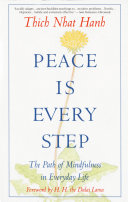
Peace Is Every Step
"Transform mundane irritations into spiritual friends through the revolutionary practice of conscious breathing."
- 1Conscious breathing anchors you to the present moment. The simple, immediate act of following your breath interrupts autopilot thinking and returns awareness to the only reality that exists: the here and now. This is the foundational practice for all mindfulness.
- 2Mindfulness transforms obstacles into opportunities for practice. A traffic jam or a ringing phone ceases to be a nuisance and becomes a bell of mindfulness, a signal to return to your true self. The entire world becomes your meditation hall.
- 3Cultivate inner peace to work effectively for outer peace. Sustainable activism and compassion are impossible without a grounded, calm center. Personal mindfulness is not an escape from the world's injustices but the essential preparation for addressing them.
- 4Recognize interbeing—your profound interconnection with all life. The book dismantles the illusion of a separate self. By seeing how you are made of non-you elements—sun, cloud, soil—you develop intrinsic care for the well-being of people and the planet.
- 5Practice smiling as a tool of physiological and spiritual renewal. A conscious smile releases tension and signals the nervous system toward calm and joy. It is an accessible first step to changing your embodied emotional state at any moment.
- 6Embrace walking meditation to find peace in motion. Each step taken with awareness, feeling the earth, is a celebration of being alive. This practice makes mindfulness portable, integrating it into the most basic daily activities.
Thich Nhat Hanh’s seminal work emerges from the confluence of engaged Buddhism and the frantic pace of modern existence. It posits that the peace we desperately seek is not a distant goal to be achieved after clearing life’s obstacles, but a latent quality available within the fabric of our ordinary, often irritating daily routines. The book challenges the Western dichotomy between the spiritual and the mundane, arguing that the path to enlightenment is paved not in remote monasteries but in kitchens, offices, and traffic jams.
Through a series of concise commentaries, personal anecdotes, and practical exercises, Hanh introduces 'mindfulness' as the continuous process of keeping our consciousness alive to present experience. The core technique is conscious breathing—a method so simple it is often overlooked. By attending to the inhalation and exhalation, we anchor ourselves in the now, disrupting the torrent of anxiety and regret. From this stable base, the book expands the practice to include walking meditation, mindful eating, and deep listening, transforming every action into an opportunity for awakened presence.
Hanh further introduces the profound Buddhist concept of 'interbeing,' the insight that nothing exists independently. We 'inter-are' with the sunlight in our morning coffee and the clouds in our breath. This understanding fosters a natural, non-coercive compassion for others and the environment, framing ecological and social justice not as burdensome duties but as expressions of our interconnected reality. The narrative is interwoven with reflections from his life as a peace activist, demonstrating how inner cultivation fuels effective, non-violent action in the world.
Ultimately, 'Peace Is Every Step' is a manual for sanity in an overwhelming age. It speaks to anyone feeling fractured by busyness, from the seasoned meditator to the complete novice. Its legacy lies in its deceptively simple, radically accessible approach, which demystifies meditation and positions it as a vital life skill. The book does not promise a life without difficulty but provides the tools to meet difficulty with a calm, clear, and compassionate heart.
Readers consistently describe the book as a gentle, transformative guide, praising its accessibility and the profound simplicity of its core practices. The overwhelming sentiment is one of gratitude for its practical, non-dogmatic approach that makes mindfulness feel immediately applicable. Criticisms are rare but occasionally note the repetitive nature of the core message for those already familiar with Zen principles. The consensus is that it serves as a perfect, calming introduction or a much-needed refresher, cutting through spiritual complexity to offer tangible peace.
- 1The revolutionary idea of using daily irritations like traffic jams as 'bells of mindfulness' for practice.
- 2The profound impact and accessibility of the core 'conscious breathing' technique for managing anxiety.
- 3How the concept of 'interbeing' reshapes one's relationship to other people and environmental concerns.
- 4The book's effectiveness as a first introduction to mindfulness versus its depth for seasoned practitioners.

Boom: Bubbles and the End of Stagnation
Byrne Hobart
The Crash Course
Chris Martenson

Out of Control
Kevin Kelly
The Art of Contrarian Trading
Carl Futia
Stumbling on Happiness
Daniel Gilbert
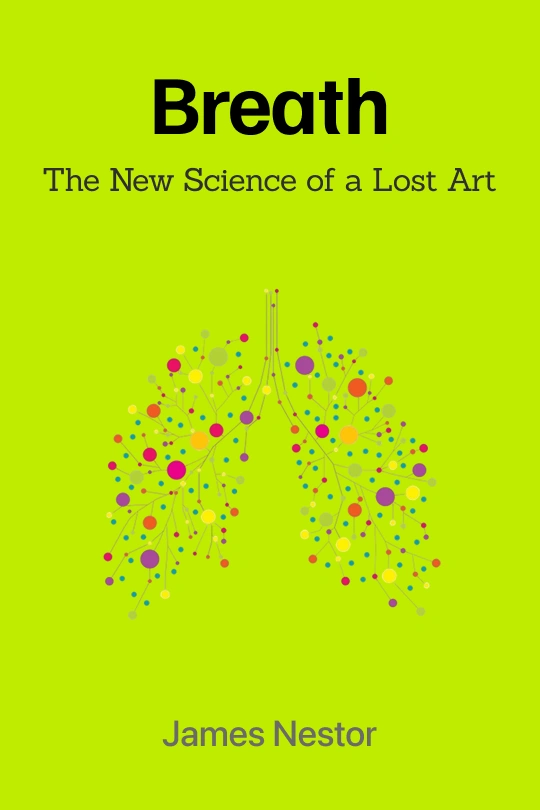
Breath: The New Science of a Lost Art
James Nestor

The Artist's Way
Julia Cameron

The Essays of Warren Buffett: Lessons for Corporate America
Lawrence A. Cunningham, Warren Buffett

The Almanack of Naval Ravikant
Naval Ravikant, Eric Jorgenson

Sapiens: A Brief History of Humankind
Yuval Noah Harari
Transformation in Christ
Dietrich Von Hildebrand
The Creative Habit
Twyla Tharp, Mark Reiter