
The Death and Life of the Great American School System: How Testing and Choice Are Undermining Education
"A former architect of education reform dismantles the failed market-based ideologies now threatening public schooling's very existence."
- 1[object Object]
- 2[object Object]
- 3[object Object]
- 4[object Object]
- 5[object Object]
- 6[object Object]
Diane Ravitch’s The Death and Life of the Great American School System stands as a monumental mea culpa and a clarion call in the debate over American education. Once an influential advocate for national standards, testing, and choice, Ravitch—a former Assistant Secretary of Education—executes a profound and public intellectual reversal. The book is her meticulously argued case that the very reforms she helped champion have become a corrosive force, pushing the nation's public schools toward a crisis of legitimacy and purpose.
Ravitch systematically dissects the dominant reform paradigms of the early 21st century: the high-stakes accountability of No Child Left Behind, the proliferation of charter schools, the push for privatization, and the influence of massive philanthropic ventures from the Gates and Walton foundations. She argues that these movements, rooted in a market-based business ideology, mistakenly treat education as a commodity. This approach, she demonstrates through case studies of New York, Chicago, San Diego, and other districts, has led to narrowed curricula, teaching to the test, fraudulent data manipulation, and the destabilization of community-based public institutions.
The analysis is not merely a critique but a historical and statistical narrative of how good intentions went awry. Ravitch traces the evolution of reform from a bipartisan consensus for improvement into a rigid, punitive system that ignores poverty’s impact and deprofessionalizes teaching. She highlights the paradox of choice, showing how unfettered charter expansion often creates a two-tiered system and fails to produce consistent gains.
Ultimately, the book is a foundational text for anyone invested in the future of democratic society. Ravitch’s prescriptions are a return to first principles: a robust, content-rich national curriculum; professional respect and fair pay for teachers; charter schools that serve as true complements, not competitors; and the insulation of school governance from partisan and commercial whims. It is a passionate defense of public education as a common good, essential for informed citizenship and social cohesion.
The reader consensus views Ravitch’s work as an essential, courageous, and devastatingly persuasive indictment of contemporary education policy. Readers, including educators and parents, praise her intellectual integrity in publicly renouncing her prior positions, finding her conversion narrative the book’s most powerful element. While some wish for more concrete policy solutions, the overwhelming sentiment is that the diagnosis is accurate, urgent, and presented with compelling clarity, though the dense statistical and historical detail can feel overwhelming to a lay audience.
- 1The profound impact of the author's personal ideological reversal from reform advocate to critic, which lends unique credibility to her arguments.
- 2Concern over the disproportionate influence of billionaire philanthropists, specifically the Gates and Walton foundations, on national education policy.
- 3Debate on whether high-stakes standardized testing inherently corrupts educational goals and narrows curriculum beyond repair.
- 4Analysis of charter schools, questioning if they have strayed from their original mission to become competitors that undermine public systems.

Sapiens: A Brief History of Humankind
Yuval Noah Harari

The Artist's Way
Julia Cameron
Radical Markets: Uprooting Capitalism and Democracy for a Just Society
Eric A. Posner, E. Glen Weyl
The Essays of Warren Buffett: Lessons for Corporate America
Lawrence A. Cunningham, Warren Buffett
Breath: The New Science of a Lost Art
James Nestor
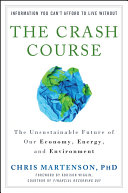
The Crash Course
Chris Martenson

Out of Control
Kevin Kelly

The Psychology of Money: Timeless Lessons on Wealth, Greed, and Happiness
Morgan Housel

Amusing Ourselves to Death: Public Discourse in the Age of Show Business
Neil Postman

Code: The Hidden Language of Computer Hardware and Software
Charles Petzold

Permanent Record
Edward Snowden

The Almanack of Naval Ravikant
Naval Ravikant, Eric Jorgenson