

How Google Works
"A masterclass in building a company where brilliant, unconventional talent thrives to create products that redefine markets."
- 1Hire and empower 'smart creatives' above all else. Success hinges on attracting multidisciplinary experts who combine technical depth, business acumen, and creative flair. Traditional managers become obsolete; the organization must be designed to let these individuals run.
- 2Default to open: information transparency fuels innovation. Withholding information creates bottlenecks and distrust. By making nearly all data accessible to every employee, you enable faster, more informed decisions and foster a collective sense of ownership and purpose.
- 3Seek consensus through dissension, not top-down decrees. Robust decisions emerge from vigorous debate, not unanimous agreement. Leaders must cultivate an environment where challenging ideas is safe, ensuring strategies are stress-tested before commitment.
- 4Think in terms of 10X improvement, not 10% increments. Incrementalism leads to irrelevance in the internet era. Aiming for monumental, order-of-magnitude improvements forces radical rethinking and unlocks transformative new markets, rather than competing in existing ones.
- 5Strategy is dynamic; plan for adaptation, not rigid adherence. In a fast-changing landscape, a five-year plan is a fiction. Effective strategy involves setting a foundational vision, then constantly recalibrating based on real-time technical insights and user feedback.
- 6Culture is a deliberate, defensible product of design. A company's culture is its operating system. It must be consciously architected—through hiring, communication, and physical space—to support innovation, speed, and resilience, becoming a key competitive moat.
How Google Works is less a conventional business manual and more a field report from the front lines of the internet revolution. Co-authored by former Google CEO Eric Schmidt and former SVP of Products Jonathan Rosenberg, the book distills the hard-won management philosophy they developed while guiding the company from a precocious startup to a global technology titan. It begins with a fundamental premise: the old rules of business—centered on information scarcity, top-down control, and incremental growth—have been rendered obsolete by the confluence of the internet, mobile computing, and cloud technology.
At the heart of this new paradigm is the 'smart creative,' a hybrid employee who blends technical expertise, business savvy, and creative passion. The book argues that the primary task of modern leadership is not to manage these individuals but to create an ecosystem where they can thrive. This requires dismantling traditional hierarchies, defaulting to radical transparency with information, and rethinking every process from recruitment to decision-making. The authors illustrate these principles with candid, often humorous anecdotes from Google's history, detailing both spectacular successes and instructive failures.
The narrative delves into the practical application of this philosophy across core business functions: strategy must be adaptable and focused on '10X' moonshots rather than marginal gains; talent decisions are the most important ones a company makes, requiring rigorous hiring committees and a willingness to 'exile knaves but fight for divas'; and innovation is not a scheduled event but a continuous output of a culture that tolerates risk and values user feedback over managers' opinions.
Ultimately, the book serves as a seminal text for entrepreneurs, executives, and anyone navigating the digital economy. It provides a coherent framework for building organizations that are fast, innovative, and resilient in the face of perpetual disruption. Its legacy lies in codifying the operational ethos of Silicon Valley's most influential company, offering a blueprint for empowering talent and building products that matter in an age where the user holds all the power.
The consensus positions the book as an inspirational and highly accessible insider's guide to Google's unique corporate culture, praised for its actionable insights and engaging, anecdotal style. Readers, particularly entrepreneurs and tech managers, value its concrete principles on talent and innovation. However, a significant critique emerges: the advice is seen as uniquely tailored to Google's vast resources and rarefied talent pool, making direct application to most conventional or cash-strapped organizations feel impractical or idealized.
- 1The book's misleading title; many expected a technical deep dive into search algorithms but found a management philosophy guide instead.
- 2The practicality of applying Google's 'utopian' management principles, like defaulting to open information, outside of a Silicon Valley tech giant.
- 3The value of the humorous, anecdotal storytelling style versus a more structured, traditional business book format.
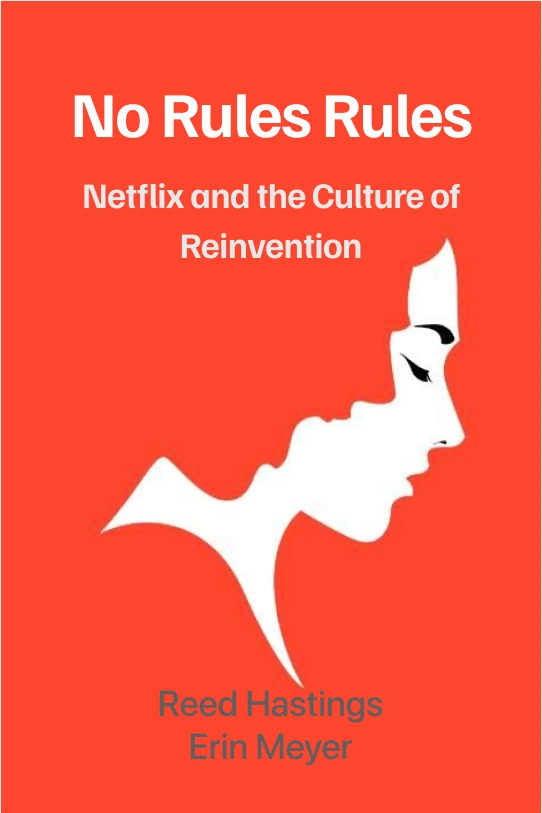
No Rules Rules: Netflix and the Culture of Reinvention
Reed Hastings, Erin Meyer

The Almanack of Naval Ravikant
Naval Ravikant, Eric Jorgenson

The Road to Financial Freedom
Bodo Schäfer

Transformation in Christ
Dietrich Von Hildebrand

The Psychology of Money: Timeless Lessons on Wealth, Greed, and Happiness
Morgan Housel

The Artist's Way
Julia Cameron

Permanent Record
Edward Snowden

Vacuum Diagrams (Xeelee Sequence, #5)
Stephen Baxter

How to Win Friends & Influence People
Dale Carnegie

Code: The Hidden Language of Computer Hardware and Software
Charles Petzold

The Intelligent Investor
Benjamin Graham

Chip War: The Quest to Dominate the World's Most Critical Technology
Chris Miller