
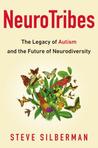
NeuroTribes: The Legacy of Autism and the Future of Neurodiversity
"Reclaims autism's hidden history to argue for a society that values cognitive difference, not cures."
- 1Autism is a natural form of human cognitive diversity. The book reframes autism not as a modern pathology but as an ancient, persistent thread in human neurology, akin to left-handedness, with unique strengths and perspectives that have always existed within populations.
- 2The diagnostic history of autism is a history of suppression and error. Silberman exposes how Leo Kanner's narrow definition and Hans Asperger's broader, more accurate work were obscured for decades, creating a damaging bottleneck in understanding and delaying recognition of the autism spectrum.
- 3The 'refrigerator mother' theory was a catastrophic, unfounded blame campaign. This psychoanalytic myth, which held mothers emotionally responsible for their children's autism, caused immense, generational trauma and diverted research for years from biological and neurological realities.
- 4Neurodiversity is a civil rights and social justice movement. The concept advocates for acceptance, accommodation, and self-determination, demanding society adapt to include autistic people rather than forcing them to conform to a narrow neurotypical standard.
- 5Many historical innovators exhibited autistic cognitive styles. The book suggests that traits like intense focus, systematic thinking, and non-social motivation have driven scientific and technological progress, positioning autistic minds as vital contributors to human culture.
- 6The search for a monolithic 'cure' is a harmful distraction. It argues that resources are better spent on support, education, and creating environments where autistic people can thrive, rather than pursuing an eradication of neurological difference.
Steve Silberman's NeuroTribes is a monumental work of narrative science history that fundamentally recalibrates our understanding of autism. It begins not with a clinical definition, but with a sweeping excavation of the past, unearthing the long-buried stories of individuals who, through contemporary lenses, clearly lived autistic lives. The book positions autism not as a sudden epidemic of the late 20th century, but as an integral, if misunderstood, strand of human neurocognitive variation that has existed throughout history, often masked or misdiagnosed.
Silberman meticulously reconstructs the parallel, and for decades disconnected, legacies of two pioneering clinicians: Leo Kanner in America and Hans Asperger in Vienna. He reveals how Kanner's influential, narrow definition—which portrayed autism as a rare and severe childhood psychosis—effectively erased the broader spectrum Asperger had identified. The narrative follows the devastating consequences of this bottleneck, including the rise of the 'refrigerator mother' theory, which blamed parents and caused profound familial trauma, and the later, frantic but misguided searches for environmental culprits like vaccines.
The heart of the book is its recovery of Asperger's work and his more nuanced view of autistic intelligence, which recognized a continuum of ability he called 'autistic psychopathy.' Silberman traces how this perspective was lost to war and politics, only to be rediscovered and integrated into the modern concept of the autism spectrum. He chronicles the emergence of the neurodiversity movement from within autistic communities, a grassroots push for civil rights that challenges pathology-based models and advocates for acceptance and accommodation.
Ultimately, NeuroTribes is a profound argument for a more humane and inclusive society. It makes the case that the future of innovation and culture depends on embracing cognitive differences, providing the necessary supports, and moving beyond the quest for a cure toward a model of understanding and integration. The book is essential reading for educators, clinicians, parents, policymakers, and anyone interested in the true diversity of the human mind.
Readers overwhelmingly praise the book as a transformative, meticulously researched historical correction that is both intellectually rigorous and deeply humane. The consensus hails it as the definitive social history of autism, lauding its power to dismantle damaging myths and reframe the conversation around neurodiversity. Criticisms are rare but note the middle sections on discredited therapies can be a harrowing, emotionally dense read. The book is celebrated for granting autistic people and their families a sense of historical identity and validation, moving the discourse from pathology to acceptance.
- 1The devastating historical impact and falsehood of the 'refrigerator mother' theory on generations of families.
- 2The revelatory restoration of Hans Asperger's broader, more accurate view of the autism spectrum.
- 3The book's powerful argument for neurodiversity as a civil rights issue over a search for a cure.
- 4The detailed debunking of the vaccine-autism link and analysis of why the myth persists.
- 5Appreciation for the biographical sketches of historical figures likely on the autism spectrum.

The Artist's Way
Julia Cameron

Transformation in Christ
Dietrich Von Hildebrand
Outliers: The Story of Success
Malcolm Gladwell

The Almanack of Naval Ravikant
Naval Ravikant, Eric Jorgenson

The Road to Financial Freedom
Bodo Schäfer

The Essays of Warren Buffett: Lessons for Corporate America
Lawrence A. Cunningham, Warren Buffett

Permanent Record
Edward Snowden

Amusing Ourselves to Death: Public Discourse in the Age of Show Business
Neil Postman

Code: The Hidden Language of Computer Hardware and Software
Charles Petzold

The Intelligent Investor
Benjamin Graham

The Lessons of History
Will Durant
Radical Markets: Uprooting Capitalism and Democracy for a Just Society
Eric A. Posner, E. Glen Weyl