
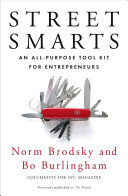
Street Smarts
"Replaces rigid formulas with an adaptive, problem-solving mentality for navigating the unpredictable realities of building a business."
- 1Distinguish between sales and profitable sales. Revenue growth is meaningless without profitability. The fatal trap for many startups is discounting unused capacity, which erodes margins and creates the illusion of health while the business bleeds cash.
- 2Use accountants as historians, not futurists. Financial professionals excel at recording past performance, but their conservative training often limits strategic vision. Entrepreneurs must own forward-looking financial strategy and risk assessment.
- 3Build a sales force on loyalty, not just commissions. A transactional compensation model fosters short-term thinking and turnover. Cultivating genuine loyalty through fair treatment and shared success creates a sustainable, resilient sales organization.
- 4Subject your initial optimism to objective scrutiny. Entrepreneurial enthusiasm naturally breeds over-optimism in forecasts and plans. Instituting a mandatory, dispassionate external review before launch exposes fatal flaws and grounds strategy in reality.
- 5Avoid blanket policies; tailor decisions to context. Rigid, system-wide rules often create more problems than they solve. Effective leadership requires nuanced judgment, assessing each situation—whether hiring, firing, or pricing—on its unique merits.
- 6Shape company culture intentionally from the outset. Culture is not an afterthought; it is the operational foundation. Clear values, consistently modeled by leadership, determine how decisions are made and problems are solved at every growth stage.
Street Smarts dismantles the pervasive myth of the entrepreneurial rulebook, arguing that no step-by-step formula can navigate the chaotic, unpredictable journey of building a business. Instead, Norm Brodsky, a veteran who has founded and grown multiple companies, posits that sustainable success hinges on cultivating a specific mentality—a flexible, pragmatic, and resilient approach to solving problems and seizing opportunities as they organically arise. This is not academic theory but field-tested philosophy, forged in the trenches of real-world commerce.
Brodsky structures this wisdom as a comprehensive lifecycle guide, moving chronologically from conception to maturity. He begins with the critical, pre-launch phase of vetting a business idea, stressing the necessity of confronting one’s own optimistic biases with harsh external reality checks. The narrative then progresses through the fundamental challenges of securing capital, making initial hires, and establishing a sales process that prioritizes profitable transactions over mere revenue volume. A central, recurring theme is financial literacy for founders, particularly the crucial distinction between gross sales and contribution margin.
The book delves into the nuanced challenges of scaling, addressing how to shape a company’s culture deliberately, manage the complex dynamics of a growing team, and work effectively with outside experts like lawyers and consultants. Brodsky illustrates each principle with candid, often personal anecdotes from his own successes and failures, such as the story of his storage business, which underscores the importance of understanding unit economics. The methodology is relentlessly practical, focusing on operational decision-making—from reading financial statements to setting prices—that directly impacts survival and growth.
Its significance lies in its departure from generic, motivational business advice, offering instead a masterclass in entrepreneurial judgment. Targeted at small business owners, operators, and aspiring founders, the book provides a durable framework for thinking rather than a fleeting list of tactics. Its legacy, drawn from Brodsky's iconic Inc. magazine column, is that of a trusted, seasoned mentor cutting through the noise to focus on the few principles that genuinely determine a venture's fate.
The critical consensus hails this as a supremely practical and readable guide, distinguished by its humble, story-driven wisdom and absence of judgment. Readers prize its actionable advice on financial fundamentals and scaling, derived from hard-won experience. A significant, recurring critique centers on Brodsky's strict admonition against befriending employees, which many argue is an unnecessary blanket policy that contradicts the book’s own ethos of contextual nuance.
- 1Heated debate over the author's strict policy against forming real friendships with employees, seen by many as overly rigid.
- 2Widespread praise for the practical, non-theoretical advice on financial literacy and distinguishing revenue from profit.
- 3Appreciation for the book's structure, which follows the natural lifecycle of a business from conception to maturity.
- 4Discussion on the value of Brodsky's transparent storytelling, using personal failures and successes to illustrate principles.
The Creative Habit
Twyla Tharp, Mark Reiter

Code: The Hidden Language of Computer Hardware and Software
Charles Petzold

Chip War: The Quest to Dominate the World's Most Critical Technology
Chris Miller

Just Listen: Discover the Secret to Getting Through to Absolutely Anyone
Mark Goulston
The Norwegian Method
Brad Culp

Sapiens: A Brief History of Humankind
Yuval Noah Harari

How to Win Friends & Influence People
Dale Carnegie

The Psychology of Money: Timeless Lessons on Wealth, Greed, and Happiness
Morgan Housel
Stumbling on Happiness
Daniel Gilbert

The Artist's Way
Julia Cameron

Breakthrough: The Quest for Life-Changing Medicines
Dr William Pao
No Rules Rules: Netflix and the Culture of Reinvention
Reed Hastings, Erin Meyer