
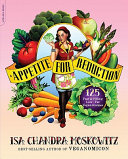
Appetite for Reduction
"Reconciles robust flavor with nutritional integrity, proving satisfying vegan meals require neither deprivation nor excess fat."
- 1Prioritize whole foods over processed substitutes. The recipes reject chemical-laden, artificial ingredients, building flavor and satisfaction from vegetables, legumes, grains, and spices. This approach ensures nutrient density and culinary authenticity.
- 2Engineer satiety through fiber and volume, not fat. By leveraging the bulk and complex carbohydrates of plants, the book creates filling meals within a 200-400 calorie framework. This counters the skimpiness stereotype of diet food.
- 3Decouple health-conscious cooking from body-shaming rhetoric. Moskowitz explicitly frames nutritional balance as an act of self-care, not a punitive war on certain body types. The focus is on feeling energized, not on weight loss as a moral imperative.
- 4Achieve depth of flavor through technique and layering. Recipes rely on roasting, caramelizing, and strategic spice blends to build complexity where fat might traditionally be used. This demonstrates that fat is a vehicle for flavor, not the flavor itself.
- 5Design for the practical constraints of weekday cooking. With an emphasis on 30-minute meals, the book treats time as a precious ingredient. It provides a realistic framework for integrating healthful vegan cooking into a busy modern life.
- 6Expand the vegan repertoire beyond comfort food extremes. It moves vegan cuisine past both the stereotype of bland salads and the opposite pole of heavy, fat-laden analogs. The result is a balanced, sustainable middle path for daily eating.
Appetite for Reduction arrives as a corrective manifesto within the crowded fields of diet cookbooks and vegan cuisine. Isa Chandra Moskowitz, a foundational voice in modern plant-based cooking, directly challenges the prevailing norms of both categories. She dismisses the gimmicks, chemical substitutes, and joyless portions endemic to traditional low-fat dieting, while simultaneously refining the sometimes overly rich trajectory of vegan comfort food. The book’s premise is a defiant synthesis: it is possible to eat food that is genuinely satisfying, explosively flavorful, and nutritionally balanced, all within a framework mindful of caloric density and saturated fat.
Moskowitz structures the collection around 125 recipes that deliberately target the foods people actively crave—lasagna, tacos, barbecue, curries, and stews. The culinary strategy is one of intelligent engineering rather than deprivation. Flavor is built through foundational techniques: the deep caramelization of onions, the blistering heat of a roasting pan for vegetables, and the careful toasting and blending of spices. Where fat is used, it is a deliberate accent, not a crutch. The recipes are meticulously crafted to deliver maximum sensory payoff for minimal caloric investment, with each serving ranging from 200 to 400 calories. Nutritional balance is inherent, with an emphasis on high fiber, plant-based protein, and complex carbohydrates to promote lasting satiety.
The book is rigorously practical, designed for integration into real life. Most recipes promise a 30-minute timeline from pantry to plate, acknowledging the time constraints of contemporary cooks. It includes abundant notations for gluten-free and soy-free adaptations, ensuring broad accessibility within dietary restrictions. Chapters progress logically from breakfasts and salads through substantial mains, sides, and even indulgent-feeling snacks like oven-baked onion rings, proving that a health-conscious approach need not eliminate culinary fun.
Appetite for Reduction’s ultimate significance lies in its philosophical re-framing. Moskowitz explicitly decouples the act of eating well from the toxic culture of body-shaming and restrictive dieting. The book is positioned as a tool for feeling better and gaining energy ‘for health at any size.’ It thus serves a dual audience: seasoned vegans seeking a lighter, more nutrient-dense daily repertoire, and anyone, regardless of dietary label, looking for a sustainable, flavor-forward approach to eating more plants. It stands as a pivotal work that helped normalize the idea that healthful vegan cooking is neither an ascetic discipline nor a parade of processed imitations, but a vibrant and delicious middle path.
The consensus celebrates the book as a revolutionary and desperately needed guide, successfully dismantling the myth that low-fat vegan food must be bland or unsatisfying. Reviewers, many of whom are long-time Moskowitz devotees, praise the recipes for being reliably delicious, genuinely filling, and shockingly quick to prepare. The author’s witty, approachable voice is repeatedly cited as a key strength, making the cooking process feel like a collaboration with a knowledgeable friend. Criticisms are rare but occasionally note a desire for more photographs or find certain spice levels aggressive. The overwhelming verdict is that this is a foundational, spine-cracked, sauce-splattered kitchen staple.
- 1The book's ability to create deeply satisfying, 'non-skimping' meals that genuinely curb hunger despite being low in fat and calories.
- 2Isa Chandra Moskowitz's relatable and humorous authorial voice, which transforms recipe reading into an engaging, confidence-building experience.
- 3The practical triumph of 30-minute recipes that deliver complex flavors, making healthy vegan cooking feasible on busy weeknights.
- 4The philosophical stance of promoting health without engaging in diet culture or body-shaming, which resonates deeply with many readers.
- 5Specific recipe triumphs like the 'OMG Oven-Baked Onion Rings' and creative hummus variations that become instant household favorites.

Breakthrough: The Quest for Life-Changing Medicines
Dr William Pao
The Art of Contrarian Trading
Carl Futia

The Artist's Way
Julia Cameron

How to Win Friends & Influence People
Dale Carnegie

Out of Control
Kevin Kelly

The Almanack of Naval Ravikant
Naval Ravikant, Eric Jorgenson

Boom: Bubbles and the End of Stagnation
Byrne Hobart
Stumbling on Happiness
Daniel Gilbert

Sapiens: A Brief History of Humankind
Yuval Noah Harari

Transformation in Christ
Dietrich Von Hildebrand
The Norwegian Method
Brad Culp

The Psychology of Money: Timeless Lessons on Wealth, Greed, and Happiness
Morgan Housel