
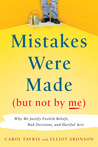
Mistakes Were Made: Why We Justify Foolish Beliefs, Bad Decisions, and Hurtful Acts
"A revelatory guide to the self-justifying mind, exposing how our need to be right traps us in cycles of error and conflict."
- 1Cognitive dissonance is the engine of self-justification. The mental discomfort of holding contradictory beliefs or actions compels us to rationalize our mistakes, often by distorting reality, to preserve our sense of being smart and moral.
- 2Self-deception is a feature, not a bug, of human psychology. The brain is wired to reduce dissonance automatically, creating a powerful, often unconscious, drive to justify our choices and beliefs, which can lead us astray.
- 3Memory is an unreliable, self-serving narrator. We unconsciously reconstruct past events to align with our present self-image, editing memories to make ourselves the hero or victim, thus entrenching our justifications.
- 4Hypocrisy is blind to the self but glaring in others. The same psychological mechanisms that allow us to spot inconsistency and moral failure in others render us incapable of seeing it in our own behavior.
- 5Escalating commitment locks us into failing courses of action. To avoid admitting a initial mistake was wasteful or foolish, we invest more resources, time, and ego into the failing endeavor, digging a deeper hole.
- 6Overcoming self-justification requires conscious, deliberate effort. Breaking the cycle involves recognizing the universal tendency, seeking disconfirming evidence, and embracing the humility to admit error without destroying self-worth.
Mistakes Were Made (But Not by Me) plunges into the unsettling psychological machinery that prevents individuals, couples, institutions, and nations from acknowledging error. Social psychologists Carol Tavris and Elliot Aronson anchor their exploration in Leon Festinger’s theory of cognitive dissonance—the acute mental stress caused by holding two contradictory ideas. The book argues that this discomfort is not a occasional glitch but the central driver of a pervasive human behavior: the reflexive, often unconscious, need to justify our beliefs, decisions, and actions to maintain a coherent, positive self-concept.
Through a compelling synthesis of decades of experimental research, the authors demonstrate how this need manifests. They trace the path from a simple mistake, through the dissonance it creates, to the elaborate fictions we construct to absolve ourselves of responsibility. These fictions reshape memory, blind us to our own hypocrisy, and fuel endless conflicts, from marital squabbles to political scandals and wrongful convictions. The narrative moves seamlessly from the laboratory to real-world case studies, examining how prosecutors cling to discredited evidence, how spouses remain locked in cycles of blame, and how leaders reframe disastrous policies as noble endeavors.
The final sections of the book confront the profound consequences of unchecked self-justification, illustrating how it corrodes relationships, perpetuates injustice, and makes learning from failure nearly impossible. Yet, it is not a counsel of despair. By mapping the terrain of self-deception with clinical clarity, Tavris and Aronson provide the necessary tools for insight. They outline a path toward greater personal and intellectual honesty, arguing that recognizing this universal human frailty is the first, essential step toward mitigating its damage and fostering a more accountable society.
Readers describe the book as a relentlessly insightful and psychologically demanding read that acts as a mirror, forcing uncomfortable self-examination. The consensus praises its rigorous, evidence-based foundation and the authors' authoritative yet accessible prose. The primary critique is its occasionally repetitive structure, with some noting that the central thesis, while powerfully illustrated, can feel reiterated across various domains. It is universally regarded as a transformative, if challenging, text that permanently alters one’s understanding of personal and collective behavior.
- 1The book's relentless, almost uncomfortable, demand for personal self-audit and its capacity to induce moments of painful recognition.
- 2The robust scientific credibility provided by the authors' deep grounding in social psychology research, which elevates it beyond pop-science.
- 3Discussions on the application of cognitive dissonance to political polarization and the inability to admit error in public life.
- 4Debates on the repetitive nature of the examples and whether the core concept is stretched too thin across too many case studies.
The Creative Habit
Twyla Tharp, Mark Reiter

The Art of Contrarian Trading
Carl Futia

Transformation in Christ
Dietrich Von Hildebrand

How to Win Friends & Influence People
Dale Carnegie
Stumbling on Happiness
Daniel Gilbert

The Artist's Way
Julia Cameron

Permanent Record
Edward Snowden

Out of Control
Kevin Kelly

The Psychology of Money: Timeless Lessons on Wealth, Greed, and Happiness
Morgan Housel
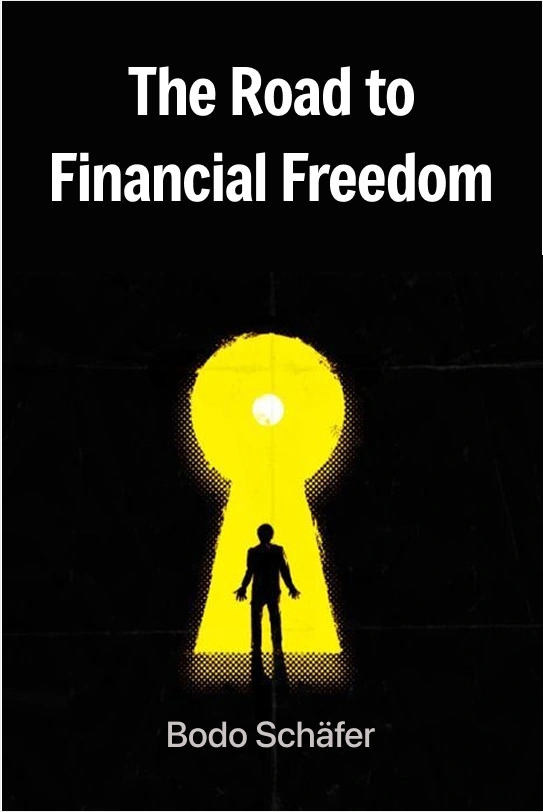
The Road to Financial Freedom
Bodo Schäfer

The Almanack of Naval Ravikant
Naval Ravikant, Eric Jorgenson

Bad Samaritans
Ha-Joon Chang