

Change by Design
"Replaces the myth of the lone genius with a rigorous, human-centered process that converts latent need into viable demand."
- 1Replace problem-focused 'Can we?' with solution-focused 'How can we?' This subtle linguistic shift reframes challenges as opportunities for creative action, moving teams from a defensive posture to one of proactive possibility and prototyping.
- 2Innovation is a disciplined process, not a sudden epiphany. Breakthroughs emerge from a structured, iterative cycle of inspiration, ideation, and implementation, demystifying innovation and making it a manageable organizational capability.
- 3Employ human-centered observation to uncover latent needs. True insight comes from empathetic engagement with people in their own environments, revealing unarticulated desires that data alone cannot capture.
- 4Prototype early and often to learn through making. Tangible, low-resolution prototypes are not final designs but crucial conversation tools that accelerate learning, expose flaws, and align stakeholders around a shared vision.
- 5Integrate desirability, feasibility, and viability for holistic solutions. Enduring innovation sits at the intersection of what is meaningful for people, technically possible, and economically sustainable for the business.
- 6Cultivate a culture of optimistic collaboration and constructive experimentation. Design thinking requires psychological safety, where multidisciplinary teams can freely brainstorm, fail forward, and build on each other's ideas without premature judgment.
Tim Brown's Change by Design dismantles the romantic archetype of the solitary inventor struck by a bolt of inspiration. In its place, he presents design thinking as a systematic, human-centered discipline for problem-solving that is accessible to all. Brown, the CEO of the celebrated design firm IDEO, argues that the designer's sensibility—empathy, integrative thinking, optimism, experimentalism, and collaboration—can be harnessed beyond traditional creative fields to tackle the complex challenges facing modern organizations and society.
At its core, the methodology is a non-linear, iterative process moving through three overlapping spaces: inspiration, ideation, and implementation. The journey begins with deep, ethnographic observation to understand people's unarticulated needs and behaviors, not merely their stated wants. This empathetic foundation fuels the ideation phase, where multidisciplinary teams engage in brainstorming and rapid prototyping to translate insights into tangible concepts. Prototypes, from simple sketches to role-playing scenarios, are treated as tools for conversation and learning, not as finished proposals, allowing ideas to be tested and refined with minimal risk.
The book illustrates this process with vivid case studies, demonstrating its application far beyond product aesthetics. Examples range from reimagining patient handoff procedures at Kaiser Permanente to improve nurse satisfaction and care, to developing user-centric financial services for communities in rural India. Brown makes a compelling case that design thinking's true power lies in its ability to balance three critical criteria: human desirability, technical feasibility, and business viability. This integrative approach ensures innovations are meaningful, executable, and sustainable.
Ultimately, Change by Design is a manifesto for creative leadership. It posits that the most significant innovations of the 21st century will not be technological gadgets alone, but new systems, services, and experiences that address profound human and organizational needs. The book serves as both a practical guide and a philosophical argument, aimed at managers, educators, and entrepreneurs seeking to build a culture of pervasive innovation that can drive growth and generate positive social impact.
The consensus positions the book as a competent, readable primer on design thinking principles, particularly valuable for newcomers to the field. However, a significant contingent of readers finds it overly familiar, covering well-trodden ground without delivering novel insights. A recurring critique centers on the pervasive self-promotion of IDEO, which many feel crosses from illustrative example into tiresome branding, undermining the universal applicability the author advocates. The prose is deemed serviceable but not inspired, with the core methodology receiving praise even as its presentation is seen as somewhat pedestrian.
- 1The book's heavy reliance on IDEO case studies, perceived as excessive self-promotion rather than objective instruction.
- 2Debate over whether the content offers fresh insights or merely repackages established design thinking concepts for a business audience.
- 3The perceived gap between the author's visionary reputation and the book's functional, somewhat dry execution as a text.

Just Listen: Discover the Secret to Getting Through to Absolutely Anyone
Mark Goulston

The Art of Contrarian Trading
Carl Futia
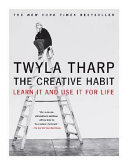
The Creative Habit
Twyla Tharp, Mark Reiter
Boom: Bubbles and the End of Stagnation
Byrne Hobart
The Psychology of Money: Timeless Lessons on Wealth, Greed, and Happiness
Morgan Housel

Blueprints: How mathematics shapes creativity
Marcus du Sautoy

The Essays of Warren Buffett: Lessons for Corporate America
Lawrence A. Cunningham, Warren Buffett

Permanent Record
Edward Snowden

The Intelligent Investor
Benjamin Graham

Breakthrough: The Quest for Life-Changing Medicines
Dr William Pao

The Almanack of Naval Ravikant
Naval Ravikant, Eric Jorgenson

Sapiens: A Brief History of Humankind
Yuval Noah Harari