
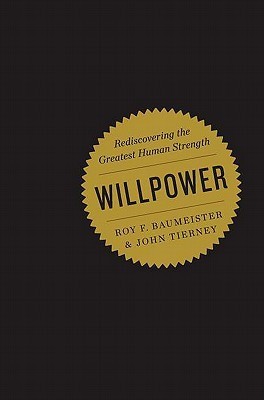
Willpower: Rediscovering the Greatest Human Strength
"Self-control is a muscle that can be strengthened through deliberate practice and proper metabolic fueling."
- 1Treat willpower as a finite physiological resource. Willpower draws directly from the brain's glucose supply, depleting throughout the day. This explains why decision fatigue sets in and why basic self-care like eating and sleeping is foundational for discipline.
- 2Strengthen self-control through incremental, consistent exercise. Just like a muscle, willpower grows stronger with regular, manageable challenges. Starting with small acts of discipline builds the capacity for larger, more consequential acts of self-control over time.
- 3Conserve willpower by establishing automatic habits. Conscious decision-making depletes willpower. By routinizing desired behaviors into automatic habits, you preserve mental energy for novel temptations and critical decisions, making discipline sustainable.
- 4Set clear, specific goals to direct your finite willpower. Vague intentions waste mental energy on deliberation. Well-defined goals act as a cognitive shortcut, efficiently channeling your self-control toward a concrete outcome and reducing internal conflict.
- 5Monitor your progress with structured self-awareness. Regular tracking of behavior creates feedback loops that reinforce discipline. This externalizes accountability, making abstract willpower tangible and allowing for precise calibration of efforts.
In Willpower: Rediscovering the Greatest Human Strength, pioneering social psychologist Roy F. Baumeister, collaborating with science writer John Tierney, dismantles the mystical view of self-control as a character trait. Instead, they present a revolutionary, empirically grounded model: willpower functions like a muscle. It is a finite mental resource that can be exhausted through use—a phenomenon known as ego depletion—but can also be strengthened through systematic training and, crucially, replenished through physiological means, primarily via glucose.
Baumeister's research, including his landmark studies on ego depletion, forms the book's core argument. The text meticulously details how acts of self-regulation—from resisting a cookie to making difficult decisions—draw from a common pool of mental energy. This explains the familiar experience of decision fatigue and why people are more likely to succumb to temptation late in the day. The authors explore the metabolic underpinnings of this system, demonstrating how blood glucose levels directly influence our capacity for discipline, thereby linking willpower inextricably to fundamentals like diet and sleep.
The book moves from laboratory findings to practical application, examining the lives of high achievers—from artists to entrepreneurs—who have mastered self-control. It provides a toolkit of evidence-based strategies, focusing on habit formation, goal-setting, and progress monitoring. The central lesson is that conserving willpower is as important as building it; by automating positive behaviors into routines and setting unambiguous goals, individuals can reduce the cognitive load of constant choice, freeing up willpower for life's inevitable crises and temptations.
Willpower positions itself not as a mere self-help manual but as a definitive compendium of modern social science on self-regulation. Its significance lies in demystifying a core human virtue, recasting it from a moral absolute into a trainable skill with a biological basis. The book speaks directly to a contemporary society awash in temptation, arguing that the path to a better life—however defined—is built not on vague inspiration but on the disciplined management of this crucial mental resource.
Readers with a distaste for conventional self-help praise the book for its empirical backbone, valuing the synthesis of robust psychological research with actionable strategies. The core metaphor of willpower as a muscle is widely embraced as a transformative and practical framework. However, a contingent finds the prose occasionally dry or repetitive, wishing for more narrative dynamism alongside the scientific exposition. The consensus is that it delivers profound insight for those seeking a rigorous, non-superficial approach to self-mastery.
- 1The transformative power of the 'willpower as a muscle' metaphor for understanding self-discipline.
- 2Appreciation for the book's empirical, research-driven approach versus fluff-filled self-help.
- 3Debates on the practical application of glucose management for sustaining self-control throughout the day.

Sapiens: A Brief History of Humankind
Yuval Noah Harari

Transformation in Christ
Dietrich Von Hildebrand

The Artist's Way
Julia Cameron
Stumbling on Happiness
Daniel Gilbert

Code: The Hidden Language of Computer Hardware and Software
Charles Petzold
Boom: Bubbles and the End of Stagnation
Byrne Hobart
Breath: The New Science of a Lost Art
James Nestor

The Road to Financial Freedom
Bodo Schäfer
Bad Samaritans
Ha-Joon Chang

Just Listen: Discover the Secret to Getting Through to Absolutely Anyone
Mark Goulston
Breakthrough: The Quest for Life-Changing Medicines
Dr William Pao
The Art of Contrarian Trading
Carl Futia