
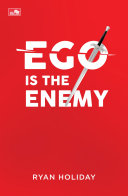
EGO IS THE ENEMY
"True power emerges not from self-aggrandizement, but from the disciplined subordination of ego to purpose."
- 1Ego impedes learning and growth at every career stage. Early on, ego creates a false sense of mastery that shuts down curiosity. In success, it breeds complacency and blinds one to faults. In failure, it amplifies pain and obstructs the clear-eyed analysis required for recovery.
- 2Distinguish confidence, born of competence, from arrogant ego. Confidence is a quiet assurance built through diligent work and proven capability. Arrogant ego is a loud, performative narrative of specialness detached from reality, which ultimately sabotages the very foundation of sustained achievement.
- 3Pursue substance over recognition, craft over applause. Ego seduces us toward public validation and shortcuts. Lasting accomplishment requires the humility to focus on the private, often tedious work that builds genuine mastery, resisting the siren call of immediate credit.
- 4Cultivate a philosophy of stoic humility and self-awareness. Drawing from historical exemplars, the book advocates for a mindset that constantly questions one's own narrative, accepts reality without flinching, and finds strength in restraint rather than in self-promotion.
- 5Beware the trap of confusing aspiration with accomplishment. Visualizing goals is useful, but the ego can mistake the fantasy of success for its reality, creating a dangerous cognitive substitution that drains the motivational energy required for the actual labor.
- 6Let your work, not your story, define you. Liberation comes from detaching your identity from the need to be seen as special or important. This detachment frees creative and intellectual energy to be channeled entirely into the quality of the output itself.
Ryan Holiday's 'Ego Is the Enemy' is a trenchant philosophical and practical inquiry into the most pervasive internal obstacle to achievement: the self-aggrandizing, self-deluding force of the ego. Framed within the robust tradition of Stoicism, the book argues that while society often celebrates the brash, visionary ego, true and lasting success across history has more frequently been the product of humility, restraint, and a fierce focus on reality over self-image.
Holiday structures his argument across the three phases of any endeavor: aspiration, success, and failure. In the aspiring phase, ego manifests as a sense of entitlement and impatience, poisoning the necessary apprenticeship and deep learning. During success, it breeds arrogance, fragility, and a disconnect from the diligent practices that created the success in the first place. In failure, ego magnifies the blow, prevents honest assessment, and blocks the resilience needed for a comeback. The narrative is propelled by a diverse cast of historical and contemporary figures—from Eleanor Roosevelt and Howard Hughes to Bill Belichick and Katharine Graham—who either mastered or were mastered by their own egos.
The book serves as a manual for this internal combat, offering strategies to cultivate what Holiday terms 'sober, quiet, determined humility.' It is a call to replace the noisy narrative of the self with a philosophy of purposeful action, where the work itself becomes the sole focus. The enemy, Holiday insists, is not external competition or circumstance, but the internal voice that prioritizes credit over contribution, recognition over results, and the story of one's own specialness over the substance of one's work.
'Ego Is the Enemy' targets a broad audience of aspiring and established professionals, artists, entrepreneurs, and leaders. Its significance lies in its countercultural stance, offering an antidote to an era obsessed with personal branding and performative success. The book provides a timeless framework for sustainable achievement, arguing that the path to genuine power and impact is paved not by feeding the ego, but by systematically dismantling its influence.
The critical consensus positions the book as a potent, necessary antidote to modern self-obsession, praised for its actionable Stoic wisdom and compelling historical anecdotes. Readers consistently laud its clarity and the transformative impact of its central premise on their professional and personal conduct. The primary critique is one of repetition; some find the core argument, while powerful, stretched thinly across the book's length, with the parade of examples occasionally feeling redundant rather than cumulative. It is broadly deemed highly accessible, distilling complex philosophy into direct, digestible prose.
- 1The critical distinction between genuine confidence and destructive ego, and the danger of society conflating the two.
- 2The book's repetitive structure, with debate over whether the reiteration is pedagogically necessary or stylistically flawed.
- 3The practical applicability of Stoic philosophy for modern professionals battling daily distractions and the pressure of self-promotion.
- 4The resonance of historical examples versus a desire for more contemporary, diverse case studies beyond the usual figures.
Stumbling on Happiness
Daniel Gilbert
Transformation in Christ
Dietrich Von Hildebrand
The Psychology of Money: Timeless Lessons on Wealth, Greed, and Happiness
Morgan Housel

Just Listen: Discover the Secret to Getting Through to Absolutely Anyone
Mark Goulston

The Fifth Discipline
Peter M. Senge
The Crash Course
Chris Martenson
The Creative Habit
Twyla Tharp, Mark Reiter
The Art of Contrarian Trading
Carl Futia

Code: The Hidden Language of Computer Hardware and Software
Charles Petzold

The Almanack of Naval Ravikant
Naval Ravikant, Eric Jorgenson

The Road to Financial Freedom
Bodo Schäfer

Breakthrough: The Quest for Life-Changing Medicines
Dr William Pao