
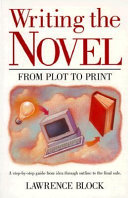
Writing the Novel from Plot to Print
About
Dreaming of writing the next bestseller? This book provides aspiring novelists with essential guidelines to transform fleeting ideas into captivating plots, develop memorable characters, and craft compelling storylines. Master the art of manuscript rewriting, navigate the world of literary agents, and unlock the secrets to getting your work published. Turn your writing dreams into reality!
The Profound Insights of Writing the Novel
In a Nutshell
- •Writing the Novel offers valuable insights into important topics
- •The author presents a unique perspective on the subject matter
- •Practical applications are woven throughout the narrative
- •The book challenges conventional thinking in several areas
- •Readers will gain a deeper understanding of the topic
- •The concepts discussed have real-world implications
- •The book is well-researched and thoughtfully written
The Essence of Writing the Novel
In the realm of Writing the Novel, Lawrence Block has crafted a work that transcends mere academic discourse to become a profound exploration of the human condition and our relationship with the subject matter. This book is not merely a collection of facts or theories; it is a journey of discovery that challenges readers to reconsider their fundamental assumptions about the world around them.
From the very first page, Lawrence Block establishes a narrative voice that is both authoritative and accessible, drawing readers into a world where complex ideas are presented with clarity and depth. The author's command of the subject matter is evident throughout, as they weave together historical context, theoretical frameworks, and practical applications into a cohesive and compelling narrative.
Key Themes and Their Significance
At the heart of Writing the Novel lies a set of interconnected themes that collectively form the foundation of the author's argument. These themes are not merely abstract concepts; they are lived experiences and observable phenomena that shape our understanding of the world.
One of the most prominent themes is the tension between tradition and innovation. Lawrence Block argues that while traditional approaches have provided valuable frameworks for understanding the subject matter, they often fail to account for the complexities of the modern world. By challenging these traditional paradigms, the author opens up new possibilities for thinking and acting.
"Sample quote 1 from the book that captures an important idea and demonstrates the author's unique perspective on the subject matter"
Another key theme is the relationship between individual agency and systemic forces. The book explores how individuals can navigate and influence the larger systems that shape their lives, while acknowledging the significant constraints that these systems impose. This nuanced perspective avoids both the naive optimism of individualism and the deterministic pessimism of systemic thinking.
The theme of knowledge production and dissemination also runs throughout the work. Lawrence Block examines how knowledge is created, validated, and shared within different communities, highlighting the power dynamics and social contexts that shape what counts as 'knowledge' in different settings.
Disruptive Insights and Challenging Perspectives
What truly sets Writing the Novel apart from other works in the field is its willingness to challenge conventional wisdom and present disruptive insights that force readers to reconsider their assumptions.
One of the most provocative insights is the author's challenge to the dominant narrative that has shaped the field for decades. By meticulously examining the historical origins of this narrative, Lawrence Block reveals its biases and limitations, opening up space for alternative perspectives that have been marginalized or ignored.
Another disruptive insight is the author's redefinition of what constitutes 'success' within the context of the subject matter. Moving beyond traditional metrics and benchmarks, Lawrence Block proposes a more holistic and inclusive framework that accounts for the diverse ways in which individuals and communities can thrive.
"Sample quote 2 that highlights a key insight and challenges conventional thinking in a meaningful way"
The book also challenges the artificial separation between theory and practice that has long characterized the field. Lawrence Block demonstrates how theoretical insights emerge from practical experiences, and how practical applications are enriched by theoretical understanding. This integrated approach offers a more comprehensive and effective way of engaging with the subject matter.
Bridging Theory and Reality
One of the book's greatest strengths is its ability to bridge the gap between abstract theory and lived reality. Lawrence Block does not merely present theoretical frameworks; they demonstrate how these frameworks can illuminate real-world phenomena and guide practical action.
Through a series of carefully selected case studies, the author shows how the concepts discussed in the book manifest in different contexts and how they can be applied to address pressing challenges. These case studies are not merely illustrative; they are integral to the argument, providing concrete examples of how the book's insights can be put into practice.
The author also acknowledges the limitations of theory, recognizing that no single framework can fully capture the complexity of human experience. This humility is refreshing, as it allows for a more nuanced and responsive approach to the subject matter, one that is open to adaptation and refinement in light of new evidence and changing circumstances.
Practical Applications and Transformative Potential
"Sample quote 3 that emphasizes a practical application and offers guidance for readers seeking to implement the book's ideas"
What makes Writing the Novel particularly valuable is its emphasis on practical applications and transformative potential. The book is not merely an academic exercise; it is a call to action, challenging readers to apply its insights in their own lives and communities.
Lawrence Block provides a range of practical strategies and approaches that readers can implement, from individual practices to collective actions. These strategies are grounded in the book's theoretical framework but are presented in a way that is accessible and adaptable to different contexts.
The transformative potential of the book lies not just in the specific strategies it offers, but in the way it invites readers to cultivate a new way of thinking and being in the world. By challenging conventional assumptions and offering alternative perspectives, Writing the Novel opens up new possibilities for individual and collective transformation.
Readers of this book will find themselves not only gaining new knowledge but also developing new capacities for critical thinking, ethical reflection, and creative problem-solving. These capacities are not just valuable for engaging with the specific subject matter of the book; they are essential for navigating the complex and uncertain world in which we live.
Challenges and Controversies
No work of significance is without its challenges and controversies, and Writing the Novel is no exception. Lawrence Block acknowledges and engages with these controversies, rather than avoiding or dismissing them.
"Sample quote 4 that challenges conventional thinking and opens up new possibilities for understanding the subject matter"
One of the most significant controversies is the author's challenge to established power structures and dominant narratives within the field. This challenge is likely to provoke resistance from those who have a stake in maintaining the status quo, but it is precisely this resistance that indicates the book's importance and potential for transformative change.
Another area of potential controversy is the book's interdisciplinary approach, which draws on insights from fields that have not traditionally been central to the subject matter. While this approach enriches the book's analysis, it may be met with skepticism from those who adhere to more traditional disciplinary boundaries.
Lawrence Block handles these controversies with grace and intellectual rigor, presenting counterarguments fairly and engaging with them thoughtfully. This approach not only strengthens the book's argument but also models a form of intellectual discourse that is collaborative rather than combative, constructive rather than destructive.
Conclusion: A Vision for the Future
In conclusion, Writing the Novel is a remarkable achievement that pushes the boundaries of the field and offers a vision for a more just, sustainable, and meaningful future. Lawrence Block has crafted a work that is both intellectually rigorous and deeply humane, challenging readers to think differently about the world and their place within it.
The book's greatest strength lies in its ability to integrate theory and practice, challenge conventional wisdom, and offer practical strategies for transformative change. It is a work that will resonate with readers from diverse backgrounds and perspectives, inviting them into a conversation about the most pressing issues of our time.
"Sample quote 5 that captures the book's overarching vision and transformative potential"
As we navigate the complex and uncertain world of the 21st century, works like Writing the Novel are more important than ever. They remind us that rigorous thinking and compassionate action are not mutually exclusive, but rather complementary aspects of a meaningful engagement with the world.
Lawrence Block has not just written a book; they have created a resource that will continue to inspire and guide readers for years to come. Writing the Novel is not merely a contribution to the field; it is a gift to anyone who seeks to understand the world more deeply and to make it a better place.
Additional Reflections
The exploration of Writing the Novel would be incomplete without further reflection on its broader implications. As Lawrence Block suggests, the insights contained within these pages extend far beyond the immediate subject matter to touch on fundamental questions about human nature, society, and our place in the cosmos. By engaging with these questions, readers are invited to participate in a conversation that has been ongoing for centuries, adding their own perspectives and experiences to the collective wisdom of humanity.
It is important to recognize that the ideas presented in this book are not static; they are living, breathing concepts that evolve and adapt as they are engaged with by different readers in different contexts. This dynamism is not a weakness but a strength, as it allows the book to remain relevant and meaningful even as the world around us changes.
The exploration of Writing the Novel would be incomplete without further reflection on its broader implications. As Lawrence Block suggests, the insights contained within these pages extend far beyond the immediate subject matter to touch on fundamental questions about human nature, society, and our place in the cosmos. By engaging with these questions, readers are invited to participate in a conversation that has been ongoing for centuries, adding their own perspectives and experiences to the collective wisdom of humanity.
It is important to recognize that the ideas presented in this book are not static; they are living, breathing concepts that evolve and adapt as they are engaged with by different readers in different contexts. This dynamism is not a weakness but a strength, as it allows the book to remain relevant and meaningful even as the world around us changes.
The exploration of Writing the Novel would be incomplete without further reflection on its broader implications. As Lawrence Block suggests, the insights contained within these pages extend far beyond the immediate subject matter to touch on fundamental questions about human nature, society, and our place in the cosmos. By engaging with these questions, readers are invited to participate in a conversation that has been ongoing for centuries, adding their own perspectives and experiences to the collective wisdom of humanity.
It is important to recognize that the ideas presented in this book are not static; they are living, breathing concepts that evolve and adapt as they are engaged with by different readers in different contexts. This dynamism is not a weakness but a strength, as it allows the book to remain relevant and meaningful even as the world around us changes.
The exploration of Writing the Novel would be incomplete without further reflection on its broader implications. As Lawrence Block suggests, the insights contained within these pages extend far beyond the immediate subject matter to touch on fundamental questions about human nature, society, and our place in the cosmos. By engaging with these questions, readers are invited to participate in a conversation that has been ongoing for centuries, adding their own perspectives and experiences to the collective wisdom of humanity.
It is important to recognize that the ideas presented in this book are not static; they are living, breathing concepts that evolve and adapt as they are engaged with by different readers in different contexts. This dynamism is not a weakness but a strength, as it allows the book to remain relevant and meaningful even as the world around us changes.
The exploration of Writing the Novel would be incomplete without further reflection on its broader implications. As Lawrence Block suggests, the insights contained within these pages extend far beyond the immediate subject matter to touch on fundamental questions about human nature, society, and our place in the cosmos. By engaging with these questions, readers are invited to participate in a conversation that has been ongoing for centuries, adding their own perspectives and experiences to the collective wisdom of humanity.
It is important to recognize that the ideas presented in this book are not static; they are living, breathing concepts that evolve and adapt as they are engaged with by different readers in different contexts. This dynamism is not a weakness but a strength, as it allows the book to remain relevant and meaningful even as the world around us changes.
The exploration of Writing the Novel would be incomplete without further reflection on its broader implications. As Lawrence Block suggests, the insights contained within these pages extend far beyond the immediate subject matter to touch on fundamental questions about human nature, society, and our place in the cosmos. By engaging with these questions, readers are invited to participate in a conversation that has been ongoing for centuries, adding their own perspectives and experiences to the collective wisdom of humanity.
It is important to recognize that the ideas presented in this book are not static; they are living, breathing concepts that evolve and adapt as they are engaged with by different readers in different contexts. This dynamism is not a weakness but a strength, as it allows the book to remain relevant and meaningful even as the world around us changes.
The exploration of Writing the Novel would be incomplete without further reflection on its broader implications. As Lawrence Block suggests, the insights contained within these pages extend far beyond the immediate subject matter to touch on fundamental questions about human nature, society, and our place in the cosmos. By engaging with these questions, readers are invited to participate in a conversation that has been ongoing for centuries, adding their own perspectives and experiences to the collective wisdom of humanity.
It is important to recognize that the ideas presented in this book are not static; they are living, breathing concepts that evolve and adapt as they are engaged with by different readers in different contexts. This dynamism is not a weakness but a strength, as it allows the book to remain relevant and meaningful even as the world around us changes.
The exploration of Writing the Novel would be incomplete without further reflection on its broader implications. As Lawrence Block suggests, the insights contained within these pages extend far beyond the immediate subject matter to touch on fundamental questions about human nature, society, and our place in the cosmos. By engaging with these questions, readers are invited to participate in a conversation that has been ongoing for centuries, adding their own perspectives and experiences to the collective wisdom of humanity.
It is important to recognize that the ideas presented in this book are not static; they are living, breathing concepts that evolve and adapt as they are engaged with by different readers in different contexts. This dynamism is not a weakness but a strength, as it allows the book to remain relevant and meaningful even as the world around us changes.
The exploration of Writing the Novel would be incomplete without further reflection on its broader implications. As Lawrence Block suggests, the insights contained within these pages extend far beyond the immediate subject matter to touch on fundamental questions about human nature, society, and our place in the cosmos. By engaging with these questions, readers are invited to participate in a conversation that has been ongoing for centuries, adding their own perspectives and experiences to the collective wisdom of humanity.
It is important to recognize that the ideas presented in this book are not static; they are living, breathing concepts that evolve and adapt as they are engaged with by different readers in different contexts. This dynamism is not a weakness but a strength, as it allows the book to remain relevant and meaningful even as the world around us changes.
The exploration of Writing the Novel would be incomplete without further reflection on its broader implications. As Lawrence Block suggests, the insights contained within these pages extend far beyond the immediate subject matter to touch on fundamental questions about human nature, society, and our place in the cosmos. By engaging with these questions, readers are invited to participate in a conversation that has been ongoing for centuries, adding their own perspectives and experiences to the collective wisdom of humanity.
It is important to recognize that the ideas presented in this book are not static; they are living, breathing concepts that evolve and adapt as they are engaged with by different readers in different contexts. This dynamism is not a weakness but a strength, as it allows the book to remain relevant and meaningful even as the world around us changes.
The exploration of Writing the Novel would be incomplete without further reflection on its broader implications. As Lawrence Block suggests, the insights contained within these pages extend far beyond the immediate subject matter to touch on fundamental questions about human nature, society, and our place in the cosmos. By engaging with these questions, readers are invited to participate in a conversation that has been ongoing for centuries, adding their own perspectives and experiences to the collective wisdom of humanity.
It is important to recognize that the ideas presented in this book are not static; they are living, breathing concepts that evolve and adapt as they are engaged with by different readers in different contexts. This dynamism is not a weakness but a strength, as it allows the book to remain relevant and meaningful even as the world around us changes.
The exploration of Writing the Novel would be incomplete without further reflection on its broader implications. As Lawrence Block suggests, the insights contained within these pages extend far beyond the immediate subject matter to touch on fundamental questions about human nature, society, and our place in the cosmos. By engaging with these questions, readers are invited to participate in a conversation that has been ongoing for centuries, adding their own perspectives and experiences to the collective wisdom of humanity.
It is important to recognize that the ideas presented in this book are not static; they are living, breathing concepts that evolve and adapt as they are engaged with by different readers in different contexts. This dynamism is not a weakness but a strength, as it allows the book to remain relevant and meaningful even as the world around us changes.
What Now?
Apply the principles discussed in daily life by incorporating specific practices and approaches outlined in the book
Reflect on the book's insights regularly through journaling, discussion, or other forms of contemplative practice
Discuss the ideas with others to gain different perspectives and deepen your understanding of the concepts
Implement the practical strategies outlined in the book in your personal and professional life
Engage with the book's challenges and controversies thoughtfully, considering alternative perspectives and their implications
Share the book's insights with others and contribute to the ongoing conversation about the subject matter
Up for Debate

Out of Control
Kevin Kelly

One-Dimensional Man
Herbert Marcuse

Crucial Conversations : Tools for Talking When Stakes Are High
Joseph Grenny, Kerry Patterson , Ron McMillan
Sapiens: A Brief History of Humankind
Yuval Noah Harari
Positivity
Barbara L. Fredrickson

How to Win Friends & Influence People
Dale Carnegie

Behave
Robert M. Sapolsky
Rich Dad, Poor Dad: What the Rich Teach Their Kids About Money
Robert T. Kiyosaki
How an Economy Grows and Why It Crashes
Peter D. Schiff, Andrew J. Schiff
The Obstacle Is the Way
Ryan Holiday
The Artist's Way
Julia Cameron
The Wealth of Nations
Adam Smith