
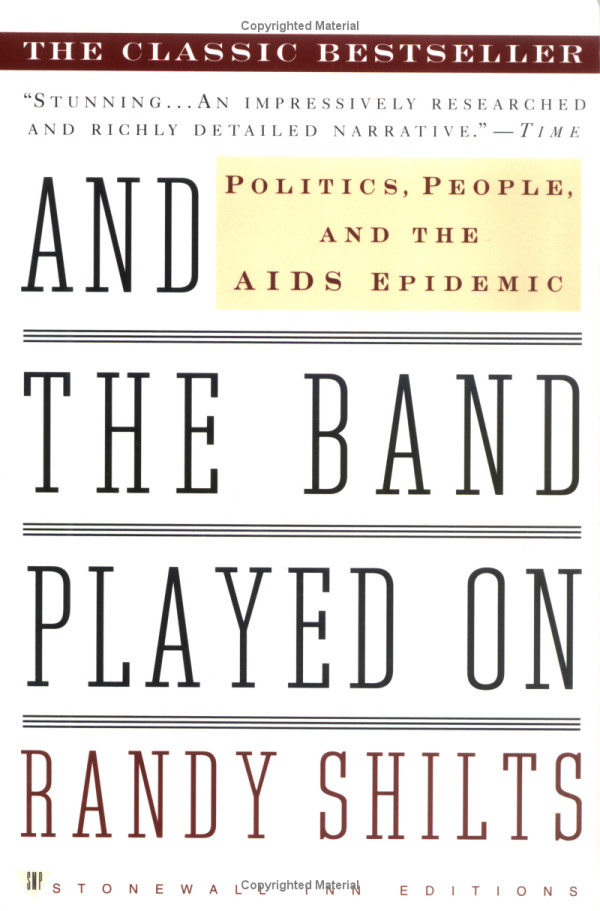
And the Band Played On: Politics, People, and the AIDS Epidemic
"A searing chronicle of how institutional indifference and political cowardice fueled a preventable plague."
Nook Talks
- 1Institutional failure is a greater killer than any virus. The epidemic's catastrophic scale was not inevitable but engineered by bureaucratic inertia, budget priorities, and a systemic refusal to acknowledge a crisis affecting marginalized communities.
- 2Scientific progress is often hindered by professional vanity. Rivalries between researchers and a race for credit delayed crucial discoveries and public health interventions, placing prestige above the urgent need to save lives.
- 3Public health cannot be separated from politics. The Reagan administration's silence and the CDC's constrained funding reveal how health policy is dictated by electoral calculus and ideological bias, not medical necessity.
- 4Community activism emerges from institutional abandonment. Faced with governmental neglect, the gay community organized its own information networks, care systems, and protest movements, forging a new model of health advocacy.
- 5Media complacency allows crises to fester unseen. Mainstream journalism's initial reluctance to cover 'a gay disease' exemplifies how media gatekeeping can obscure existential threats until they reach a critical, undeniable mass.
- 6The bathhouse debate exposed a tragic tension within liberation. The conflict over closing sexual venues pitted communal solidarity against individual freedom, highlighting the painful choices required for collective survival during an epidemic.
Randy Shilts's monumental work is not merely a history of the AIDS epidemic but a forensic autopsy of a societal collapse. It begins in the late 1970s, tracing the silent migration of a mysterious pathogen from the forests of Central Africa to the bathhouses of San Francisco and the blood banks of America. The narrative hook is a chilling question of accountability: how did a containable public health crisis metastasize into a national catastrophe, claiming tens of thousands of lives before it was officially acknowledged?
The body of the book meticulously reconstructs the parallel failures that formed a perfect storm. Shilts documents the Centers for Disease Control's heroic but underfunded epidemiological detective work, stymied by political hostility and a lack of resources. He exposes the fatal delays at the National Institutes of Health, where scientific territorialism and a demand for pristine research protocols overrode emergency action. The political narrative centers on the Reagan administration's willful silence, treating the epidemic as a distasteful political liability rather than a mortal threat. Simultaneously, Shilts portrays the fraught response within the gay community, caught between hard-won sexual liberation and the terrifying new reality of a sexually transmitted killer.
This tapestry is woven with intimate portraits of the players—from the doomed patient zero, Gaëtan Dugas, to dedicated doctors like Don Francis, and activists like Larry Kramer. Shilts shows how the blood industry prioritized profit over precaution, how media outlets buried the story, and how public health officials hesitated to name sexual practices for fear of controversy. The book operates as a complex systems failure analysis, where each institution's minor evasion or delay compounded into a tidal wave of death.
Ultimately, 'And the Band Played On' stands as a foundational text of investigative journalism and a permanent warning. Its impact lies in its rigorous demonstration that epidemics are as much social and political phenomena as biological ones. The book targets anyone concerned with governance, medicine, media ethics, and social justice, offering a masterclass in how not to respond to a crisis. Its legacy is the uncomfortable understanding that the tragedy of AIDS was not just a disease, but a choice.
The reader consensus elevates this book to the status of a sacred text and a visceral emotional experience. It is universally praised as an essential, enraging, and meticulously documented historical record that masterfully synthesizes complex science and politics into a human narrative. The primary critique, echoed across decades of readers, is its overwhelming density and the profound, emotionally exhausting grief it induces. While some note its journalistic style lacks lyrical flourish, this is overshadowed by its authoritative power as the definitive account of a systemic moral failure.
- 1The enduring rage directed at the Reagan administration for its lethal silence and active obstruction during the epidemic's critical early years.
- 2Debates over patient zero, Gaëtan Dugas, and the ethics of Shilts's portrayal, which some feel verges on scapegoating.
- 3The tragic conflict within the gay community over closing bathhouses, pitting public health against hard-won sexual freedom.
- 4The book's function as a generational touchstone and personal memoir for those who lived through the fear and loss of the 1980s.

The Creative Habit
Twyla Tharp, Mark Reiter

The Almanack of Naval Ravikant
Naval Ravikant, Eric Jorgenson

Transformation in Christ
Dietrich Von Hildebrand

The Psychology of Money: Timeless Lessons on Wealth, Greed, and Happiness
Morgan Housel
Stumbling on Happiness
Daniel Gilbert

Code: The Hidden Language of Computer Hardware and Software
Charles Petzold

The Lessons of History
Will Durant

The Essays of Warren Buffett: Lessons for Corporate America
Lawrence A. Cunningham, Warren Buffett

Sapiens: A Brief History of Humankind
Yuval Noah Harari

How to Win Friends & Influence People
Dale Carnegie

The Art of Contrarian Trading
Carl Futia

Permanent Record
Edward Snowden