
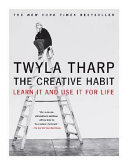
The Creative Habit
"Demystifies genius by transforming creativity from a sporadic gift into a disciplined, daily practice."
- 1Establish a ritual to defeat the terror of the blank page. A consistent, personal pre-work ritual signals to the brain that it is time to create, bypassing procrastination and anxiety to enter a productive state of flow.
- 2Cultivate 'scratching' as a perpetual hunt for raw material. Creativity begins not with a grand idea but with the active, ongoing search for inspiration—collecting images, sounds, and experiences to build a personal archive of potential.
- 3Build a physical 'box' to organize and contain your project's spine. A tangible system for filing research and nascent ideas provides structure, prevents loss of insights, and makes the abstract, sprawling nature of a project concretely manageable.
- 4Embrace failures and ruts as necessary phases of the process. Creative dead ends are not signs of inadequacy but invitations to employ practical exercises—like 'Do a Verb' or 'Coins and Chaos'—to dismantle blocks and find a new path forward.
- 5Prioritize 'quiet without loneliness' for deep, generative thought. Sustained creativity requires protected solitude, a state of focused isolation free from distraction yet connected to one's purpose, where the mind can synthesize and innovate.
- 6Finish a work session by knowing the next immediate step. Following Hemingway's lesson, always halt work at a point where the subsequent action is clear. This builds a bridge to the next day, eliminating the paralysis of restarting.
In a cultural landscape that often romanticizes the 'eureka' moment, Twyla Tharp’s The Creative Habit presents a radical, grounded counter-narrative. Drawing from her storied career as one of America’s preeminent choreographers, Tharp dismantles the myth of innate genius, arguing that creativity is not a mystical endowment but a skill forged through rigorous preparation and unwavering discipline. The book posits that the capacity for original work is within anyone’s reach, provided they are willing to systematize the creative impulse and integrate it into the fabric of their daily life.
Tharp structures her argument around the core concept of habit, detailing the specific, practical rituals that scaffold a creative life. She introduces tools like the 'project box'—a physical container for organizing the nascent 'spine' of an idea—and emphasizes the critical practice of 'scratching,' the ongoing, active search for inspiration in the world. The text is rich with anecdotes from her own process, illustrating how she navigates creative ruts and transforms vague impulses into structured ballets and Broadway shows. These personal stories serve not as boasts of achievement but as transparent blueprints for problem-solving.
The book’s pedagogical heart lies in its more than thirty exercises, designed to be 'practical and immediately doable.' From 'Where’s Your Pencil?'—a mandate to observe and record relentlessly—to 'Build a Bridge to the Next Day,' which ensures momentum is never lost, these tasks translate philosophy into action. Tharp covers the entire arc of the creative process, from the anxious beginnings of a blank canvas to the complexities of collaboration and the resilience required to edit and finish work.
Ultimately, The Creative Habit transcends the genre of self-help for artists. Its lessons on ritual, self-knowledge, and productive preparation are universally applicable, offering value to entrepreneurs, scientists, educators, and anyone engaged in acts of making. Tharp’s voice is both demanding and profoundly optimistic, reframing the empty room not as a void of pressure but as a field of limitless potential, awaiting the individual who has done the work to fill it.
The consensus positions this as a foundational, practitioner’s text, valued for its actionable exercises and Tharp’s authoritative, lived experience. Readers praise its demystification of creativity and find the specific rituals—like the project box—transformative. Criticisms are primarily from those who find the content familiar if they have read other books on creative discipline, noting some repetition of core principles. The tone is widely appreciated as generous and direct, though a few find the choreography-centric examples less relatable.
- 1The practicality and immediate applicability of Tharp's specific exercises, like 'scratching' and the 'project box.'
- 2Debate over the book's novelty versus its reinforcement of established principles on discipline and routine.
- 3The value of Tharp's personal anecdotes and memoir-like passages in illustrating abstract concepts.
- 4Discussion on the book's relevance beyond traditional arts to business, coding, and everyday problem-solving.
Sapiens: A Brief History of Humankind
Yuval Noah Harari

Code: The Hidden Language of Computer Hardware and Software
Charles Petzold

The Almanack of Naval Ravikant
Naval Ravikant, Eric Jorgenson
Blueprints: How mathematics shapes creativity
Marcus du Sautoy
The Art of Contrarian Trading
Carl Futia
Out of Control
Kevin Kelly
Transformation in Christ
Dietrich Von Hildebrand

Permanent Record
Edward Snowden
The Psychology of Money: Timeless Lessons on Wealth, Greed, and Happiness
Morgan Housel
Stumbling on Happiness
Daniel Gilbert
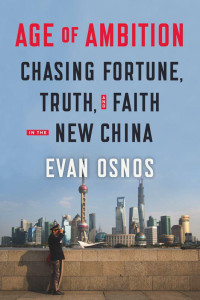
Age of Ambition: Chasing Fortune, Truth, and Faith in the New China
Evan Osnos
Just Listen: Discover the Secret to Getting Through to Absolutely Anyone
Mark Goulston