

Save the Cat!: The Last Book on Screenwriting You'll Ever Need
"A structural blueprint that demystifies successful storytelling by mapping the universal beats of a compelling narrative."
Nook Talks
- 1Structure your story around fifteen universal plot beats. The 'Beat Sheet' provides a precise, scene-by-scene framework for pacing, ensuring narrative momentum and emotional payoff from opening image to final frame.
- 2Define your story's genre by its core emotional mechanics. Moving beyond superficial labels, Snyder's genre taxonomy—like 'Rites of Passage' or 'Monster in the House'—clarifies the central promise and obligatory scenes required to satisfy an audience.
- 3Prioritize audience empathy through a defining character moment. The titular 'Save the Cat' beat mandates an early, altruistic action from the protagonist, forging an essential emotional bond between viewer and character.
- 4Diagnose narrative problems using a logical checklist. A systematic list of common story flaws, from a passive hero to unclear stakes, provides a diagnostic tool for revising and strengthening a script's foundation.
- 5Craft a compelling logline before writing a single scene. The 'logline' formula forces clarity of concept, identifying irony, a compelling hero, and primal stakes, ensuring the story's core is marketable and dramatically sound.
- 6Understand the commercial logic behind successful screenplays. The book operates as an insider's guide to Hollywood's unspoken rules, framing structural principles as non-negotiable requirements for professional viability and sale.
Blake Snyder's 'Save the Cat!' is less a theoretical treatise on the art of screenwriting than a field manual for its commercial practice. It posits that all commercially successful films, regardless of genre, share an identical, invisible architecture—a fifteen-beat structural skeleton that dictates the timing of key emotional turns and plot revelations. Snyder, a veteran screenwriter and script consultant, distills a lifetime of Hollywood experience into this pragmatic system, arguing that mastery of this 'beat sheet' is the fundamental prerequisite for a script's survival in a competitive marketplace.
The book's core is the detailed exposition of these fifteen beats, from the Opening Image and Theme Stated to the Final Image. Each beat serves a specific narrative function, such as the 'Catalyst' that disrupts the hero's world or the 'All Is Lost' moment that precedes the climax. Snyder illustrates this framework with concise examples from well-known films, demonstrating its universal application. Complementing this is his innovative genre classification, which moves beyond conventional categories to define stories by their core emotional engine and required narrative components.
Further chapters provide actionable tools for the working writer, including the construction of a high-concept logline, the 'Board' for scene-by-scene plotting, and a systematic checklist for diagnosing a 'broken' script. The tone is confident, prescriptive, and occasionally brash, reflecting Snyder's belief in the system's infallibility when properly applied. The methodology is presented not as one creative option among many, but as the industry's de facto standard.
While its primary audience is aspiring screenwriters seeking a clear path to a sale, the book's influence has permeated broader narrative fields. Its lasting impact lies in codifying the hidden grammar of mainstream cinematic storytelling, offering a replicable formula for constructing narratives that feel instinctively satisfying to a mass audience. It is a foundational text for anyone seeking to understand the engineered mechanics of popular plot.
The consensus positions the book as an indispensable, if rigid, primer on practical story structure. Readers universally praise its clarity and actionable framework, crediting it with demystifying screenplay format and providing a concrete path from concept to outline. The primary critique is its inflexible, prescriptive nature, which novelists and experienced writers find confining when applied to longer or more unconventional forms. It is hailed as a perfect starting point for beginners but cautioned as a potential creative straightjacket if followed dogmatically.
- 1The applicability and necessary adaptation of the rigid 15-beat screenplay structure for novelists and long-form fiction writers.
- 2Debate over whether the book's formulaic approach stifles creativity or provides essential scaffolding for disciplined storytelling.
- 3The value of Snyder's genre classifications (e.g., 'Rites of Passage') in helping authors clarify the core emotional engine of their own stories.
Sapiens: A Brief History of Humankind
Yuval Noah Harari
Code: The Hidden Language of Computer Hardware and Software
Charles Petzold
The Artist's Way
Julia Cameron

Permanent Record
Edward Snowden
Stumbling on Happiness
Daniel Gilbert
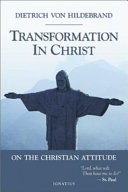
Transformation in Christ
Dietrich Von Hildebrand
Breath: The New Science of a Lost Art
James Nestor
The Almanack of Naval Ravikant
Naval Ravikant, Eric Jorgenson

Breakthrough: The Quest for Life-Changing Medicines
Dr William Pao
Just Listen: Discover the Secret to Getting Through to Absolutely Anyone
Mark Goulston

Chip War: The Quest to Dominate the World's Most Critical Technology
Chris Miller
Boom: Bubbles and the End of Stagnation
Byrne Hobart